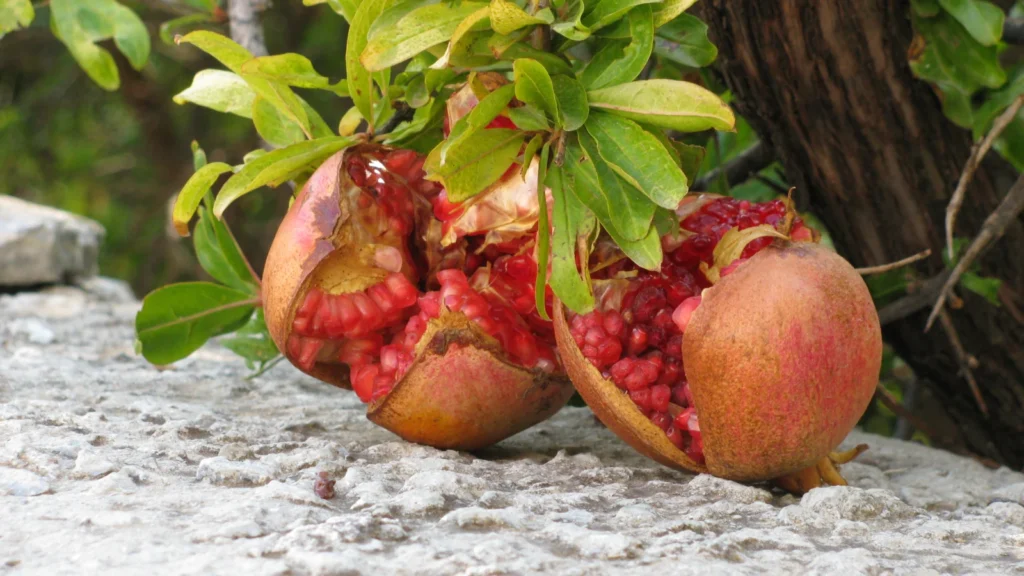
Cold-hardy pomegranates are varieties of Punica granatum, many from Central Asia and the Caucasus, that survive winter lows of about 5 to 10°F, extending pomegranate growing into USDA zone 7 and protected spots in zone 6. The best-known include Russian 26, Salavatski, Kazake, Surh-Anor, Afganski and Al-Sirin-Nar; Parfianka and Wonderful are less hardy, about zone 7b to 8. Grow them as multi-stemmed shrubs in the warmest, sunniest spot you have, against a south-facing wall, mulch the base heavily in winter, and choose early-ripening varieties so fruit matures before fall frost. In colder zones, grow them in large containers and overwinter them in a garage.
Cold-hardy pomegranate varieties compared
| Variety | Reported hardiness | Fruit | Notes |
|---|---|---|---|
| Russian 26 | About 5°F; zone 6b to 7 | Medium, red, sweet-tart | Widely tested; reliable in zone 7 |
| Salavatski (Russian 18) | About 5 to 10°F; zone 6b to 7 | Large, pink-red, sweet-tart | Among the hardiest; vigorous |
| Kazake | About 5 to 10°F | Medium, tart | Very hardy; good for juice |
| Surh-Anor | About 5 to 10°F | Medium to large, sweet-tart | Hardy; Central Asian origin |
| Afganski | About 5 to 10°F | Large, sweet | Hardy; soft-ish seeds |
| Al-Sirin-Nar | About 10°F | Large, sweet-tart | Ripens fairly early |
| Parfianka | About 10 to 15°F; zone 7b to 8 | Large, sweet, soft seeds | Outstanding flavor; less hardy |
| Wonderful | About 12 to 15°F; zone 8 | Large, deep red, tart | Commercial standard; ripens late |
Hardiness figures come mostly from growers’ reports and nursery trials, and they vary with plant age, health, winter conditions and how quickly the cold arrives. Treat them as guides rather than guarantees.
How cold can pomegranates survive?
Most standard pomegranates are damaged around 10 to 15°F, with top growth dying back and sometimes the whole plant killed to the ground. The hardiest varieties can survive brief lows near 5°F with some dieback. The New Mexico State University Southwest Yard and Garden column on cold-hardy pomegranates reports that Russian 26 is said to survive temperatures as low as 5°F and is listed as hardy to zone 6, and that pomegranates growing in protected spots near walls and structures in Albuquerque, zone 7, have survived for years and fruited, while some froze to the ground in extreme winters such as 2011 and regrew from the base.
Roots and the base of the plant are hardier than the top, so a well-mulched pomegranate that freezes back often resprouts. But a plant that dies back every winter will rarely fruit, because pomegranates bear on short spurs on wood that is at least two years old.

What makes a pomegranate cold-hardy?
Pomegranates originated in a region stretching from Iran to northern India, and they have been cultivated across the Mediterranean, Middle East and Central Asia for thousands of years. The Wikipedia article on pomegranate covers this history and the wide range of cultivated types. Varieties selected in the colder parts of that range, such as Turkmenistan, Uzbekistan, Tajikistan and the Caucasus, where winters are severe but summers long and hot, tend to be hardier. Many reached North American gardeners through the USDA’s National Clonal Germplasm Repository in Davis, California, and through collectors who tested them in colder climates.
Where can you grow cold-hardy pomegranates?
| USDA zone | What to expect |
|---|---|
| 9 to 10 | Any variety; easy fruiting |
| 8 | Most varieties, including Wonderful |
| 7 | Hardy varieties; plant in a warm, sheltered spot |
| 6 | Hardiest varieties only, against a south wall with heavy mulch; dieback likely in hard winters |
| 5 and colder | Containers moved into shelter for winter |
Check your zone with the growing zone finder. Pomegranates also need long, hot summers to ripen fruit, often 150 to 180 days or more from bloom to harvest. In cool-summer or short-season areas, plants may survive but fruit may not ripen before frost. The growing season length calculator and the growing degree days calculator help judge whether you have enough heat.
Where should you plant a pomegranate in a cold climate?
Microclimate makes the difference between success and failure at the edge of a pomegranate’s range:
- Plant against a south- or west-facing wall, which reflects heat in summer and radiates warmth at night in winter.
- Choose a site sheltered from cold winter winds, such as a courtyard or the corner of a building.
- Avoid low spots where cold air pools on frosty nights.
- Provide full sun, at least 8 hours a day, for flowering and ripening.
- Use well-drained soil; pomegranates tolerate poor and alkaline soils but hate wet feet, especially in winter.
The sunlight requirement finder helps choose a site, and the frost date tool shows your first fall frost.
When and how do you plant cold-hardy pomegranates?
The NMSU column advises planting bare-root pomegranates in late winter or early spring and container-grown plants most of the year. In cold climates, spring planting is best, giving roots a full season to establish before the first winter. Dig a hole as deep as the root ball and two to three times as wide, using the planting hole size calculator, set the plant at the same depth it grew in the pot, water well and mulch. Space shrubs about 6 to 12 feet apart. Choose larger, well-rooted plants for cold sites; small plants are more vulnerable in their first winters.

Should you grow a pomegranate as a shrub or tree?
In cold climates, grow pomegranates as multi-stemmed shrubs with four to six main trunks. If a hard winter kills one or two stems, others survive to carry the crop, and new suckers can replace losses. Single-trunk trees look tidy but can be lost entirely to one cold snap. Each year, keep a few new suckers as replacements and remove the rest.
How do you protect pomegranates in winter?
- Stop feeding by midsummer so growth hardens before fall.
- Water deeply in fall before the ground freezes; dry plants suffer more winter injury.
- Mulch heavily: as the NMSU column recommends, pile a thick layer of straw, pine needles or wood chips around the base in late fall so the plant can regrow from protected buds if the top is killed.
- Wrap young plants with burlap or frost cloth during severe cold snaps, removing it afterward.
- Wait to prune until spring, when you can see which wood survived.
Use the mulch calculator to estimate winter mulch.
Hardiness note: Hardiness zones are based on average annual minimum temperatures, not record lows, so even a zone-appropriate pomegranate can be damaged in an unusually cold winter. Many hardiness ratings for Central Asian pomegranate varieties come from grower observations rather than formal trials. Plant more than one variety if you can, and buy from nurseries that list their source and testing.
Can you grow pomegranates in containers in cold climates?
Yes. In zones 5 and colder, or for tender varieties in zone 6, grow pomegranates in large containers of 15 to 25 gallons. The NMSU column suggests moving container pomegranates to a protected location such as a sunroom or garage for winter and watering occasionally so tissues do not dry out. Dwarf pomegranates such as ‘Nana’ make attractive ornamental pot plants with small fruit, while full-size varieties fruit better in larger pots. Use the container garden planner to choose a container.
How do you prune cold-hardy pomegranates?
Prune in late winter or early spring, after the worst cold has passed. First remove all dead and winter-damaged wood back to live tissue, which shows green under the bark. Then thin crowded and crossing stems, keep four to six main trunks, and remove most suckers, keeping a few as replacements. Avoid heavy heading cuts, since fruit forms on short spurs on two- and three-year-old wood.
When do pomegranates fruit, and why do they split?
Pomegranates usually begin fruiting two to three years after planting. They are self-fertile, though cross-pollination with a second variety can increase fruit set. Fruit ripens in fall, typically September to November, about five to seven months after flowering, which is why early-ripening hardy varieties matter in cold climates. Ripe pomegranates have full color, a slightly flattened, angular shape and a metallic sound when tapped. Fruit splits when heavy rain or irrigation follows dry weather; keep soil evenly moist through late summer and fall and harvest promptly when ripe. Plan your picking with the harvest date calculator.
What problems affect pomegranates in cold climates?
| Problem | Cause | Solution |
|---|---|---|
| Dieback to the ground | Severe winter cold | Hardier variety, warmer site, heavy mulch |
| Flowers but no fruit | Young plant, poor pollination or cold-damaged wood | Be patient; protect older wood |
| Fruit does not ripen | Short or cool summer | Early variety; hottest site |
| Fruit splitting | Irregular watering or rain | Even moisture; harvest promptly |
| Leaf-footed bugs | Feeding on fruit | Handpick; remove damaged fruit |
| Root rot | Wet, heavy soil | Plant in well-drained soil |
For other symptoms, try the plant problem identifier.
How do you feed and water pomegranates in cold climates?
Pomegranates are drought tolerant once established but fruit best with regular deep watering during flowering and fruit development, about every one to two weeks in dry weather. Taper watering in early fall to help wood harden, then give one deep watering before the ground freezes. Feed lightly in spring with compost or a balanced fertilizer, and avoid feeding after early summer, since late, soft growth is the first to die in winter. The garden watering calculator and the garden fertilizer calculator help plan both.
Which hardy pomegranate tastes best?
Flavor is personal, but among hardy types, growers often praise Salavatski and Afganski for large, sweet-tart fruit, while Kazake is tarter and excellent for juice. If you are in zone 7b or warmer, Parfianka is widely considered one of the best-tasting pomegranates, with soft, edible seeds and a rich, wine-like flavor. Wonderful, the familiar supermarket variety, is tart and needs a long, hot season to ripen fully.
How long do pomegranates live?
Pomegranates are long-lived; in warm climates, shrubs can produce for decades and some are said to be centuries old. In cold climates their lifespan depends mostly on winter injury. A multi-stemmed shrub that loses a trunk now and then but keeps renewing from the base can remain productive for many years.
Are ornamental dwarf pomegranates hardy?
The dwarf pomegranate ‘Nana’ is grown mainly for its flowers and small fruit and is roughly as hardy as standard varieties, about zone 7b to 8 outdoors. It is an excellent choice for containers and bonsai, moved into a cool, bright garage or porch for winter in colder zones.
Whichever variety you choose, the formula for success in cold climates stays the same: the warmest site, good drainage, multi-stem training and a thick winter mulch.
Keep notes on each winter’s lowest temperature and how your plants responded; within a few years you will know which varieties truly thrive in your garden.
In time, a well-sited hardy pomegranate becomes one of the most ornamental shrubs in the garden, with glossy leaves, scarlet flowers and jewel-like fruit.
Another heat-loving, tough fruit for hot, dry gardens is the jujube tree, which also tolerates alkaline soil.
For other trees and berries to grow alongside this one, see the home fruit tree guide.
Cold-hardy pomegranate varieties and winter survival
Clemson Extension’s pomegranate fact sheet says common cultivars are cold-hardy in USDA zones 8 to 10, and plants usually survive winter in zone 7b. Temperatures below 10°F (-12°C) may kill plants to the ground, though they usually resprout vigorously from the crown, and planting in a protected location may prevent cold injury. The Russian series is hardier, to zone 6. ‘Wonderful’ is the classic standard with red flowers and large red fruit that ripens in September on a plant 8 to 12 ft tall; ‘Salavatski’ (R8) has large fruit with sweet-tart juice, excellent for juicing; ‘Afganski’ (R26) and ‘Surh-Anor’ (R33, semi-dwarf at about 10 ft) are other Russian-series choices.
- Size: mature plants reach 12 to 20 ft tall and wide; fruit is typically 2 to 3 inches across and ripens August to October.
- Pruning: prune before spring growth, remove suckers and dead wood, and prune lightly each year to encourage fruiting spurs on 2- to 3-year-old wood. Heavy pruning reduces fruit.
- Watering: maintain even soil moisture to reduce fruit drop and splitting.
Check your zone with the growing zone finder, and see the fruit trees hub.
Safety and legal note: Check local rules on introducing non-native fruit plants and on moving plants between regions. Use gloves when pruning thorny shoots, and wash fruit before eating. Rules vary by country and region.
Free printable: the Year-Round Garden & Preserving Planner
Planting dates for 24 crops, monthly tasks, blanching times, canning safety numbers and a winter storage chart in one 8-page PDF. Enter your email to download it instantly and get our seasonal garden newsletter.
No spam. Unsubscribe any time. We never sell your email.
Frequently asked questions
What is the most cold-hardy pomegranate?
Salavatski, Russian 26 and Kazake are among the hardiest, reported to survive about 5 to 10°F.
Can pomegranates grow in zone 6?
The hardiest varieties can survive in protected spots with heavy mulch, but dieback is likely in hard winters.
Do pomegranates need two plants?
No, they are self-fertile, though a second variety can improve fruit set.
Will a pomegranate grow back after freezing?
Often yes, from the base, if the roots and crown were protected by mulch.
How long until a pomegranate fruits?
Usually two to three years after planting.
Can I grow a pomegranate in a pot?
Yes, in a 15- to 25-gallon container moved into a garage or sunroom for winter in cold zones.
Further reading: New Mexico State University, Southwest Yard and Garden: Cold-Hardy Pomegranates; Wikipedia, Pomegranate; Wikipedia, Hardiness zone.
Reviewed October 2026. Sources: Clemson Cooperative Extension, Pomegranate