
Quick answer: Practical garlic companions include lettuce in a neighboring strip, spinach, strawberries, provided their light, roots and harvest schedules fit. Do not use aromatic leaves or nearby flowers as guaranteed pest repellents.
Garlic is usually planted from cloves and spends many months forming a harvestable bulb. In cold regions, hardneck garlic is commonly planted in autumn and dug the following summer; other climates use different schedules. Its roots and bulbs need space, moisture during active growth, limited weed competition, and an unblocked digging path at harvest.
Companion decisions should match the crop
Look beyond a single friends-and-enemies list. Ask whether the second plant provides a harvest, flowering resources or efficient seasonal timing. Then check the main crop’s adult dimensions, access routes and likely disease risks. University of Minnesota Extension’s evidence review distinguishes plant-spacing advantages from exaggerated folklore.
Best companion plants at a glance
| Neighbor | Reason to consider it |
|---|---|
| Lettuce in a neighboring strip | Early lettuce can grow near garlic without much height competition if rows are spaced and both crops can be harvested independently. |
| Spinach | Cool-season spinach can finish before garlic bulb harvest, allowing efficient use of a broader spring bed. |
| Strawberries | Garlic may sit in an adjacent row but requires digging; avoid disrupting the permanent shallow-rooted strawberry crowns. |
| Carrots | Carrots can grow in a separate well-spaced row, but root harvest and garlic digging should be coordinated to avoid damage. |
| Calendula in a pathside flower border | An insectary border can offer flowers outside the garlic bed without sacrificing the weed control and accessible harvesting garlic needs. |
Lettuce in a neighboring strip: an evidence-minded pairing
Early lettuce can grow near garlic without much height competition if rows are spaced and both crops can be harvested independently.
A functioning relationship is not about putting roots as close together as possible. Leave space for watering, weeding and finding early pests. When a companion loses light or blocks access, remove or relocate it. Seasonal timing often determines success more than botanical family names.
Spinach: an evidence-minded pairing
Cool-season spinach can finish before garlic bulb harvest, allowing efficient use of a broader spring bed.
A functioning relationship is not about putting roots as close together as possible. Leave space for watering, weeding and finding early pests. When a companion loses light or blocks access, remove or relocate it. Seasonal timing often determines success more than botanical family names.
Strawberries: an evidence-minded pairing
Garlic may sit in an adjacent row but requires digging; avoid disrupting the permanent shallow-rooted strawberry crowns.
A functioning relationship is not about putting roots as close together as possible. Leave space for watering, weeding and finding early pests. When a companion loses light or blocks access, remove or relocate it. Seasonal timing often determines success more than botanical family names.
Carrots: an evidence-minded pairing
Carrots can grow in a separate well-spaced row, but root harvest and garlic digging should be coordinated to avoid damage.
A functioning relationship is not about putting roots as close together as possible. Leave space for watering, weeding and finding early pests. When a companion loses light or blocks access, remove or relocate it. Seasonal timing often determines success more than botanical family names.
Calendula in a pathside flower border: an evidence-minded pairing
An insectary border can offer flowers outside the garlic bed without sacrificing the weed control and accessible harvesting garlic needs.
A functioning relationship is not about putting roots as close together as possible. Leave space for watering, weeding and finding early pests. When a companion loses light or blocks access, remove or relocate it. Seasonal timing often determines success more than botanical family names.
Neighbors and situations to avoid
Dense weed carpets
Garlic has slender leaves and does not compete well against vigorous weeds early in the season.
Large spreading squash
Summer squash leaves and roots can dominate the same growing area during garlic’s final growth or harvest stage.
Crops needing frequent deep digging
Potatoes can complicate lifting bulbs from closely interplanted rows.
A workable layout for garlic
In a cool-region fall garlic bed, plant cloves according to local planting-date advice and maintain proper spacing, often around six inches between cloves for many varieties. In spring, use short rows of leafy greens only where they won’t crowd garlic. Stop or reduce watering as bulb harvest approaches according to your local guidance, and dig bulbs carefully.
Use the plant-spacing calculator to estimate how many plants fit and the GardenVoila bed planner to preserve access paths. Always follow cultivar-specific instructions where they differ from a general diagram.
Pests, soil and seasonal care
The belief that garlic planted beside roses or tomatoes always prevents aphids or fungal diseases is not established as a universal field result. Garlic itself can suffer onion maggots, bulb mites and plant diseases. Use clean planting cloves, rotation and soil moisture management. University of Minnesota Extension describes when to remove scapes, when leaves signal harvest and how to cure bulbs afterward.
Check your local Extension recommendations for planting dates and moisture because weather changes the relationship between neighbors. Strong pest pressure requires direct identification; flowers can help build an insect-friendly garden but won’t replace crop protection or sanitation.
Free printable: the Year-Round Garden & Preserving Planner
Planting dates for 24 crops, monthly tasks, blanching times, canning safety numbers and a winter storage chart in one 8-page PDF. Enter your email to download it instantly and get our seasonal garden newsletter.
No spam. Unsubscribe any time. We never sell your email.
Frequently asked questions
Can garlic and tomatoes grow together?
They may share a larger garden, but garlic harvesting and tomato transplanting schedules can conflict. Plan separate rows.
Is garlic a good strawberry companion?
Only if you can grow and lift the bulbs without disturbing strawberry crowns and runners.
Does garlic repel every garden pest?
No. Fragrance does not replace species-specific pest identification and management.
Related GardenVoila growing guides
For the next step, compare this crop-specific guide with this related crop guide and evaluate how the two crops will share available sun, water and maintenance access.
Sources and further reading
- University of Minnesota Extension: Growing garlic
- University of Minnesota Extension: Companion planting in home gardens
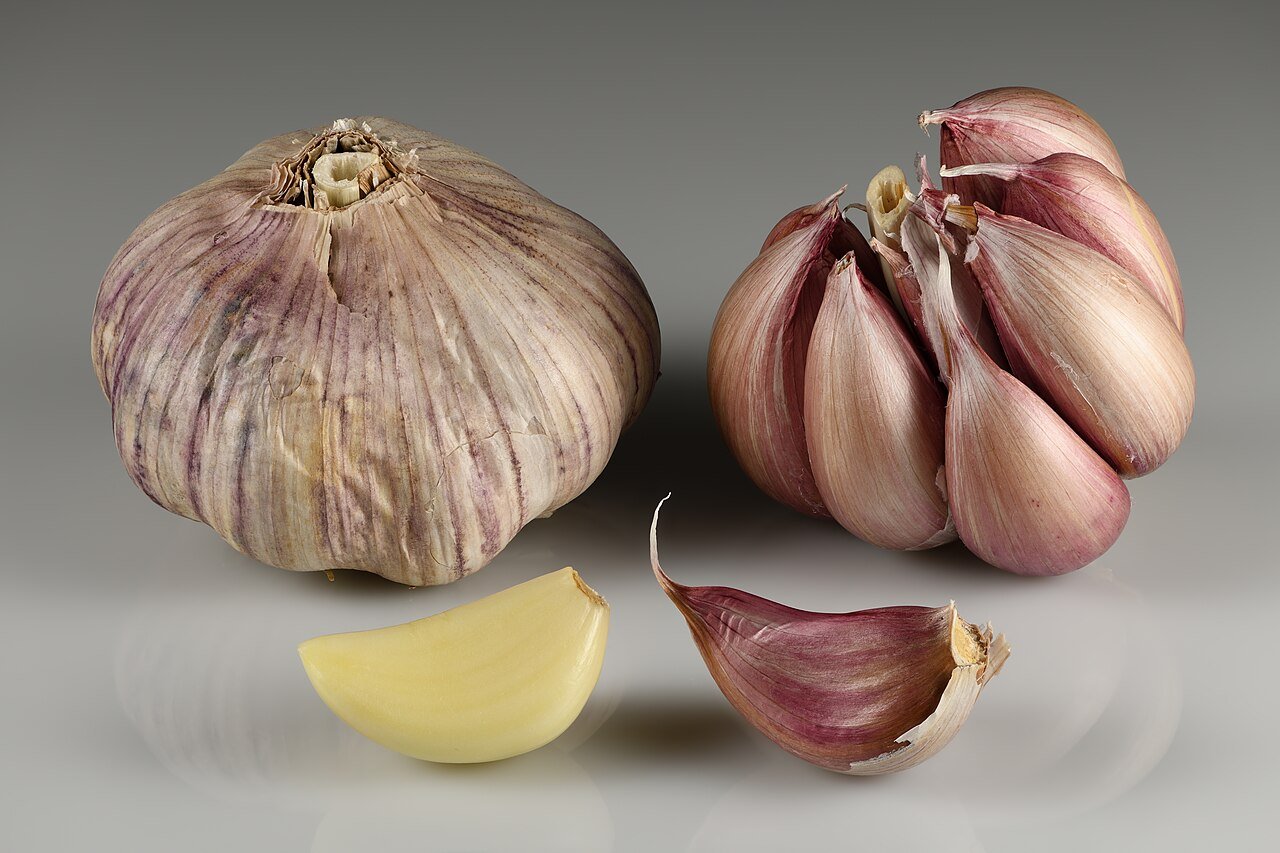
Featured photo: Photo: Matthew Pilachowski / Wikimedia Commons source · CC0 · Resized for web display.


