A grapevine without support is a tangle on the ground. A good trellis gets the fruit into the sun, keeps air moving through the leaves and makes pruning and picking far easier. It is also the part of a vineyard that is most expensive and awkward to fix later, so it pays to build it correctly the first time. This guide covers the main trellis types, how to plan the layout, post and wire specifications from university extension sources, how to build a simple post-and-wire trellis, how to space your vines, how to train them in the first three years and how to keep the structure sound.
Common grape trellis types
| Type | How it works | Best for |
|---|---|---|
| High cordon (one to three wires) | Trunk trained up to a wire, with arms (cordons) along it and shoots hanging down | Simple home plantings and vigorous American varieties |
| Vertical shoot positioning (VSP) | Cordon on a low wire, shoots trained upward between movable catch wires | European-type (vinifera) grapes, tidy canopies, smaller vines |
| Geneva double curtain | Two cordons on a wide crossarm, shoots hang down in two curtains | Very vigorous vines in wide rows |
| Umbrella Kniffen (six-cane) | Canes tied to wires at several heights | Traditional systems for American varieties |
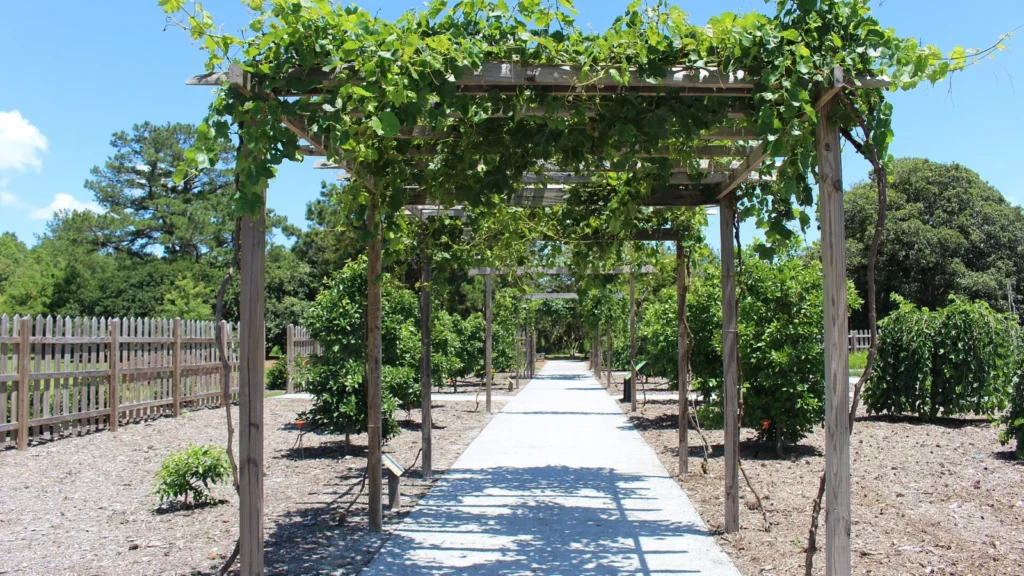
| Arbor or pergola | Vines grown overhead on a frame | Shade and fruit near a patio |
Which system suits your vines?
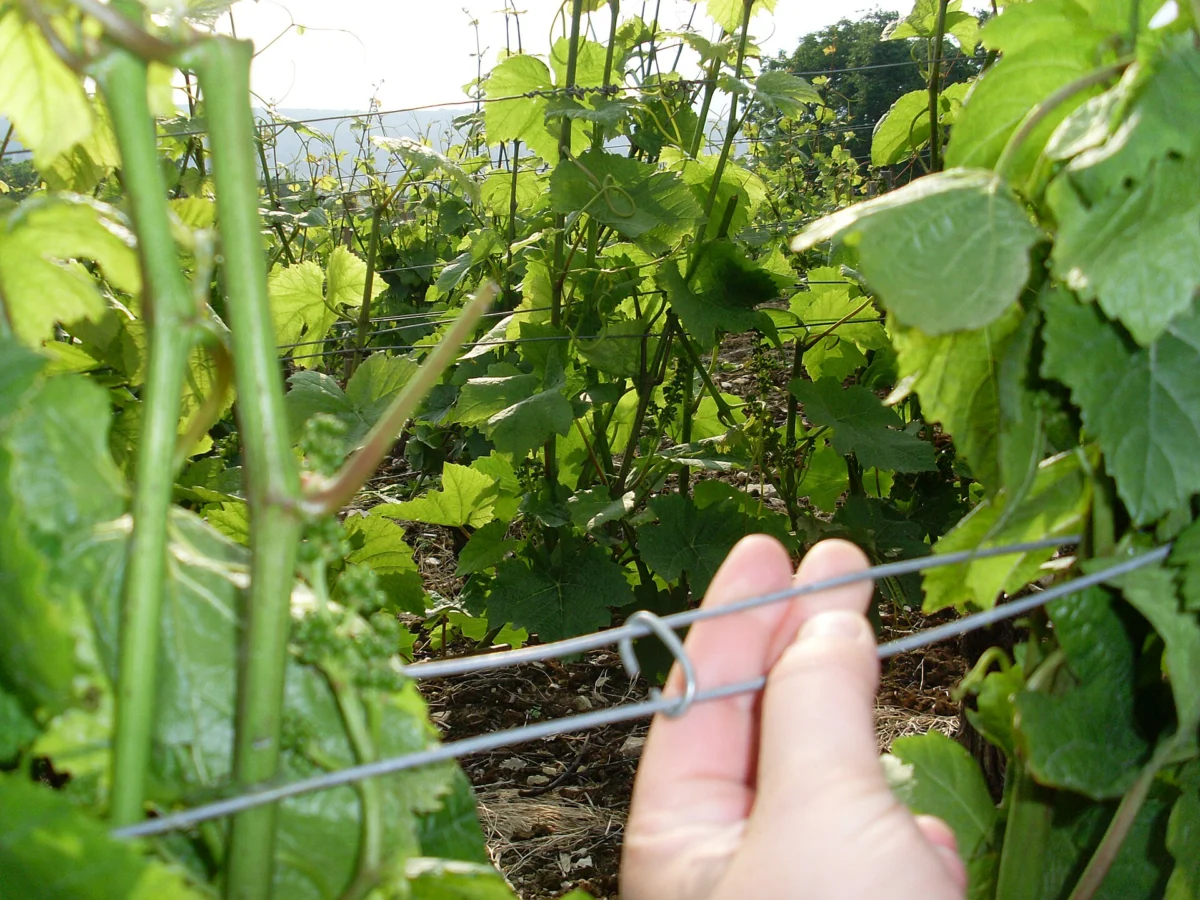
The eXtension grape resource describes the vertical shoot position (VSP) trellis as one using four to six wire levels, with the fruiting (cordon) wire typically about 3 feet off the ground and movable catch wires above it to guide shoots upward. The top wire is usually about 60 to 70 inches high. VSP makes leaf removal, shoot removal and cluster thinning easier, and it improves spray coverage, but it is best suited to vines of small vine size and the natural upright growth of Vitis vinifera. It is harder to manage with high-vigor cultivars or on fertile sites that grow large vines, and vigorous canopies can become dense, so leaf removal matters to reduce disease. In hot, sunny climates, remove leaves only on the morning side to avoid sunburn on the afternoon side.
The University of Wisconsin’s vineyard trellis construction guide gives typical wire counts: one to three wires for high cordon, five to seven wires for VSP (with the catch-wire cordon at 36 to 42 inches and catch wires about 10 inches apart), three or four wires for Geneva double curtain (with a minimum row width of 10 feet), and wires at 2.5, 4 and 6 feet for the umbrella Kniffen system. For most home gardeners with a few vines, a two-wire system or a simple arbor is the easiest to build and manage.
Planning the layout
- Row direction: north-south rows give even sun on both sides in many climates. On a slope, run rows across the slope on a contour or up and down for good drainage.
- Vine spacing: about 6 to 8 feet between vines in the row, and 8 to 10 feet between rows. Vigorous varieties need more room.
- Sun and drainage: grapes need full sun, good air flow and well-drained soil. Avoid low spots where cold air and moisture collect.
- Space for a gate or mower: leave room at row ends for working.
Use the plant spacing calculator and our trellis post and wire calculator to estimate posts and wire for your row length.
Post and wire specifications
The Wisconsin guide gives practical numbers worth using as a baseline:
- Post spacing: 21, 24 or 28 feet is common, and it should not exceed 30 feet. Smaller spacing suits heavy crops.
- Line posts: wood, 3 to 4 inches in diameter and 8 feet long, set about 2 feet deep (3 feet deep in swales).
- End posts: 5 to 6 inches in diameter and about 10 feet long, set 3 to 4 feet deep. They carry the wire tension, so they must be strong.
- Anchoring ends: earth anchors suit rows up to about 600 feet, while longer rows need H-brace or slant-brace end posts.
- Wire: 12.5-gauge high-tensile galvanized steel line wire, tensioned to about 250 pounds using strainers.
- Staples: at least 1.75 inches long, driven at 45 degrees to the grain, with two staples per wire on a post.
- Durable wood: osage orange, black locust and red mulberry resist decay. Treated pine is also widely used where the rules allow it.
Cold weather increases wire tension. Wisconsin notes that a drop from 80°F to −20°F can add around 130 pounds on a 500-foot run of 12.5-gauge wire, so use tension springs, or leave wires slightly slack in summer, so that winter contraction does not pull posts over.
How to build a simple post-and-wire trellis
- Set end posts. Use strong, rot-resistant posts about 10 feet long and 5 to 6 inches across, set 3 to 4 feet deep and braced or anchored, because they carry the wire tension.
- Add line posts. Set intermediate posts about every 15 to 24 feet, or closer for a heavy crop. For a small home trellis, 10 to 15 feet is common.
- Run the wires. Place a fruiting wire at about 3 to 3.5 feet and, for a two-wire system, a second wire at about 5.5 to 6 feet.
- Tension the wire with turnbuckles, strainers or wire vises so it does not sag under the crop. Aim for tight but not harp-string tight.
- Plant the vines beside the posts or between them. Wisconsin suggests driving posts right after planting, narrow end down and between the vines, if you plant first.
- Tie each young vine to a stake until it reaches the wire.
- Check wire tension each spring and tighten as needed.
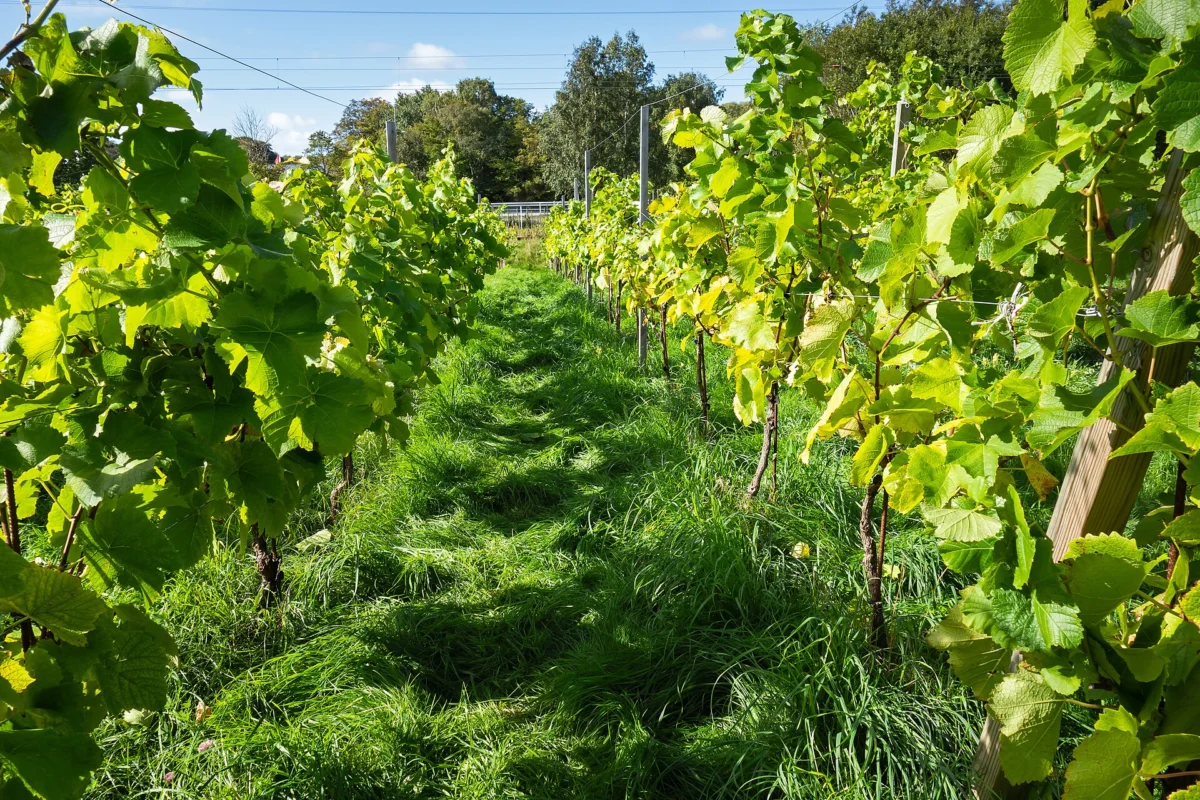
Training and pruning
Grapes fruit on one-year-old canes, so pruning and training go hand in hand.
- Year 1: let one strong shoot grow and tie it upward. Remove other shoots and any flower clusters so the vine builds roots.
- Year 2 winter: cut back and select the trunk, then choose two canes or arms to train along the wire.
- Year 2 summer: tie shoots to wires, remove side shoots low on the trunk and limit the crop.
- Year 3 and after: prune hard each late winter, leaving only a set number of buds on strong, pencil-thick canes, and remove the rest. Most vines are pruned severely, and beginners often prune too lightly.
Training choices differ by variety, so ask your nursery whether your grape is best on a cordon or cane-pruned system.
Larger plantings: what Virginia Tech advises
If you plan more than a handful of vines, it is worth reading Virginia Tech’s new grower vineyard design presentation. It recommends driving posts rather than augering them, setting line posts 2 to 3 feet deep and 6 to 7 feet above ground for non-divided canopies, spacing them 15 to 20 feet apart at one consistent height, and using strong end posts set about 4 feet deep. It describes VSP as the standard system with one fruiting zone, simple and relatively cheap to install but with low to moderate yield potential, and it may need frequent maintenance on high-vigor sites. The divided-canopy Smart-Dyson system can reportedly yield about 50 to 70 percent more than non-divided VSP but needs extra labor. The Geneva double curtain should be used only in high-vigor situations, defined as more than 0.3 pound of cane prunings per foot of canopy, and needs shoot positioning about twice a year. The advice for new vines is to fill the entire trellis by the end of the third growing season, and to train two trunks as insurance against winter damage.
Planting grapevines at the trellis
- Test the soil for pH and organic matter before planting, because both influence vine vigor. Most grapes like a pH of about 5.5 to 6.5 and well-drained soil.
- Plant in early spring, keeping bare-root vines moist until planting and watering them in well.
- Cut vines back to two buds at planting, as Virginia Tech suggests, and keep the graft union (if there is one) above the soil line.
- Tie to a stake or string that leads up to the first wire, and keep weeds back for a couple of feet around each vine.
- Most new vines do not need fertilizer. On low-organic-matter soil a light feeding may help first-year growth. Follow a soil test.
Choosing a system by site and variety
- Small backyard with a few vines: a two-wire high cordon or a simple arbor.
- Cold climate with hybrid or American grapes: cane-pruned or cordon systems that let you lay canes down for winter protection if needed.
- European wine grapes on moderate soil: VSP, with careful leaf removal.
- Vigorous vines on rich soil: Geneva double curtain or another divided canopy, which spreads the shoots and reduces shading.
- Decorative planting by a patio: a pergola, with strong beams and room to walk under.
Pests and diseases that the trellis helps with
A good trellis is also a disease-control tool. Open canopies dry faster after rain, so powdery mildew, downy mildew and black rot are less likely to establish, and sprays or protective covers reach the fruit more easily. See our guides to powdery mildew and downy mildew for symptoms and control. Birds, wasps and Japanese beetles are the usual fruit pests, and netting is easiest to hang on a trellis with a consistent height. See how to get rid of Japanese beetles.
Repairing and upgrading an old trellis
Old trellises are often neglected until a post snaps or a wire breaks. Walk the row in late winter and look for leaning posts, rotten bases, sagging or rusty wire and loose staples. Replace damaged line posts by pulling the broken stub and driving a new post next to the vine, being careful not to injure roots. If end posts have started to lean, add a brace or an earth anchor rather than just retightening the wire. Replace rusty wire before it breaks under a crop. Upgrading from a single wire to a two-wire system can improve air flow and fruit exposure without replacing the whole structure, and it can often be done over a winter with the vines dormant.
Do-it-yourself and cost-saving tips
- Use salvaged cedar or locust posts for line posts where available.
- Buy wire in large spools and tension it with inexpensive strainers.
- Build the trellis before the vines need it, since adding it later damages roots and canes.
- For a few vines, a simple T-shaped or arbor frame is cheaper than a full vineyard trellis. See our garden arches and arbors guide.
- For other climbing fruit, see our blackberry trellis ideas and garden trellis ideas.
Maintenance through the year
- Late winter: prune, check wire tension, replace rotten posts and retie the trunk.
- Spring: tie new shoots as they grow, and thin shoots so the canopy is not crowded.
- Summer: keep shoots in the trellis, remove leaves around clusters for airflow and net against birds.
- Harvest: loosen wires and supports if the crop is heavy, and pick before bad weather.
- Fall: check posts and anchors before winter, and loosen tension in very cold climates if needed.
Common trellis mistakes
- Posts too small or too shallow: end posts lean under the wire tension.
- No end bracing: the first tough winter pulls the row inward.
- Too few wires: shoots flop and shade the fruit.
- Wire too thin or untreated: rusts or stretches. Use galvanized high-tensile wire.
- Training the vine after the fact: start tying shoots upward from the first year.
Safety and legal note: Tensioned wire stores a lot of energy, so wear eye protection and gloves, and release tension slowly. Call before you dig to locate underground utilities, and check local rules on fence height, setbacks and building permits for permanent structures. Rules vary by state and country. Do not use treated lumber in ways that conflict with local regulations, and follow product labels for any sprays.
For more fruit crops, see our guide to growing fruit trees at home.
Free printable: the Year-Round Garden & Preserving Planner
Planting dates for 24 crops, monthly tasks, blanching times, canning safety numbers and a winter storage chart in one 8-page PDF. Enter your email to download it instantly and get our seasonal garden newsletter.
No spam. Unsubscribe any time. We never sell your email.
Frequently asked questions
How tall should a grape trellis be?
Most trellises have a fruiting wire at about 3 to 3.5 feet and a top wire at 5.5 to 6 feet or higher, depending on the system.
How far apart should grape vines be planted?
About 6 to 8 feet between vines in the row, and 8 to 10 feet between rows.
What wire should I use?
12.5-gauge high-tensile galvanized steel wire, tensioned to about 250 pounds.
How deep should the trellis posts be?
Line posts about 2 feet deep, and end posts 3 to 4 feet deep and braced or anchored.
Can I grow grapes on an arbor?
Yes. Choose a strong frame and prune carefully so the canopy stays open.
Reviewed October 2026.