Stink bugs are shield-shaped true bugs, about 1/2 to 5/8 inch long, that pierce fruit, seeds and stems with needle-like mouthparts and suck the juices, leaving cloudy white spots inside tomatoes, dimpled and corky areas on peaches and apples, and shriveled beans, peas and corn kernels. The most widespread garden pest in many areas is the invasive brown marmorated stink bug, which also invades homes in fall; green and brown native stink bugs and the harlequin bug on brassicas are also common. Control stink bugs by handpicking adults and nymphs into soapy water early in the morning, crushing egg clusters on leaf undersides, covering crops with fine netting, removing weeds and trap crops nearby, and encouraging natural enemies. Sprays are rarely needed in home gardens and are often ineffective against adults.
Stink bugs you may find in the garden
| Stink bug | How to recognize it | Main targets |
|---|---|---|
| Brown marmorated stink bug (Halyomorpha halys) | Mottled brown, white bands on antennae and alternating light and dark bands along the abdomen edge | Tomatoes, peppers, beans, corn, apples, peaches, berries; invades homes |
| Green stink bug | Bright green, shield-shaped, about 5/8 inch | Tomatoes, beans, peas, okra, fruit |
| Brown stink bug | Plain tan-brown underside, no white bands on antennae | Tomatoes, beans, corn, soybeans |
| Harlequin bug | Glossy black with bright orange or red patterns | Cabbage, kale, collards, mustard, radish |
| Spined soldier bug (beneficial) | Brown, with sharp shoulder spines | Predator of caterpillars and beetle larvae; do not kill |
What are stink bugs?
Stink bugs belong to the family Pentatomidae and are named for the strong odor they release when disturbed or crushed. The brown marmorated stink bug is native to East Asia and was first found in Pennsylvania in the late 1990s; the Wikipedia article on the brown marmorated stink bug describes its rapid spread across most of the US and into Europe, where it has become a serious pest of fruit and vegetables. The University of Kentucky Entomology guide to brown marmorated stink bug in the home garden notes that it feeds on a very wide range of plants and that damage is often found only when fruit is cut or ripens.
What damage do stink bugs cause?
- Tomatoes: cloudy white or yellow spots just under the skin, with corky, whitish tissue inside; ripe fruit looks blotchy.
- Peppers: discolored, sunken areas and internal rot.
- Beans and peas: shriveled, deformed pods and seeds.
- Sweet corn: shriveled or missing kernels.
- Peaches, apples and pears: dimpled, deformed fruit with brown, corky spots under the skin, sometimes called cat-facing.
- Brassicas (harlequin bugs): white or yellow blotches on leaves, wilting and death of young plants.
- Okra: misshapen, warty pods.
Cloudy spot on tomatoes can be confused with other ripening disorders. Cut a tomato open: stink bug injury shows as small, whitish, spongy areas beneath tiny puncture marks. See common tomato problems for other causes, or use the plant problem identifier.
What is the stink bug life cycle?
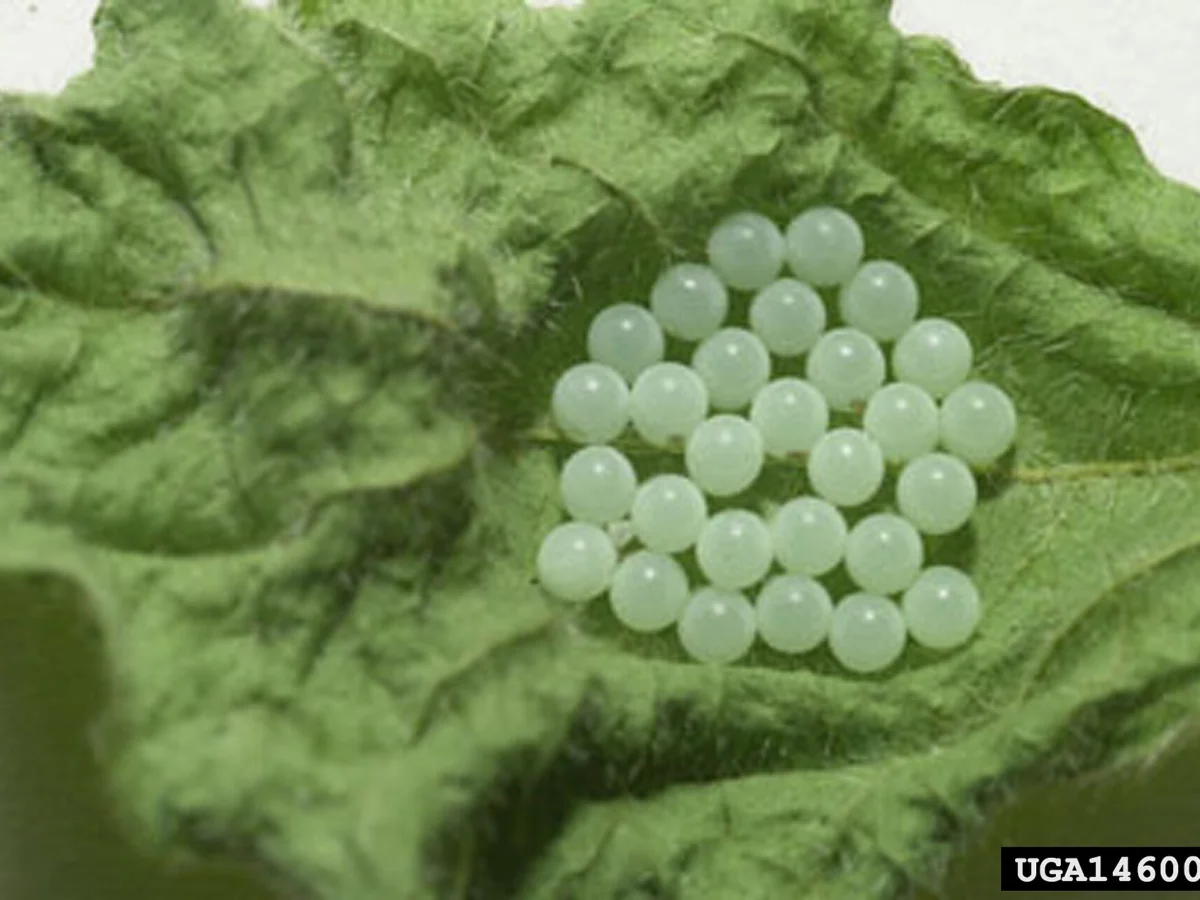
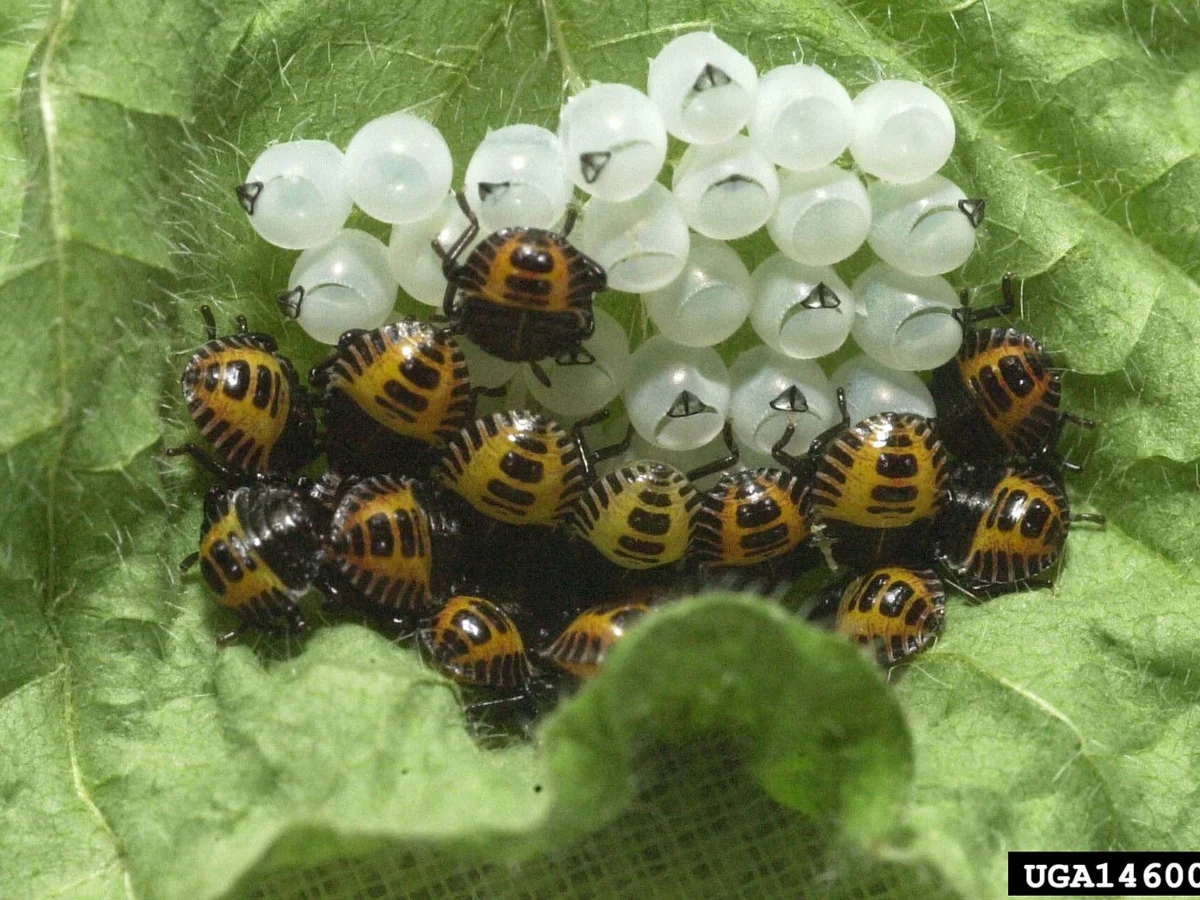
Adult stink bugs spend the winter in sheltered places: leaf litter, hedgerows, woodpiles and, for the brown marmorated stink bug, inside walls and attics of houses. They become active in spring, feed and lay barrel-shaped eggs in neat clusters, often 20 to 30 eggs, on the undersides of leaves. Brown marmorated stink bug eggs are pale green to white; harlequin bug eggs look like tiny black-and-white striped barrels. Nymphs hatch, feed together at first, and develop through five stages over about five to six weeks. There are one to two generations a year in most areas, with numbers peaking in late summer, when fruit and vegetables ripen.
| Season | Stink bug activity | What to do |
|---|---|---|
| Spring | Adults leave shelter; first eggs | Check leaf undersides; remove weed hosts |
| Early summer | Nymph clusters feeding | Crush egg masses; handpick nymphs |
| Late summer | Peak adults on ripening crops | Net crops; handpick daily; harvest promptly |
| Fall | Adults seek winter shelter, enter homes | Seal cracks; clean up debris and weeds |
How do you get rid of stink bugs in the garden?
- Handpick into soapy water. Hold a container of soapy water under the bug and tap it in. Stink bugs tend to drop when disturbed, and they are slow in the cool early morning. Wear gloves if the smell bothers you.
- Crush egg masses. Check the undersides of leaves on tomatoes, beans, okra and brassicas and remove egg clusters.
- Vacuum them. A handheld vacuum is effective on larger plantings; empty the bag into soapy water.
- Cover crops with fine netting during peak periods, especially for brassicas and late-summer tomatoes and peppers. Use the garden netting calculator to size it.
- Use trap crops. Stink bugs are strongly attracted to sunflowers, sorghum, millet and buckwheat, and harlequin bugs to mustard and collards. Plant these at the edge of the garden and destroy the bugs that gather on them.
- Remove weeds such as wild mustard, pigweed and lamb’s quarters that host stink bugs.
- Harvest promptly and pick tomatoes at the breaker stage (when they first show color) to ripen indoors.
Invasive species and label note: The brown marmorated stink bug is an invasive species. In some places new sightings are tracked by agriculture departments; report it if you find it in an area where it is not yet known. If you use any insecticide, choose one labeled for stink bugs on your crop, follow the label and pre-harvest interval, and never spray flowering plants when bees are present.
Which natural enemies attack stink bugs?
| Natural enemy | How it helps |
|---|---|
| Samurai wasp (Trissolcus japonicus) | Tiny parasitoid of brown marmorated stink bug eggs; now spreading naturally in many states |
| Native egg parasitoids | Attack eggs of native stink bugs |
| Tachinid flies (Trichopoda) | Lay eggs on adults; larvae kill them |
| Spiders, assassin bugs, praying mantises | Eat nymphs and adults |
| Birds and chickens | Eat stink bugs readily |
Egg masses with small round exit holes, or that turn dark, are usually parasitized; leave them so the wasps can emerge and continue their work. Avoid broad-spectrum insecticides, which kill these natural enemies.
How do you keep stink bugs out of your house?
The UConn Home and Garden Education Center fact sheet on brown marmorated stink bug recommends sealing entry points before fall as the most effective way to keep them out of homes.
Brown marmorated stink bugs gather on sunny, south- and west-facing walls in September and October, looking for cracks to crawl into for the winter. They do not breed, bite or damage the house, but they are a nuisance and smell when crushed. Seal gaps around windows, doors, siding, utility pipes and attic vents with caulk and weatherstripping before fall, repair screens, and install door sweeps. Vacuum up bugs that get inside, using a bag you can seal and discard, and avoid crushing them indoors. A simple light trap, a pan of soapy water under a desk lamp at night, catches many bugs in a room.
Do sprays work on stink bugs?
Adult stink bugs, especially brown marmorated stink bugs, are hard to kill with most garden insecticides, and they fly in from surrounding areas, so sprays give only brief relief. Insecticidal soap and neem oil kill young nymphs that are thoroughly wetted. Pyrethrin products labeled for stink bugs give short-term knockdown but are toxic to bees and beneficial insects. For most home gardens, handpicking, netting, trap crops and good timing work better. If you use any product, choose one labeled for stink bugs on your crop, apply in the evening and observe the pre-harvest interval.
Are stink bug-damaged vegetables safe to eat?
Yes. Stink bug feeding is cosmetic for the most part: cut away corky or discolored areas on tomatoes, peppers and fruit and use the rest. Damaged spots can allow rot organisms to enter, so use affected produce soon and discard anything that is moldy or rotting.
You can find guides to related pests and diseases in our plant pests and diseases hub.
Free printable: the Year-Round Garden & Preserving Planner
Planting dates for 24 crops, monthly tasks, blanching times, canning safety numbers and a winter storage chart in one 8-page PDF. Enter your email to download it instantly and get our seasonal garden newsletter.
No spam. Unsubscribe any time. We never sell your email.
Stink bug FAQ
What kills stink bugs instantly?
Dropping them into soapy water kills them quickly without crushing them.
Do stink bugs bite?
No, they cannot bite people and are harmless apart from their smell.
Why are stink bugs in my house?
Brown marmorated stink bugs enter homes in fall looking for a place to spend the winter.
What do stink bug eggs look like?
Neat clusters of barrel-shaped eggs on the undersides of leaves, often pale green or white.
Are all stink bugs pests?
No. Spined soldier bugs and other predatory stink bugs eat caterpillars and beetle larvae.
What plants attract stink bugs?
Tomatoes, peppers, beans, corn, okra, fruit trees, sunflowers and brassicas (harlequin bugs).
How do you protect tomatoes and peppers from stink bugs?
Late-summer tomatoes and peppers are prime targets because stink bug numbers peak just as the fruit ripens. Start checking plants weekly in midsummer, paying attention to the undersides of leaves near fruit clusters, where eggs and young nymphs gather. Handpick every morning during peak season, cover a few high-value plants with fine insect netting once fruit sets, and pick tomatoes at the breaker stage, when they first show a blush of color, to finish ripening indoors at room temperature. Ripening indoors does not reduce flavor noticeably and removes the fruit from the plant during its most vulnerable period. A border of sunflowers or sorghum several feet away can draw stink bugs away from your tomatoes, as long as you visit the trap crop daily to destroy the bugs it collects.
How do you control harlequin bugs on brassicas?
Harlequin bugs are a serious pest of cabbage, kale, collards and mustard in the southern half of the US. Their feeding leaves white or yellow blotches and can kill young plants. Plant a trap crop of mustard or turnips a week or two before your main brassicas and destroy the bugs that gather there, cover main crops with netting, and check for the distinctive black-and-white barrel-shaped egg clusters on leaf undersides. Clean up brassica debris after harvest, since adults overwinter in it.
When are stink bugs most active?
Adults leave their winter shelter in mid to late spring, but damage builds through summer and peaks in August and September, when the second generation matures and many crops are ripening. In fall, brown marmorated stink bugs become very noticeable on sunny walls as they look for winter shelter. Plan netting and daily checks for late summer, and seal your house before the fall invasion.
Do stink bug traps work?
Commercial pheromone traps for brown marmorated stink bugs catch many adults, but, as with Japanese beetle traps, they can draw more bugs into the area than they catch, and bugs that do not enter the trap may feed on nearby plants. If you use one, place it at least 15 to 20 feet away from vegetables and fruit trees, at the edge of the property. Simple soapy-water light traps indoors work well for the bugs that get into the house in fall.
Above all, regular inspection and early action on eggs and young nymphs prevent most serious damage in home gardens.
Keep notes on when stink bugs first appear each summer so you can have netting ready in time next year.
Combined with prompt harvesting, that timing alone prevents much of the damage.
Do stink bugs harm pets?
No. Stink bugs are not poisonous, though a dog or cat that eats one may drool or vomit briefly because of the bad taste. They do not bite or sting animals.
Thanks for growing with us.
Good luck protecting your harvest.
Further reading: University of Kentucky Entomology, Brown Marmorated Stink Bug in the Home Garden; UConn Home and Garden Education Center, Brown Marmorated Stink Bug; Wikipedia, Brown marmorated stink bug.
Identifying and managing brown marmorated stink bugs
University of California IPM’s brown marmorated stink bug guide gives identification details: adults are about 5/8 inch (16 mm) long, marbled brown, with two white bands on the antennae. The look-alike consperse stink bug is smaller with no antenna bands, and the rough stink bug has a rough shoulder margin and two-pointed head. Eggs are barrel-shaped, white to pale green, in clusters of 20 to 28, with 212 to 486 eggs per female over her lifetime, and nymphs pass five instars from 2.4 mm to 12 mm. The mid-Atlantic has one or two generations a year.
They feed mainly on fruit and fruiting vegetables such as apple, pear, peach, tomato, pepper and sweet corn, injecting enzymes that cause pockmarks, distortion and hard, pithy flesh under the skin; small spots can simply be cut out. Management in gardens:
- Handpick into soapy water, vacuum with a dedicated handheld vacuum, and destroy egg masses on leaf undersides.
- Traps: pheromone traps are for monitoring, not protection. A 2013 Maryland study found traps placed 1 m from rows drew more bugs and increased damage, so place them well away from crops.
- Row covers block feeding but also pollinators, and are hard to use on large trees.
- Insecticides are of limited help, especially on adults, and new bugs often move in.
- Natural enemies: assassin bugs, earwigs, lacewing larvae and birds feed on them, with egg mortality of 50 to 60 percent in some cases.
Indoors, seal entry points with silicone or foam, repair screens and add door sweeps; they do not bite, eat wood or breed indoors. Our plant problem identifier helps confirm the pest.
Safety and legal note: Stink bugs release an odour when crushed and may irritate sensitive skin, so use gloves when handpicking. Do not spray insecticides on flowering plants when bees are active, and follow label directions on edible crops. Rules on pesticide use vary by country and region.
Reviewed October 2026. Sources: University of California IPM, Brown Marmorated Stink Bug