
To grow an apple tree from seed, collect seeds from a ripe apple, give them 60 to 90 days of cold, moist stratification in the refrigerator, then plant the sprouted seeds about ½ inch deep in pots and move the seedlings outdoors after frost. Expect a seedling apple to take about 7 to 10 years or more to bear fruit, and expect the fruit to be different from the apple you started with, because apple seeds do not grow true to type. Growing from seed is a rewarding experiment and a way to raise rootstocks; for a predictable variety, plant or graft a named tree.
Apple-from-seed timeline
| Step | What to do | Timing |
|---|---|---|
| Collect seeds | Plump, dark brown seeds from ripe apples | Fall |
| Clean and dry briefly | Rinse off pulp; air-dry for a day | Same week |
| Cold stratify | Moist paper towel or peat in a bag in the refrigerator, about 35 to 40°F | 60 to 90 days |
| Plant | Sprouted seeds ½ inch deep in potting mix | Late winter to spring |
| Grow on | Bright light, steady moisture | Spring to summer |
| Plant out | Harden off; plant in full sun | After last frost, or the next spring |
| First fruit | Seedling trees | Usually 7 to 10+ years |
Will an apple tree grown from seed produce the same apples?
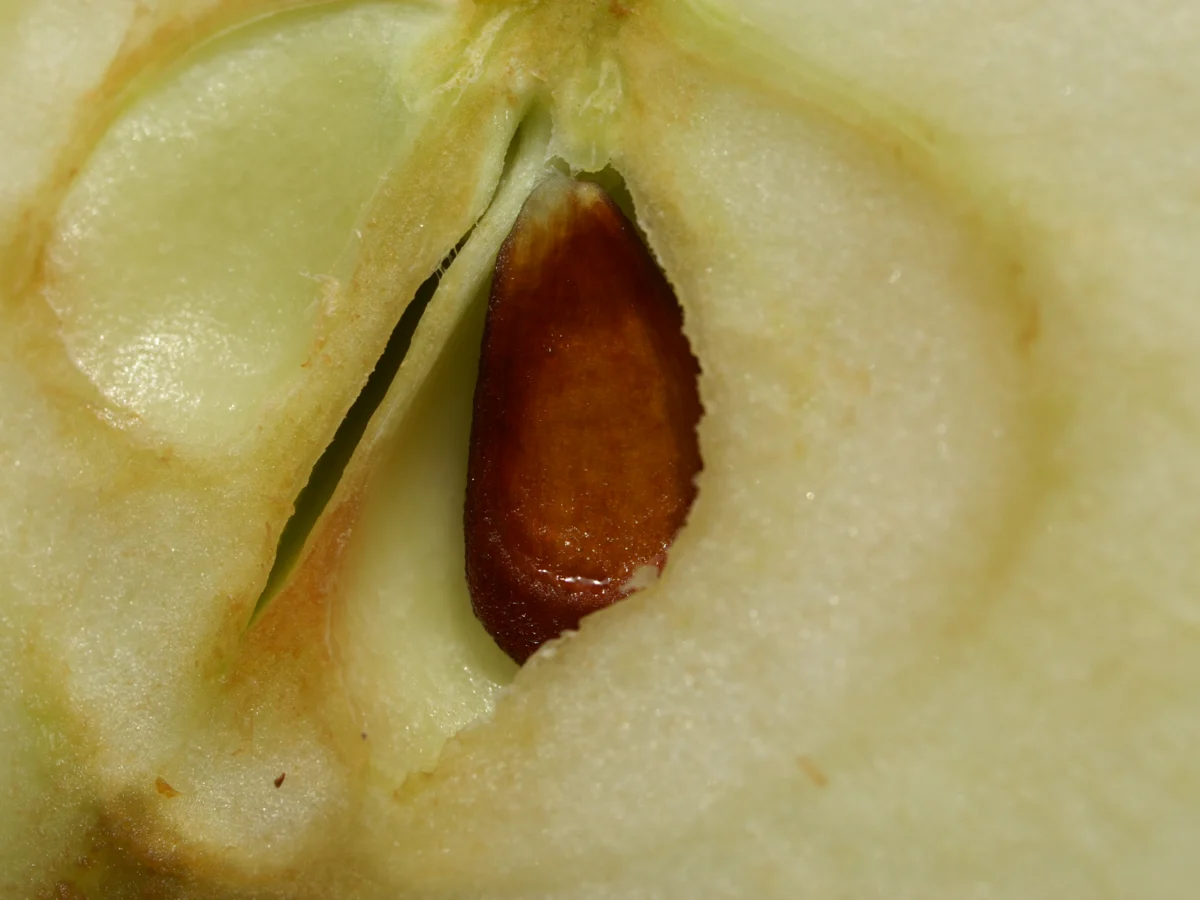
No. Every apple seed is a new genetic combination of its mother tree and whatever tree supplied the pollen, often a different variety or a crabapple. The University of Minnesota Extension apple guide explains that each apple seed produces a genetically different plant, which is why named varieties such as Honeycrisp or Gala are propagated by grafting rather than from seed. A seed from a Honeycrisp apple will not grow into a Honeycrisp tree.
Most seedling apples produce small, sour or bland fruit, often best for cider or wildlife. A few turn out good, and many famous varieties, including McIntosh, Granny Smith, and the heirloom apples of old farms, began as chance seedlings. Growing from seed is a lottery with long odds but a real chance of something new.
How long does an apple tree from seed take to fruit?
Seedling apples usually take about 7 to 10 years or more to flower and fruit, according to the Raintree Nursery guide to apple tree growth, because they grow on their own vigorous roots and go through a long juvenile phase. By comparison, grafted trees on dwarfing rootstock often fruit in 2 to 3 years. See how long an apple tree takes to grow for a full comparison.
Which apple seeds should you use?
- Ripe fruit: Use seeds from fully ripe apples; they should be plump and dark brown. White or pale seeds are immature.
- Local trees: Seeds from apples grown near you, especially from hardy or disease-resistant trees, may produce seedlings better adapted to your climate.
- Store-bought apples: These work, but some have been kept in cold storage for months, which can reduce germination, and their pollen parent is unknown.
- Plenty of seeds: Germination and seedling quality vary, so start with at least 10 to 20 seeds.
How do you stratify apple seeds?
Apple seeds are dormant when they leave the fruit and need a period of cold and moisture, mimicking winter, before they will sprout. This process is called cold stratification.
- Rinse the seeds to remove pulp and let them air-dry for a day.
- Place them in a lightly damp paper towel, or mix them with slightly moist peat moss, sand or vermiculite.
- Seal them in a labeled zip-top bag or small container.
- Refrigerate at about 35 to 40°F (not the freezer) for about 60 to 90 days.
- Check every couple of weeks. Keep the medium damp but not wet, and remove any moldy seeds.
- Plant seeds as soon as they begin to sprout tiny white roots.
Alternatively, plant fresh seeds outdoors in a protected pot or bed in fall and let winter stratify them naturally. Cover the area with wire mesh to stop mice and squirrels from eating the seeds.
How do you plant and germinate apple seeds?
- Fill small pots or deep cells with seed-starting mix or a light potting mix.
- Plant sprouted seeds about ½ inch deep, root down, one per pot.
- Water gently and keep the mix evenly moist.
- Give seedlings bright light: a sunny window or grow light for 14 to 16 hours a day.
- Keep them at normal room temperature, about 60 to 70°F.
Seedlings usually appear within a few weeks. The seed germination rate calculator helps you track how many seeds sprouted, and our guide on when to start seeds indoors covers lighting and timing.
How do you care for apple seedlings?
- Light: Seedlings stretch and weaken in low light; provide strong light from the start.
- Water: Water when the surface begins to dry; avoid soggy mix, which causes damping off.
- Feeding: Once seedlings have several true leaves, feed lightly every few weeks with a diluted balanced fertilizer.
- Pot up: Move them to larger, deeper pots as roots fill the container.
- Harden off: Before moving outdoors, acclimate seedlings to sun and wind over one to two weeks; the hardening-off schedule calculator creates a plan.
When and where should you plant an apple seedling outdoors?
Plant seedlings outdoors after your last spring frost, or grow them in pots for a year and plant them the following spring. Choose full sun with at least 6 to 8 hours of light and well-drained soil. Seedling apples grow into full-size trees, often 20 feet or more, so give them plenty of space, about 20 to 25 feet from other trees. Use the planting hole size calculator and protect young trees from rabbits, deer and mowers with a wire cage and trunk guard. Check your frost dates with the frost date tool.
Can you make a seedling apple fruit sooner?
A little. Seedlings fruit faster when they grow strongly in full sun with steady water and nutrients, because they reach a mature size sooner. Training branches toward horizontal, and avoiding heavy pruning once the tree is established, encourage flower buds. The fastest route, though, is grafting: take a cutting (scion) from your seedling and graft it onto a dwarfing rootstock, or graft a named variety onto your seedling. Our guide to grafting apple trees explains how.
What can you do with a seedling apple tree?
- Grow it out: Wait and see what fruit it produces; you might discover a great new apple.
- Use it as a rootstock: Graft one or more named varieties onto it after a year or two, producing a vigorous, full-size tree.
- Cider and wildlife: Even mediocre seedling apples are useful for cider, cooking or feeding birds and deer.
- Teaching and fun: A great project for children and anyone curious about plant genetics.
Are apple seeds poisonous?
Apple seeds contain amygdalin, a compound that can release small amounts of cyanide when the seeds are crushed or chewed. Swallowing a few whole seeds accidentally is not harmful, because they pass through intact, but do not grind or eat large quantities of seeds, and keep seed collections away from young children and pets.
Common problems growing apple trees from seed
| Problem | Cause | Fix |
|---|---|---|
| Seeds never sprout | Not stratified long enough, immature or old seeds | Stratify 60 to 90 days; use plump brown seeds |
| Moldy seeds in the fridge | Too wet, leftover pulp | Clean seeds well; use barely damp medium |
| Seedlings collapse at the base | Damping-off fungi | Use clean mix; avoid overwatering; improve air flow |
| Tall, weak seedlings | Too little light | Use a grow light close to the seedlings |
| Leaf spots on young trees | Apple scab or other diseases | Good air flow; rake fallen leaves |
Which apple varieties grow best from seed?
No variety guarantees good seedlings, but seeds from hardy, disease-resistant parents give your seedlings a better start. Seeds of crabapples and very hardy varieties produce tough seedlings that are excellent rootstocks in cold regions. Seeds from popular modern varieties such as Honeycrisp, which is itself a cross of older varieties, often produce interesting fruit, but expect plenty of variation. Apple breeders grow thousands of seedlings to find a single variety worth naming, so plant as many seeds as you have room for and keep the best.
How do you choose which seedlings to keep?
After the first season, keep the most vigorous, healthy seedlings with clean leaves and a straight stem, and discard weak, spindly or diseased ones. Seedlings that show leaf spots or mildew early are likely to be disease-prone as trees. If you only have room for one or two trees, plant out the strongest and keep a few in pots as spares or future rootstocks. Label each seedling with the parent apple and the date, so you can track which apples produced the best trees.
Apple from seed vs grafted tree
| Trait | Seedling | Grafted nursery tree |
|---|---|---|
| Fruit | Unknown, usually inferior | Same as the named variety |
| Time to fruit | About 7 to 10+ years | About 2 to 8 years depending on rootstock |
| Size | Full size, 20+ feet | Controlled by rootstock |
| Cost | Nearly free | Higher |
| Roots | Deep, vigorous, long-lived | Varies with rootstock |
| Best for | Experiments, rootstock, cider, wildlife | Reliable home harvest |
Can you grow an apple tree from seed in a pot?
For the first year or two, yes. Start seedlings in deep pots, at least 6 inches deep at first, then move them to 3 to 5 gallon containers as they grow. Because seedling apples become full-size trees, they eventually need to be planted in the ground. If you want a permanent potted apple, graft a named variety onto a dwarfing rootstock instead; see dwarf apple trees.
Month-by-month plan for growing apples from seed
| Time | Task |
|---|---|
| September to October | Collect seeds from ripe apples; clean and dry |
| October to December | Start cold stratification in the refrigerator |
| January to March | Plant sprouting seeds in pots under lights |
| April to May | Pot up; harden off; move outdoors after last frost |
| Summer | Water and feed lightly; protect from pests |
| Next spring | Plant out in the ground or graft |
Can you grow an apple tree from a cutting instead?
Apple cuttings are difficult to root, so propagation by cuttings is uncommon for home growers. The standard way to reproduce a particular apple is grafting a cutting, called a scion, onto a rootstock. Some very vigorous rootstock types root from hardwood cuttings or layering, which is how many nurseries produce them. If you love a particular tree, take dormant scion wood in late winter and graft it; the resulting tree will be identical to the parent, unlike a seedling.
Above all, enjoy the process. Watching an apple seed grow into a tree is a slow but rewarding project, and every seedling is genuinely one of a kind.
Keep notes as you go; they turn a one-time experiment into knowledge you can build on.
Growing an apple from seed is a long project, but every named apple variety in the world began as a single seedling, so your tree could turn out to be something special.
You’ll find related varieties, pruning calendars and pest guides in the fruit tree hub.
What happens when you plant an apple seed
Iowa State Extension’s answer to can I grow an apple tree from a seed? is blunt: usually not true to type. Seedlings differ genetically from the parent and are typically inferior, so a Red Delicious seed will not grow a Red Delicious tree, and a seedling tree is likely to bear disappointing-tasting apples. Seeds need about 90 to 120 days of cold, moist conditions at 37 to 41°F (3 to 5°C), such as in the refrigerator in moist sand, though fall planting outdoors is an alternative. Most apple trees are propagated by grafting, which produces genetically identical trees, so grafting is the reliable route to a known variety.
That makes a seed-grown tree a fun experiment rather than an orchard plan. If you want apples you can predict, buy a grafted tree on a suitable rootstock, or learn grafting yourself; our grafting guide covers the main methods. Use our tree planting hole size calculator when you plant out.
Safety and legal note: Apple seeds contain small amounts of compounds that release cyanide when crushed, so do not eat them in quantity, and keep seedlings away from pets. Check local rules on moving grafting material between regions. Rules vary by country and region.
Free printable: the Year-Round Garden & Preserving Planner
Planting dates for 24 crops, monthly tasks, blanching times, canning safety numbers and a winter storage chart in one 8-page PDF. Enter your email to download it instantly and get our seasonal garden newsletter.
No spam. Unsubscribe any time. We never sell your email.
Frequently asked questions
Can you grow an apple tree from a store-bought apple?
Yes, after cold stratification, but the tree will not produce the same kind of apple.
How long do apple seeds need to be in the fridge?
About 60 to 90 days at roughly 35 to 40°F in a moist medium.
How long does it take an apple seed to sprout?
Usually during or soon after stratification, then a few weeks after planting.
How long until an apple tree from seed bears fruit?
Usually 7 to 10 years or more.
Will a seedling apple tree be big?
Yes. Seedlings grow on their own roots into full-size trees, often 20 feet or more.
Do you need two apple trees for fruit?
Usually yes. Most apples need another variety or a crabapple nearby for pollination.
Reviewed October 2026. Sources: University of Minnesota Extension, Growing Apples; Raintree Nursery, How Long Does It Take for an Apple Tree to Grow?
Additional sources: Iowa State University Extension, Can I grow an apple tree from a seed?
