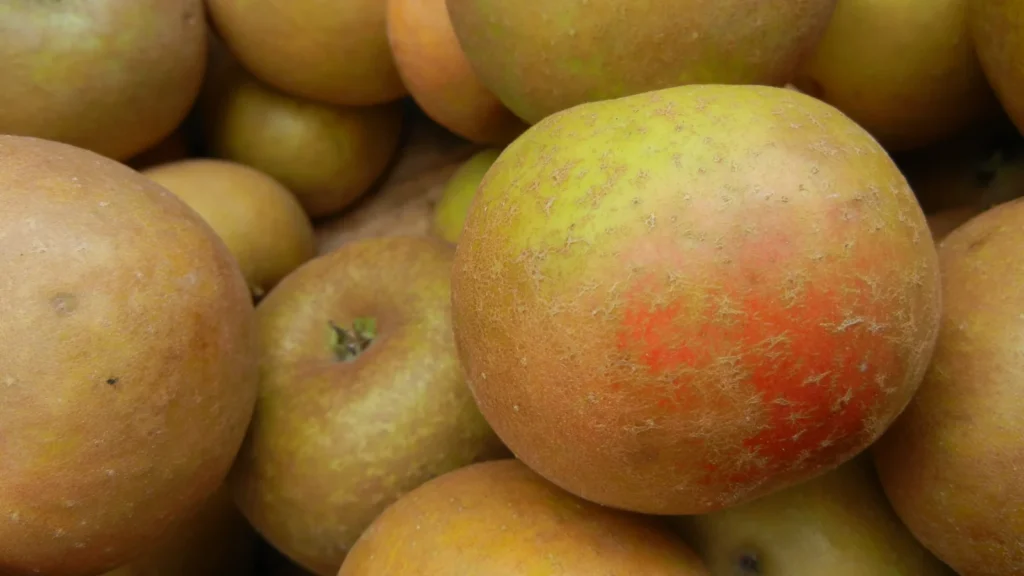
Heirloom apples are old apple varieties, generally introduced before about 1950 and often dating back to the 1700s and 1800s, that have been preserved by home orchardists, historic farms and collectors rather than modern commercial growers. Classic examples include Roxbury Russet, Esopus Spitzenburg, Newtown Pippin, Northern Spy, Baldwin, Gravenstein, Ashmead’s Kernel, Arkansas Black, Wolf River and Cox’s Orange Pippin. They offer an enormous range of flavors, textures and uses, from cider and baking to long winter storage, but many are more disease-prone, less productive or more variable than modern varieties.
Heirloom apple quick guide
| Variety | Origin | Flavor and texture | Best use |
|---|---|---|---|
| Roxbury Russet | Massachusetts, 1600s | Russeted skin; sweet-tart, dense | Cider, storage, fresh |
| Esopus Spitzenburg | New York, 1700s | Spicy, rich, crisp | Fresh, baking |
| Newtown Pippin (Albemarle Pippin) | New York, 1700s | Green-yellow, tart, aromatic; sweetens in storage | Fresh, pies, cider, storage |
| Northern Spy | New York, about 1800 | Tart, juicy, crisp | Pies, storage |
| Baldwin | Massachusetts, 1700s | Sweet-tart, firm | Fresh, cider, storage |
| Gravenstein | Denmark/Germany, 1600s | Tart, aromatic, juicy | Sauce, pies, early fresh eating |
| Ashmead’s Kernel | England, about 1700 | Russeted; intense, nutty, pear-drop | Fresh, cider |
| Arkansas Black | Arkansas, 1800s | Very dark red; hard at harvest, mellows in storage | Storage, baking |
| Wolf River | Wisconsin, about 1875 | Huge, soft, mild | Baking, apple butter |
| Cox’s Orange Pippin | England, 1830s | Complex, aromatic, sweet-tart | Fresh |
| Grimes Golden | West Virginia, about 1800 | Spicy, sweet; parent of Golden Delicious | Fresh, cider |
| Yellow Transparent | Russia, 1800s | Pale, tart, soft; very early | Sauce |
What makes an apple an heirloom?
There is no official definition. Most growers use “heirloom” or “heritage” for varieties that were introduced before about 1950, before modern breeding programs and the rise of a few dominant supermarket varieties. Many were chance seedlings found on farms and named after the farmer, town or region where they appeared. In the 1800s, North American nurseries sold thousands of apple varieties, each suited to particular uses and regions; today a handful dominate stores, and many old varieties survive only in home orchards and collections.
The Montana State University heritage apple identification guide is one of several projects documenting old varieties still growing in historic orchards, and the University of Georgia has planted a heritage orchard to preserve Southern varieties, as described in its research news on the UGA heritage apple orchard.

Why grow heirloom apples?
- Flavor diversity: Heirlooms span nutty russets, spicy dessert apples, intensely tart pie apples and bittersweet cider apples rarely found in stores.
- Specific uses: Many were selected for cider, drying, baking or storing through winter rather than for shipping and looks.
- Long storage: Winter keepers such as Newtown Pippin, Arkansas Black and Roxbury Russet improve in flavor for months after harvest.
- Regional adaptation: Old Southern apples tolerate heat and humidity; northern heirlooms such as Wolf River and Yellow Transparent survive severe cold.
- History and conservation: Growing them keeps genetic diversity and food history alive.
What are the drawbacks of heirloom apples?
- Disease: Many are susceptible to apple scab, cedar-apple rust or fire blight, so they may need more care in humid climates.
- Biennial bearing: Varieties such as Baldwin and Northern Spy tend to crop heavily one year and lightly the next.
- Slow bearing: Northern Spy is famous for taking many years to fruit on standard rootstock.
- Looks: Russeted, irregular or small fruit that would not sell in a supermarket.
- Pollination quirks: Some, such as Gravenstein, Baldwin and Mutsu-type triploids, produce poor pollen and cannot pollinize other apples, as the Washington State University tree fruit guide notes.
Which heirloom apples are best for different uses?
| Use | Good heirloom choices |
|---|---|
| Fresh eating | Esopus Spitzenburg, Cox’s Orange Pippin, Ashmead’s Kernel, Grimes Golden |
| Pies and baking | Northern Spy, Newtown Pippin, Wolf River, Rhode Island Greening |
| Applesauce | Gravenstein, Yellow Transparent, Duchess of Oldenburg |
| Cider | Roxbury Russet, Golden Russet, Hewe’s Virginia Crab, Ashmead’s Kernel |
| Winter storage | Arkansas Black, Newtown Pippin, Roxbury Russet, Baldwin |
| Very cold climates | Wolf River, Yellow Transparent, Duchess of Oldenburg |
| Hot, humid South | Arkansas Black, Black Twig, Grimes Golden and other Southern heirlooms |
Which heirloom apples resist disease?
Some old varieties have useful natural resistance. Wolf River resists scab, mildew and cedar rust; Golden Russet and Roxbury Russet are moderately scab-resistant; and many Southern heirlooms tolerate heat and humidity. Resistance varies by region, so ask your extension office or a local heritage orchard which old varieties perform well near you. If disease pressure is high, consider planting a modern disease-resistant variety such as the Liberty apple alongside your heirlooms.
How do you grow heirloom apple trees?
- Buy grafted trees. Heirlooms do not come true from seed; specialty nurseries graft them onto rootstocks. Choose a rootstock that suits your space, from dwarf to standard; see dwarf apple trees.
- Plan pollination. Plant at least two compatible varieties that bloom at the same time, or plant near a crabapple. Avoid relying on triploid varieties as pollinizers.
- Plant in early spring in full sun and well-drained soil; see when to plant apple trees and use the planting hole size calculator.
- Prune every winter to an open, well-lit framework; see when to prune apple trees.
- Thin fruit to one per cluster to improve size and reduce biennial bearing.
- Manage disease with good sanitation, raking leaves and pruning for air flow.
How do you find heirloom apple trees?
Specialty mail-order nurseries offer hundreds of heirloom varieties, often grafted to order. Many regions also have scion exchanges, where home growers trade cuttings each winter, and heritage orchards or historical societies that sell or share wood from old local trees. If you have an old tree on your property, you can preserve it by grafting scion wood onto new rootstock; our guide to grafting apple trees explains how. Identifying an unknown old apple usually requires comparing fruit, leaves and ripening time with regional guides like Montana State’s or asking a heritage apple expert.
How do you store heirloom apples?
Late-ripening heirlooms are often the best keepers. Pick them mature but firm, handle gently and store them unwashed in a cold, humid place, ideally just above freezing. Many winter keepers improve in flavor after a month or two in storage. Early varieties such as Yellow Transparent and Gravenstein keep only days to weeks, so use them for sauce and pies. See how to store apples for details.
Profiles of classic heirloom apples
Roxbury Russet
Often cited as the oldest named American apple, Roxbury Russet arose in Roxbury, Massachusetts, in the 1600s. Its greenish skin is covered with rough, golden-brown russet, and its dense, sweet-tart flesh makes outstanding cider. It is a long keeper, mellowing through winter, and has moderate scab resistance.
Esopus Spitzenburg
Found near Esopus in New York’s Hudson Valley in the 1700s, Spitzenburg is famous as a favorite of Thomas Jefferson, who planted it at Monticello. It has red skin, crisp, yellowish flesh and a rich, spicy flavor that improves after a few weeks of storage. It is susceptible to several diseases and best in good growing sites.
Newtown Pippin
Also known as Albemarle Pippin in Virginia, Newtown Pippin originated in Queens, New York, in the early 1700s and was exported to England, where Queen Victoria reportedly favored it. Its green-yellow fruit is tart at harvest and becomes sweet and aromatic after months in storage, making it a classic winter apple for pies, cider and eating.
Northern Spy
Originating in New York around 1800, Northern Spy is a large, juicy, tart apple with thin skin, widely regarded as one of the best pie apples. The tree is late to bloom, which helps it escape frost, but it is notoriously slow to bear on vigorous rootstocks. Northern Spy is also a parent of the Malling-Merton rootstocks, chosen for its resistance to woolly apple aphid.
Arkansas Black
A Southern heirloom from Arkansas in the 1800s, its skin turns such a deep red that it looks almost black. The fruit is very hard at harvest and needs a month or more in storage to develop its sweet, aromatic flavor. It keeps for months and is well adapted to hot summers.
Cox’s Orange Pippin
Raised in England in the 1830s, Cox is often called one of the finest-flavored dessert apples, with complex notes of pear, mango and spice. It needs a cool, moist climate and good care, as it is prone to scab and canker, but it is a parent of many modern varieties.
How did heirloom apples come about?
Apples arrived in North America with European settlers, who planted seeds as well as grafted trees. Because apple seeds do not grow true, millions of seedling trees on farms produced a huge range of new apples, mostly fit only for cider. The best chance seedlings were named and propagated by grafting, giving rise to many of today’s heirlooms. Planters such as John Chapman, better known as Johnny Appleseed, spread seedling nurseries across the Ohio Valley in the early 1800s. By the late 1800s, American nursery catalogs listed thousands of named apple varieties, many of them regional favorites selected for local conditions.
Which heirloom apples are best for hard cider?
Cider makers prize old varieties for their high sugar, sharp acidity and tannins, which modern dessert apples often lack. Classic American heirloom cider apples include Roxbury Russet, Golden Russet, Baldwin, Harrison and Hewe’s Virginia Crab, while English cider varieties such as Kingston Black and Dabinett bring bittersweet tannins. A blend of sweet, sharp and bittersweet apples gives the most balanced cider; see our guide to hard apple cider for how to make it at home.
How do you identify an old apple tree?
Identifying an unknown heirloom takes patience. Note the ripening date, then collect several typical fruits and record their size, shape, skin color and pattern, russeting, stem length, the shape of the eye (calyx) end, flesh color, texture and flavor. Compare these with regional identification guides and catalogs, and contact local heritage orchards, apple societies or your extension office; many hold apple identification days in fall. Old farm trees are often seedlings with no name at all, so a match is not guaranteed, but a good unnamed apple is still worth preserving by grafting.
Are heirloom apples organic?
Not automatically. Heirloom describes the age of a variety, while organic describes how the fruit was grown. Some heirlooms with natural disease resistance are easier to grow organically, but many need careful sanitation, pruning and sometimes approved sprays to produce clean fruit in humid climates.
How long do heirloom apple trees live?
On standard seedling rootstock, many heirloom apple trees live and bear for 50 to 100 years or more, and some old farm trees are well over a century old. Trees grafted onto dwarfing rootstocks have much shorter lives, typically 15 to 25 years. If you want a long-lived heirloom tree to pass on, choose a semi-dwarf or standard rootstock and give it plenty of room.
Whether you plant one heirloom or a whole collection, label each tree permanently with its variety name and keep a record of where it came from. Old varieties are easily confused, and good records help future growers keep them alive.
For a modern contrast to these old varieties, read about the Kanzi apple, a crisp, sweet-tart club variety.
For other trees and berries to grow alongside this one, see the home fruit tree guide.
Free printable: the Year-Round Garden & Preserving Planner
Planting dates for 24 crops, monthly tasks, blanching times, canning safety numbers and a winter storage chart in one 8-page PDF. Enter your email to download it instantly and get our seasonal garden newsletter.
No spam. Unsubscribe any time. We never sell your email.
Frequently asked questions
What is the oldest American apple variety?
Roxbury Russet, from Roxbury, Massachusetts, dating to the 1600s, is usually cited as the oldest named American apple.
Are heirloom apples better than modern apples?
They offer more flavor variety and special uses, but modern varieties are usually more productive and disease-resistant.
Can you grow heirloom apples from seed?
No. Apple seeds do not come true; heirloom varieties must be grafted.
What are the best heirloom apples for pies?
Northern Spy, Newtown Pippin, Rhode Island Greening and Wolf River are classic choices.
Which heirloom apples store the longest?
Arkansas Black, Newtown Pippin, Roxbury Russet and Baldwin are among the best keepers.
Where can I buy heirloom apple trees?
From specialty fruit nurseries, scion exchanges and heritage orchards.
Last reviewed October 2026. Key references: Montana State University, Heritage Fruit Identification Guide; University of Georgia, UGA Heritage Apple Orchard; Washington State University Tree Fruit, Pollination.