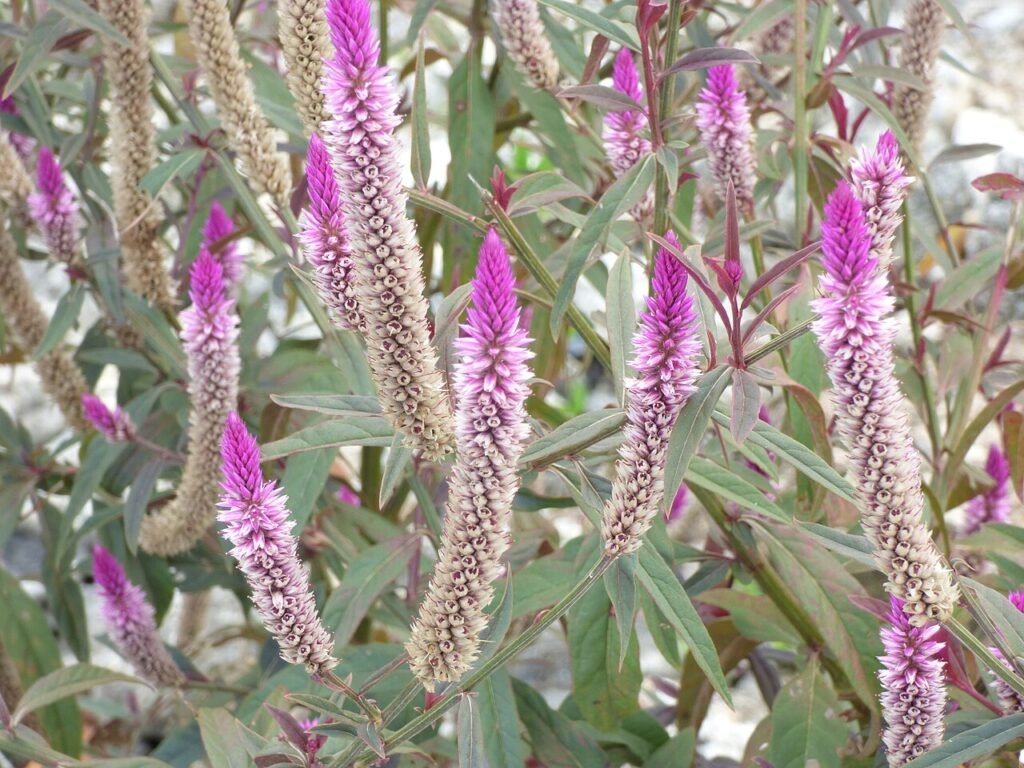
Celosia is a warm-season flower in the amaranth family, grown for plumes, wheat-like spikes or brain-like crests of long-lasting color. University of Minnesota Extension describes three types: plumed (8 to 24 inches tall), wheat (12 to 36 inches) and cockscomb (12 to 36 inches, with heavy crested blooms that often need staking). NC State Extension lists it as hardy only in zones 10 to 11, so in most gardens it is grown as an annual.
Celosia (Cockscomb) at a glance
| Type | Flower |
|---|---|
| Season | Warm-season |
| Sun | Full sun |
| Plant spacing | 10 in |
| Row spacing | 10 in |
| Per square foot | 1 |
| Seed depth | ¼ in |
| Days to maturity | Sow indoors ~10 weeks before planting out; germinates in 7–10 days |
| How to start | Start celosia seed indoors about 10 weeks before planting out, set plants in full sun once the soil is above 55°F, space them 8–12 inches apart and water only when the top 1–2 inches are dry |
| Water | 1 in per week |
These are the same numbers our plant spacing, square foot and harvest date calculators use. See every crop in the plant database.
When to plant celosia
Sow seed indoors about 10 weeks before your outdoor planting date, and plant outdoors only once the soil is above 55°F (Minnesota). Because celosia wants real warmth, wait until well after your last frost; the planting calendar shows your window. Seed germinates in 7 to 10 days at 75 to 80°F.
How to plant celosia
- Sowing: use seed-starting mix, plant seed 1/4 inch deep and cover with vermiculite. Cover the tray with plastic to hold moisture until seeds sprout.
- Seedling care: after germination grow at 70 to 75°F days and 65 to 70°F nights. Let the mix dry slightly between waterings, because seedlings are very susceptible to damping off.
- Spacing: 8 to 12 inches apart depending on the cultivar. See the plant spacing calculator.
- Site: full sun (8 or more hours), a very warm spot, and well-drained soil at pH 6 to 6.5 with plenty of organic matter. Minnesota says containers usually produce stunted plants.
Caring for celosia
Water regularly but avoid overwatering: water only when the top 1 to 2 inches of soil are dry. Celosia tolerates dry soil better than waterlogged soil. Use the garden watering calculator.
Work in a balanced general-purpose fertilizer at planting, then feed monthly with a formula higher in phosphorus than nitrogen to encourage blooms. Stake tall cockscomb types and remove spent blooms to promote new flowers (Minnesota). Plants are usually trouble-free; NC State lists mites, leaf spots and stem rot as occasional problems, with wet soil and cold weather as the main causes. It often reseeds, so deadhead if you do not want volunteers.
Companion plants
| Grow nearby | Other warm-season annuals that like full sun and well-drained soil, such as zinnia, marigold and sunflower |
|---|---|
| Keep apart | Wet, heavy clay soil and cold, damp weather |
Celosia attracts bees and butterflies and is listed as deer resistant (NC State). Check other pairings with the companion plant finder.
Common problems
| Problem | What you see | What to do |
|---|---|---|
| Seedlings collapse | Stems pinch off at the soil line | This is damping off; let the seed-starting mix dry slightly between waterings and keep seedlings warm. |
| Stunted plants | Plants stay small and weak | Minnesota notes containers usually produce stunted plants; grow in garden beds in full sun and warm, well-drained soil. |
| Stem rot or leaf spots | Dark, soft stems or spotted leaves | Wet soil is the main trigger; water only when the top 1–2 inches are dry. See the overwatering checker. |
Not sure what you are looking at? The plant problem identifier ranks likely causes from the symptoms you see.
When and how to harvest
Celosia is excellent for cut flowers: change the vase water every 2 days for fresh arrangements. To dry, hang the flowers upside down for 2 weeks (Minnesota). Young leaves are edible with a spinach-like taste but turn bitter after flowering; wheat types have seed heads that are considered a pseudo-cereal (NC State).
Plan your celosia
- Plant spacing calculator: how many plants fit your bed
- Planting calendar: sowing and transplant dates for your frost dates
- Frost dates by ZIP code: your last spring and first fall frost
- Harvest date calculator: when your crop will be ready
Frequently asked questions
How far apart should I plant celosias?
Space celosias 10 inches apart in rows 10 inches apart. In a square foot garden, plant 1 per square foot.
How deep do I plant celosia seed?
About 1/4 inch deep, covered with vermiculite.
How long do celosias take to grow?
Seed germinates in 7 to 10 days at 75-80°F; sow indoors about 10 weeks before the outdoor planting date.
How much water do celosias need?
About 1 inch of water a week, from rain and watering combined. Water only when the top 1-2 inches of soil are dry.
How deep do I plant celosia seed?
About 1/4 inch deep, covered with vermiculite, at 75 to 80°F for germination in 7 to 10 days.
How far apart should celosia be planted?
8 to 12 inches apart, depending on the cultivar.
How do I dry celosia?
Hang the flowers upside down for about 2 weeks.