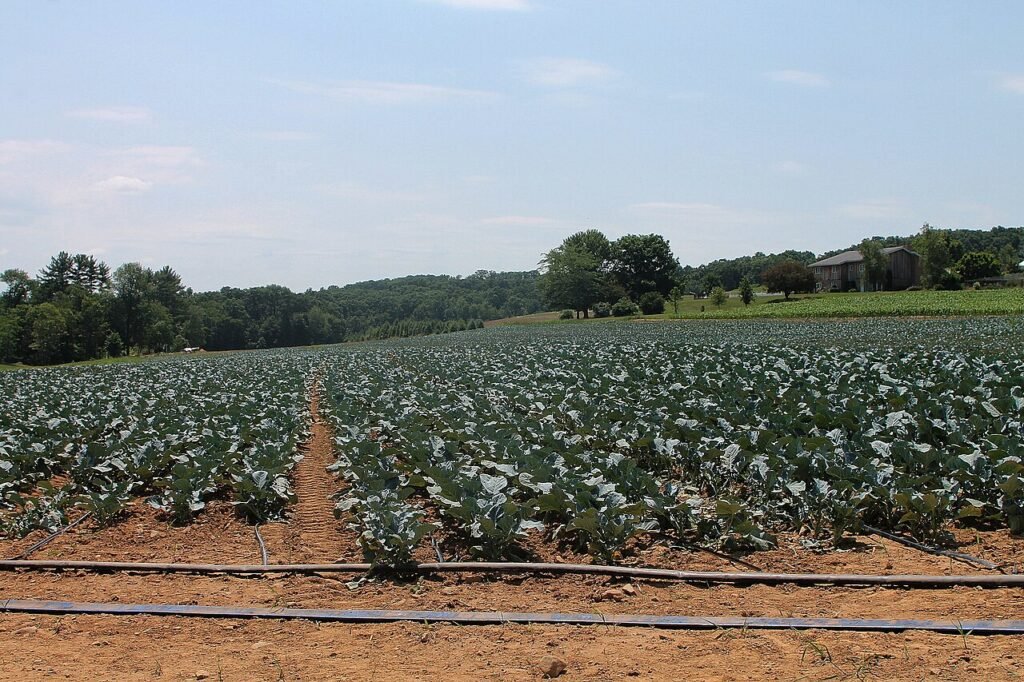
Collard greens are a Southern classic and one of the toughest members of the cabbage family. They handle both summer heat and hard frost better than most greens, and a few plants keep producing big, sturdy leaves for months. Like kale, they taste sweeter after frost. This page covers when to plant, how to space them, how to keep pests off and how to harvest so they keep growing.
Collards at a glance
| Type | Vegetable |
|---|---|
| Season | Cool-season |
| Sun | Full sun to part shade |
| Plant spacing | 18 in |
| Row spacing | 30 in |
| Per square foot | 1 |
| Seed depth | ½ in |
| Days to maturity | 60–80 from seed |
| How to start | Direct sow or transplant 4 weeks before last frost; again in late summer for fall |
| Water | 1.5 in per week |
These are the same numbers our plant spacing, square foot and harvest date calculators use. See every crop in the plant database.
When to plant collards
For a spring crop, sow seeds directly or set out transplants about 4 weeks before your last spring frost. For fall, which gives the sweetest leaves, sow in late summer, about 8 to 10 weeks before your first fall frost. In mild-winter regions, fall-planted collards produce right through winter.
Find your dates with the frost dates by ZIP code tool and the planting calendar.
How to plant collards
- Choose sun or part shade. Full sun is best; some afternoon shade helps in hot summers.
- Feed the soil. Collards are heavy feeders. Mix in compost before planting.
- Sow 1/2 inch deep. Sow a few seeds per spot and thin to the spacing in the table above, or set transplants at the depth they grew.
- Rotate. Avoid spots where cabbage-family crops grew in the last 2 to 3 years. The crop rotation checker helps you plan.
- Plan the space. Plants grow 2 to 3 feet tall and wide. The plant spacing calculator shows how many fit your bed.
Caring for collards
Collards need steady moisture for tender leaves, about an inch and a half of water a week. Water at the base and mulch to keep the roots cool and moist. The garden watering calculator turns this into gallons.
Side-dress with compost or a nitrogen-rich fertilizer about a month after planting and again every 4 to 6 weeks while you harvest. Cover young plants with row cover to keep cabbage worms and flea beetles off.
Companion plants
| Grow nearby | Onions, garlic, dill, nasturtiums, tomatoes, potatoes |
|---|---|
| Keep apart | Strawberries; other cabbage-family crops in the same spot as last year |
Onions and garlic help confuse cabbage pests. Dill attracts beneficial wasps that attack caterpillars, and nasturtiums draw aphids away. Check other pairings with the companion plant finder.
Common problems
| Problem | What you see | What to do |
|---|---|---|
| Cabbage worms and loopers | Green caterpillars and ragged holes in leaves | Use row cover from planting, hand-pick caterpillars and spray Bt if needed. See the pest identifier. |
| Aphids | Gray, waxy clusters under leaves | Spray off with water and encourage ladybugs. |
| Harlequin bugs | Black and orange bugs; leaves with white or yellow blotches | Hand-pick bugs and crush their barrel-shaped egg clusters. |
| Flea beetles | Tiny holes in young leaves | Use row cover. Established plants outgrow the damage. |
| Yellowing lower leaves | Oldest leaves turn yellow | Often a sign of low nitrogen or age. Side-dress and remove old leaves. Check with the yellow leaf identifier. |
Not sure what you are looking at? The plant problem identifier ranks likely causes from the symptoms you see.
When and how to harvest
Start harvesting when leaves are about 10 inches long. Pick the lower, outer leaves first and leave the top growing point and several leaves at the top. The plant keeps producing from the center for months, slowly growing taller. Young leaves are the most tender.
For the best flavor, harvest after a few light frosts. Store unwashed leaves in a bag in the fridge for up to a week. Use the harvest date calculator to estimate your first harvest.
Plan your collards
- Plant spacing calculator: how many plants fit your bed
- Planting calendar: sowing and transplant dates for your frost dates
- Frost dates by ZIP code: your last spring and first fall frost
- Harvest date calculator: when your crop will be ready
Frequently asked questions
How far apart should I plant collards?
Space collards 18 inches apart in rows 30 inches apart. In a square foot garden, plant 1 per square foot.
How deep do I plant collard seeds?
Sow seeds ½ inch deep.
How long do collards take to grow?
Most varieties are ready 60–80 days from seed. Check the seed packet, because early and late varieties differ.
How much water do collards need?
About 1.5 inches of water a week, from rain and watering combined. Steady moisture keeps the leaves tender.
How do I harvest collard greens so they keep growing?
Pick the lower, outer leaves and leave the top bud and several upper leaves. The plant keeps making new leaves from the center.
Can collard greens grow in hot weather?
Yes, collards handle heat better than most cabbage-family crops, though the leaves are sweetest when grown in cool weather and after frost.