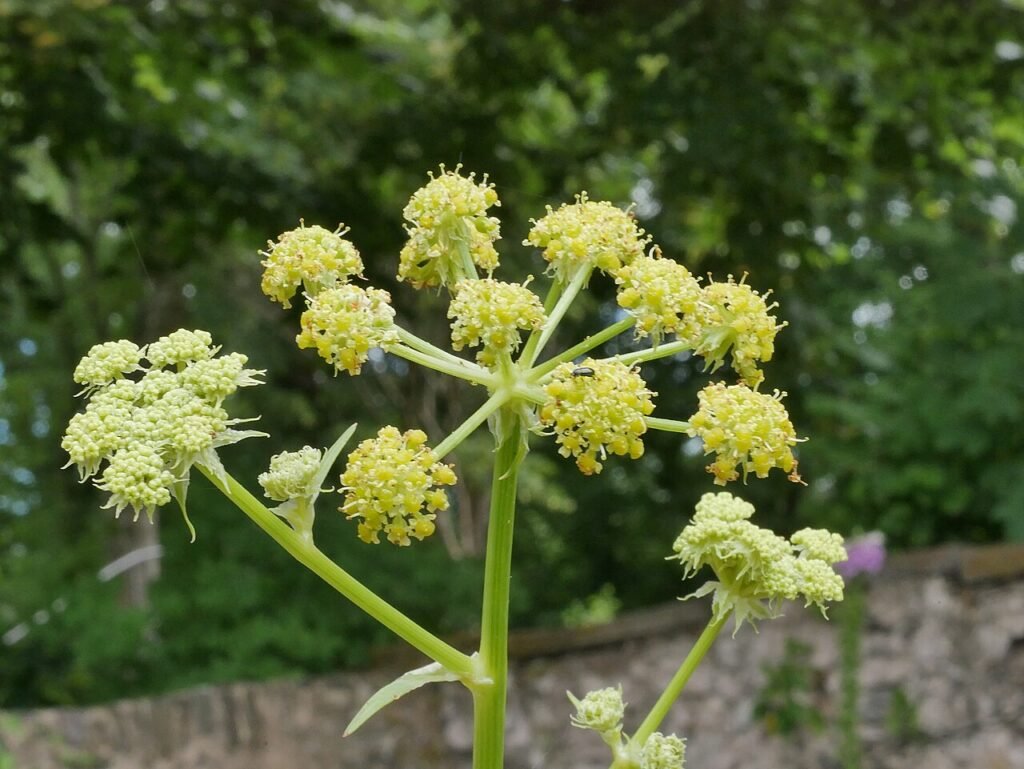
Lovage (Levisticum officinale) is a hardy perennial herb that tastes like celery but stronger and sweeter. University of Illinois Extension lists it at 4 to 6 feet tall, and the Royal Horticultural Society says flower stems reach about 6 feet by mid to late summer, so it works as a background plant.
Lovage at a glance
| Type | Herb |
|---|---|
| Season | Perennial |
| Sun | Light shade to full sun |
| Plant spacing | 18 in |
| Row spacing | 24 in |
| Per square foot | 1 |
| Seed depth | At surface |
| Days to maturity | Harvest from year 2 when grown from seed |
| How to start | Sow or plant lovage in spring in rich, moist soil and light shade, pick young leaves often and cut off flower stalks to keep the leaves coming |
| Water | 1 in per week |
These are the same numbers our plant spacing, square foot and harvest date calculators use. See every crop in the plant database.
When to plant lovage
University of Illinois Extension says to plant seed or divisions in spring or fall. The RHS suggests sowing in spring in a lightly shaded spot, planting out in late spring or early summer once plants are well rooted, and hardening off indoor-raised plants first. Bought young plants can usually be lightly cropped in their first summer; plants grown from seed can be harvested from their second year. Check your growing zone.
How to plant lovage
- Site: light shade is preferred, though full sun is fine (RHS). Illinois notes light shade improves quality. Rich, moist soil that does not dry out or become waterlogged is best; dig a bucketful of compost or well-rotted manure into the backfill.
- Space plants 12 to 18 inches apart at first; established plants can spread up to about 3 feet wide after a few years. See the plant spacing calculator.
- Containers: a heavy pot at least 1 foot wide and deep with plenty of drainage holes, one lovage per container, not in a mixed herb pot.
Caring for lovage
Water new plants regularly during the first growing season and more in hot weather, especially in full sun or free-draining soil; container plants need steady moisture. See the garden watering calculator. Mulch with at least 2 inches of compost or well-rotted manure each spring.
Cutting back: remove flower stems as they form in summer to extend leaf harvests. In autumn, cut spent stems after a heavy frost, or leave them until early spring and cut back before new growth starts.
Slugs and snails may nibble young plants, and celery leaf miner can attack leaves; remove affected leaves. Lovage self-seeds readily, so weed out seedlings or remove seed heads before seeds ripen.
Companion plants
| Grow nearby | Other perennial herbs and border plants; lovage works as a background plant |
|---|---|
| Keep apart | Mixed herb pots, since it needs its own large container and moist soil |
Sources do not list specific companion plants. Check other pairings with the companion plant finder.
Common problems
| Problem | What you see | What to do |
|---|---|---|
| Bitter leaves | Leaves taste bitter late in summer | The RHS says leaves turn bitter once plants flower in late summer. Remove flower stalks early to prolong the harvest. |
| Chewed seedlings | Young plants nibbled by slugs and snails | Protect seedlings from slugs and snails (RHS). |
| Mined leaves | Tunnels or blotches in leaves | Celery leaf miner (RHS). Remove affected leaves; see the pest identifier. |
| Too many volunteer seedlings | Self-sown plants around the clump | Lovage self-seeds readily. Weed out seedlings in spring and summer, or cut seed heads before the seed ripens. |
Not sure what you are looking at? The plant problem identifier ranks likely causes from the symptoms you see.
When and how to harvest
Pick young leaves regularly in spring and summer; young leaves are more tender and can be used fresh anytime, and the leaves can be dried. Leaves and stems flavor soups, salads and meat dishes, stems can be candied or blanched, and hollow stems can be used as straws. For blanched stems, wrap a few in newspaper when about 1 foot tall. Roots can be dug from established plants (2 to 3 years old) when dormant over winter. Pick seed heads when they begin to turn brown and dry them in paper bags.
Plan your lovage
- Plant spacing calculator: how many plants fit your bed
- Planting calendar: sowing and transplant dates for your frost dates
- Frost dates by ZIP code: your last spring and first fall frost
- Harvest date calculator: when your crop will be ready
Frequently asked questions
How far apart should I plant lovage plants?
Space lovage plants 18 inches apart in rows 24 inches apart. In a square foot garden, plant 1 per square foot.
How deep do I plant lovage seed?
Sow seed in spring in seed compost; sources do not give a sowing depth, so check the packet.
How long do lovage plants take to grow?
Bought plants can be lightly cropped the first summer; plants grown from seed can be harvested from their second year (RHS).
How much water do lovage plants need?
About 1 inch of water a week, from rain and watering combined. Water new plants regularly the first season and more in hot weather; keep soil moist but not waterlogged.
How tall does lovage grow?
About 4 to 6 feet (Illinois Extension); flower stems reach about 6 feet by mid to late summer (RHS).
Why are my lovage leaves bitter?
The leaves turn bitter once the plant flowers in late summer; remove flower stalks early to prolong the harvest.
Can I grow lovage in a pot?
Yes, in a heavy pot at least 1 foot wide and deep, one plant per pot.