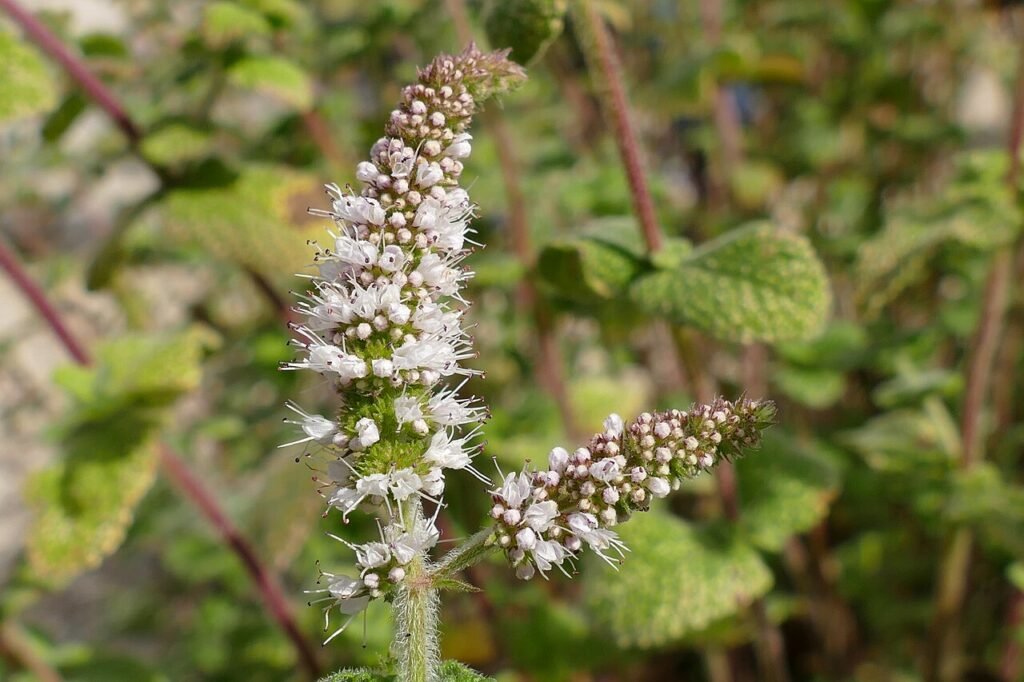
Mint is one of the easiest herbs to grow, and almost too easy: it spreads by underground runners and will take over a bed if you let it. Grown in a container, it gives fresh leaves for tea, drinks and cooking all season with very little effort. There are many kinds, including spearmint, peppermint, apple mint and chocolate mint. This page covers planting, containing, caring for and harvesting mint.
Mint at a glance
| Type | Herb |
|---|---|
| Season | Perennial |
| Sun | Full sun to part shade |
| Plant spacing | 18 in |
| Row spacing | 24 in |
| Per square foot | 1 |
| Seed depth | ¼ in |
| Days to maturity | Harvest once established |
| How to start | Buy plants or divisions; grow in a container to stop it spreading |
| Water | 1 in per week |
These are the same numbers our plant spacing, square foot and harvest date calculators use. See every crop in the plant database.
When to plant mint
Plant mint in spring after your last frost, or any time during the growing season from potted plants. Mint is a hardy perennial, surviving winters in most of the US, roughly zones 3 to 8 depending on the type. It dies back in winter and regrows in spring.
Find your last frost with the frost dates by ZIP code tool.
How to plant mint
- Start from plants. Buy plants, or take divisions or cuttings from a plant you like. Seed-grown mint often differs from its parent in flavor.
- Contain it. Grow mint in a pot, or plant it in the ground inside a bottomless bucket or pot sunk so its rim sits an inch or two above the soil. Without this, runners spread through the bed.
- Choose sun or part shade. Mint grows in full sun to part shade; afternoon shade helps in hot areas.
- Use moist, rich soil. Unlike most herbs, mint likes consistent moisture.
- Root cuttings in water. Stems put in a glass of water root within a week or two.
Caring for mint
Keep the soil evenly moist, about an inch of water a week, more for plants in pots in hot weather. The garden watering calculator turns this into gallons.
Pinch stem tips often to keep plants bushy. When plants get leggy or start flowering in midsummer, cut them back by half or more; they regrow with fresh leaves. A little compost each spring is all the feeding mint needs. Divide or repot every 2 to 3 years, when the center of the clump gets woody.
Companion plants
| Grow nearby | Cabbage-family crops, tomatoes, peas (grown in a pot nearby) |
|---|---|
| Keep apart | Planted loose in a bed with other herbs, which it will overrun; parsley and chamomile |
Mint's strong scent is said to help deter cabbage moths, ants and aphids. Keep it in a pot placed near the crops rather than planted among them. Check other pairings with the companion plant finder.
Common problems
| Problem | What you see | What to do |
|---|---|---|
| Spreading everywhere | Runners pop up across the bed | Grow in a container or a sunken bottomless pot, and pull stray runners as they appear. |
| Mint rust | Orange spots under leaves and distorted stems | Cut affected stems to the ground and bin them, and give plants more airflow. Replace badly affected plants. |
| Leggy, woody growth | Long stems with few leaves | Cut back by half or more in midsummer and pinch tips often. |
| Aphids and spider mites | Clusters of insects or speckled leaves | Rinse plants with water. See the pest identifier. |
| Wilting in pots | Leaves droop on hot days | Potted mint dries out fast. Water when the top of the soil is dry, and use a larger pot. |
Not sure what you are looking at? The plant problem identifier ranks likely causes from the symptoms you see.
When and how to harvest
Pick mint any time once the plant is growing well. Cut stems just above a pair of leaves, which makes the plant branch. Leaves have the strongest flavor just before flowering. Harvest regularly; mint grows back fast, and you can take up to two-thirds of the plant in summer.
Use mint fresh, or dry it: hang bundles upside down in a warm, airy place out of sun, then store the leaves in a jar. Fresh stems keep for several days in a glass of water.
Plan your mint
- Plant spacing calculator: how many plants fit your bed
- Planting calendar: sowing and transplant dates for your frost dates
- Frost dates by ZIP code: your last spring and first fall frost
- Harvest date calculator: when your crop will be ready
Frequently asked questions
How far apart should I plant mint plants?
Space mint plants 18 inches apart in rows 24 inches apart. In a square foot garden, plant 1 per square foot.
How deep do I plant mint?
Mint is usually grown from plants, divisions or cuttings, because seed-grown mint often differs from its parent. If you do sow seed, press it onto the surface and barely cover it.
How long do mint plants take to grow?
Mint grown from plants or cuttings can be harvested within a few weeks of planting, once it is growing strongly. It comes back every spring.
How much water do mint plants need?
About 1 inch of water a week, from rain and watering combined. Unlike most herbs, mint likes moist soil. Pots may need water daily in hot weather.
How do I stop mint from spreading?
Grow it in a container, or plant it in the ground inside a bottomless pot or bucket sunk so the rim sits an inch or two above the soil. Pull any runners that escape.
Does mint come back every year?
Yes. Mint is a hardy perennial in most of the US. It dies back in winter and regrows in spring.