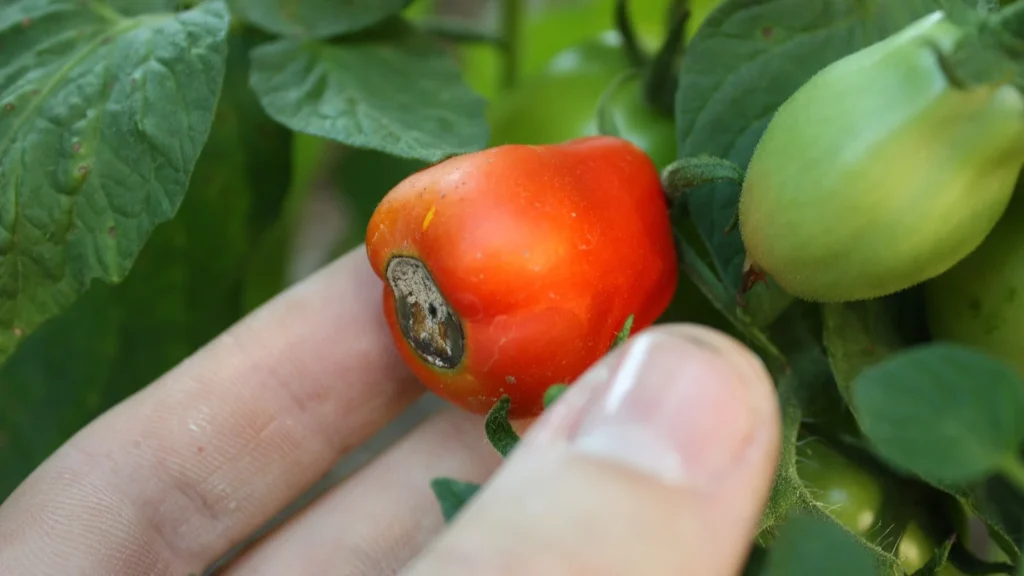
Blossom end rot is a common disorder, not a disease, that causes a sunken, leathery, tan to black patch on the bottom (blossom end) of tomatoes, peppers, eggplant, squash, zucchini and watermelons. It happens when the developing fruit cannot get enough calcium, which almost always results from uneven watering rather than a lack of calcium in the soil, because calcium moves into fruit only with the water the plant takes up. To prevent blossom end rot, water deeply and consistently so soil stays evenly moist, mulch to hold moisture, avoid heavy nitrogen and high-ammonium fertilizer, keep soil pH near 6.5, avoid damaging roots, and grow less susceptible varieties. Remove affected fruit; later fruit usually develops normally once watering is steady.
Blossom end rot facts
| Feature | Details |
|---|---|
| Type | Physiological disorder (not caused by a pathogen or insect) |
| Cause | Localized calcium deficiency in the developing fruit |
| Main trigger | Uneven soil moisture: drought then heavy watering, or waterlogged soil |
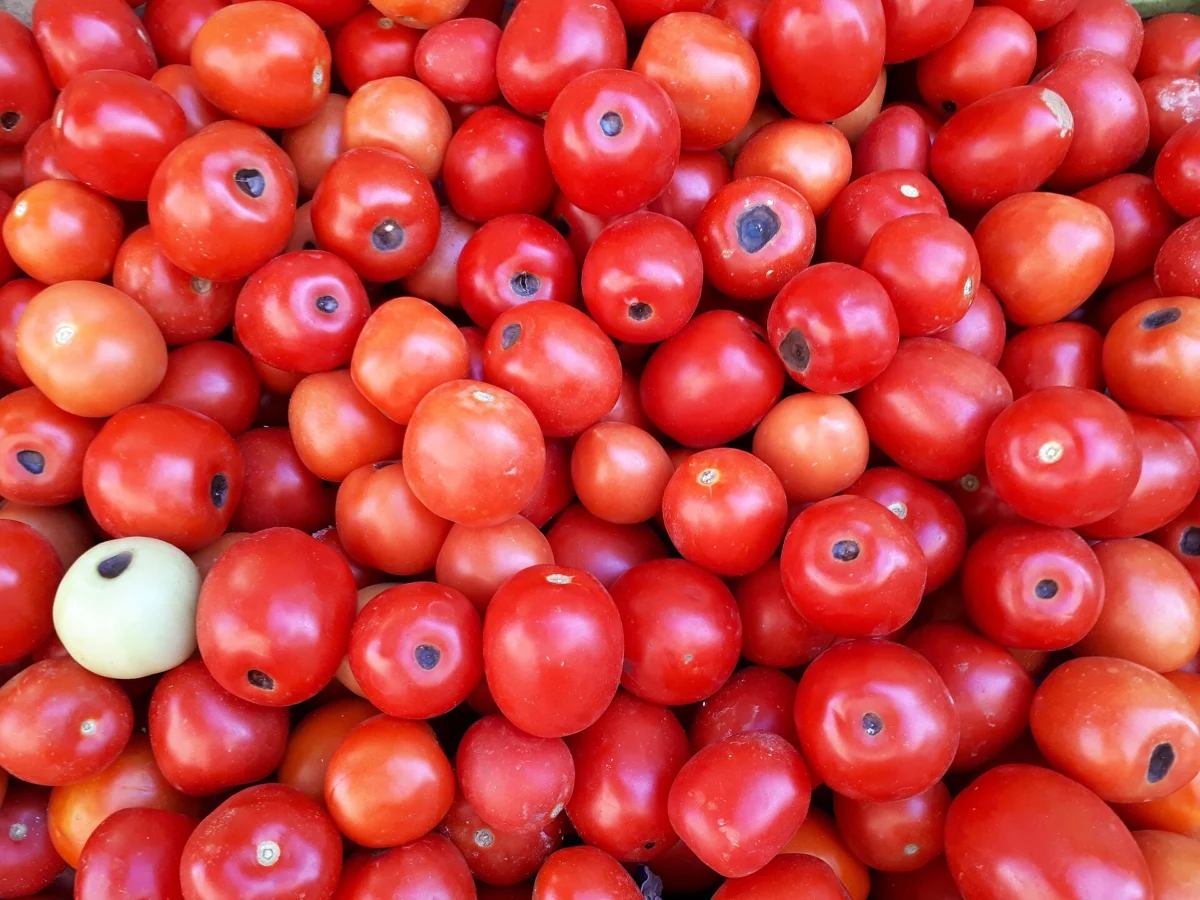
| Symptoms | Water-soaked spot at the blossom end that becomes sunken, dry, leathery and brown or black |
| Crops | Tomatoes (especially paste and plum types), peppers, eggplant, summer and winter squash, watermelon |
| When | Often on the first fruits of the season, during rapid growth or after weather swings |
| Contagious? | No; it does not spread between plants |
What causes blossom end rot?
Calcium is essential for building strong cell walls. Plants take it up from the soil dissolved in water and move it upward in the water stream (xylem) toward the parts that lose the most water, mainly the leaves. Fruits lose little water, so they receive relatively little calcium, and the blossom end, farthest from the stem, is the last to get it. When the water supply is interrupted by drought, or when roots are damaged or waterlogged, the fruit tip runs short during its rapid early growth, and cells collapse. The Wikipedia article on blossom end rot explains that the disorder is linked to calcium transport within the plant rather than simply soil calcium levels. The UMass Extension fact sheet on blossom end rot notes that most garden soils contain enough calcium, and that inconsistent moisture is the main cause.

What does blossom end rot look like?
- A small, pale, water-soaked spot at the blossom end of green fruit.
- The spot enlarges and becomes sunken, dry, leathery and tan, brown or black.
- It may cover a third or more of the fruit on tomatoes and peppers.
- Secondary molds often grow on the lesion, giving a fuzzy black or gray look.
- Internal browning can occur in some peppers and tomatoes without an external spot.
- Squash and zucchini develop shriveled, rotting tips on young fruit.
Do not confuse blossom end rot with poor pollination in squash, where small fruits yellow and shrivel from the tip because they were never fertilized. See common tomato problems for other tomato disorders, or use the plant problem identifier.
Which conditions make blossom end rot worse?
| Factor | Why it matters |
|---|---|
| Drought followed by heavy watering | Interrupts calcium flow during rapid fruit growth |
| Waterlogged soil | Damaged, oxygen-starved roots take up less water and calcium |
| Hot, windy, dry weather | Leaves pull most water and calcium, leaving fruit short |
| Excess nitrogen, especially ammonium forms | Lush leaf growth competes for calcium; ammonium interferes with calcium uptake |
| Excess potassium or magnesium | Compete with calcium for uptake |
| Low soil pH (below about 6) | Can reduce available calcium |
| Root damage from deep cultivation | Fewer roots to take up water |
| Small containers | Dry out quickly, causing big moisture swings |
| Susceptible varieties | Elongated paste tomatoes and some peppers are more prone |
How do you prevent blossom end rot?
- Water deeply and consistently. Aim for about 1 to 1.5 inches of water a week from rain and irrigation combined, more in hot weather and sandy soil, applied in one or two deep soakings rather than frequent light sprinkles. Drip irrigation or soaker hoses on a timer make this much easier. Use the garden watering calculator to plan amounts.
- Mulch. A 2- to 3-inch layer of straw, shredded leaves or other organic mulch keeps soil moisture even and roots cool; use the mulch calculator.
- Test the soil before planting and adjust pH to about 6.2 to 6.8 with lime if needed; garden lime adds calcium at the same time. See garden lime: when and how to use it and how to test soil pH.
- Feed moderately. Avoid heavy nitrogen, especially ammonium-based fertilizers, during fruit set; use a balanced or calcium nitrate-based feed. The garden fertilizer calculator helps.
- Protect roots. Avoid deep hoeing near plants; hand-pull weeds instead.
- Use large containers. Grow tomatoes and peppers in pots of at least 10 to 20 gallons, and check moisture daily in hot weather.
- Choose resistant varieties. Many round slicing and cherry tomatoes are less prone than elongated paste types.
Should you add calcium for blossom end rot?
Only if a soil test shows low calcium or low pH. Most garden soils contain plenty of calcium; the problem is getting it to the fruit. Popular fixes such as crushed eggshells, antacid tablets, powdered milk or bone meal added at planting break down too slowly to help this season and do not fix uneven watering. Calcium foliar sprays are widely sold, but research shows mixed results because little calcium sprayed on leaves moves into the fruit. Epsom salt (magnesium sulfate) can actually make the problem worse by competing with calcium. Focus on watering and mulch first.
Fertilizer and soil note: Add lime, gypsum or calcium products only when a soil test shows they are needed, and follow product labels. Over-applying lime can raise pH too high and cause other nutrient problems. Calcium nitrate and other soluble fertilizers should be measured carefully and kept away from children and pets.
What should you do with fruit that has blossom end rot?
Pick affected fruit as soon as you notice it, so the plant puts its energy into healthy fruit. On tomatoes and peppers, the healthy part of the fruit is safe to eat: cut away the damaged area and a little beyond it, and use the rest promptly. Discard fruit with mold or soft rot in the lesion. The disorder does not spread from fruit to fruit or plant to plant, and later fruits usually develop normally once watering is consistent and weather stabilizes.
Blossom end rot on peppers, squash and watermelon
The University of Wisconsin Plant Disease Diagnostics Clinic fact sheet on blossom end rot describes the disorder on tomatoes, peppers, squash and watermelon and emphasizes consistent soil moisture as the key to prevention.
Peppers
Bell peppers and other large-fruited peppers develop tan, papery or sunken patches on the side or bottom of the fruit, sometimes mistaken for sunscald. Even watering and mulch help, and peppers grown in containers need daily checks in summer.
Zucchini and squash
Young fruits rot at the tip, often early in the season. Distinguish this from poor pollination, in which tiny fruits yellow and shrivel before growing. Water consistently and, if poor pollination is the issue, hand-pollinate. See squash vine borer for another cause of sudden squash problems.
Watermelon
Elongated watermelon varieties are especially prone. Even moisture during early fruit growth and adequate soil pH help.
Is blossom end rot worse in containers?
Yes. Potting mix in small containers can swing from soaking wet to bone dry in a single hot afternoon, which is exactly the pattern that causes blossom end rot. Use the largest containers practical, at least 10 gallons for determinate tomatoes and 15 to 20 gallons for indeterminate varieties, choose a quality mix with compost for water holding, mulch the surface, and water deeply whenever the top inch is dry, which may mean daily in summer. Self-watering containers and drip systems help a great deal. See container vegetable gardening for beginners and the container garden planner.
Why do the first tomatoes get blossom end rot?
The first fruits of the season often show blossom end rot, while later ones are fine. Early in the season, plants are still developing their root systems, soil may swing between cold and wet and suddenly hot and dry, and fruits are growing rapidly. As roots expand and weather settles, calcium supply to the fruit improves. Removing the first affected fruits and keeping moisture steady usually solves the problem for the rest of the season.
Dealing with more than one problem? Our plant pests and diseases guide lists every insect and disease we cover, organized by symptom.
Free printable: the Year-Round Garden & Preserving Planner
Planting dates for 24 crops, monthly tasks, blanching times, canning safety numbers and a winter storage chart in one 8-page PDF. Enter your email to download it instantly and get our seasonal garden newsletter.
No spam. Unsubscribe any time. We never sell your email.
Blossom end rot FAQ
Is blossom end rot a disease?
No, it is a physiological disorder caused by calcium shortage in the fruit, usually from uneven watering.
Can you eat tomatoes with blossom end rot?
Yes, cut away the damaged part and eat the rest if there is no mold.
Do eggshells prevent blossom end rot?
Not in the current season; they break down too slowly and do not fix uneven watering.
Does Epsom salt help blossom end rot?
No, magnesium can compete with calcium and may make it worse.
Will blossom end rot go away?
Affected fruit will not recover, but new fruit usually forms normally once watering is consistent.
Do calcium sprays work?
Results are mixed because little sprayed calcium reaches the fruit; consistent watering matters more.
Which tomato varieties resist blossom end rot?
Elongated paste and plum tomatoes such as Roma, San Marzano and Amish Paste are among the most prone, as are some large beefsteak types. Round slicing tomatoes and cherry tomatoes are generally less affected. Varieties with good reported tolerance include many hybrid slicers bred for even ripening, such as Celebrity, Mountain Fresh and Big Beef, and most cherry types. If paste tomatoes are important to you, give them the most consistent watering and mulch of any crop in the garden, and consider drip irrigation on a timer for that bed.
How much should you water tomatoes to prevent blossom end rot?
There is no single number, because soil type, weather and plant size all matter, but most garden tomatoes need about 1 to 1.5 inches of water a week, rising to 2 inches in very hot, dry weather or in sandy soil. The aim is soil that stays evenly moist several inches down, never soggy and never bone dry. Check by digging a finger 2 to 3 inches into the soil near the plant: if it feels dry at that depth, water deeply. Watering in the morning, at the base of plants, also reduces leaf diseases. Containers may need water every day in midsummer.
Can overwatering cause blossom end rot?
Yes. Waterlogged soil starves roots of oxygen, damages fine root hairs and reduces water and calcium uptake, which can trigger blossom end rot just as drought does. Poorly drained clay soils, low spots and containers without drainage holes are common culprits. Improve drainage with raised beds, compost and proper pots, and water only when the soil needs it. See overwatering vs underwatering for signs of each.
Does blossom end rot affect the whole plant?
No. Blossom end rot affects only fruit, and plants with it are otherwise healthy. Leaves, stems and roots are not damaged, and the plant will continue to produce normal fruit once conditions improve. That is a key difference from diseases such as blights and wilts, which attack leaves and stems as well.
Steady watering and mulch are the two habits that prevent nearly all blossom end rot in home gardens.
If blossom end rot keeps appearing despite steady watering, test your soil pH and calcium, review your fertilizer, and consider switching to less susceptible varieties next season.
Happy tomato growing.
Remember, too, that weather swings early in the season are often to blame, so a few affected fruits in June rarely mean the whole season is lost.
References used in this guide: UMass Extension, Blossom End Rot; University of Wisconsin Plant Disease Diagnostics Clinic, Blossom End Rot; Wikipedia, Blossom end rot.
What University of Wisconsin Extension says about the cause
University of Wisconsin Extension explains that blossom end rot is caused by a lack of calcium in the fruit, but soil calcium is often adequate. The real problem is that calcium availability for uptake and transport to the fruit is impaired. Calcium moves with transpiration, and leaves lose more water than fruit, so calcium collects in the leaves and is not later moved to the fruit.
Water is the main driver
Drought stress, swings between wet and dry soil, and waterlogged soil all reduce calcium uptake, so both too little and too much water cause trouble. Both very high and very low humidity can limit transpiration, especially in hot, windy weather. Worsening factors include cold or waterlogged soils, root damage from cultivating too close to plants, high soil ammonium, potassium or magnesium, and excess nitrogen that pushes leafy growth. Tomato is the main host, but pepper, eggplant, cucumber, pumpkin, squash and watermelon are also affected, and the first fruits are often hit.
Prevention
- Water evenly and mulch to hold moisture in dry spells. Try our garden watering calculator.
- Avoid cultivating near roots.
- Use nitrate rather than ammonium nitrogen, and do not over-fertilize.
- Test soil for calcium and, if low, add it, for example as bonemeal or lime. Lime raises pH, so check it too; about 6.5 is ideal for most vegetables.
- Grow cultivars tolerant of calcium deficiency.
The article recommends soil amendments and does not mention foliar calcium sprays, which fits its point that the fix is steady moisture and healthy roots rather than more calcium on the leaves.
Safety and legal note: Lime and other soil amendments change pH and can harm plants if overapplied. Test soil first and follow label rates, and keep amendments away from eyes and skin.
Reviewed October 2026. Sources: University of Wisconsin Extension: Blossom end rot