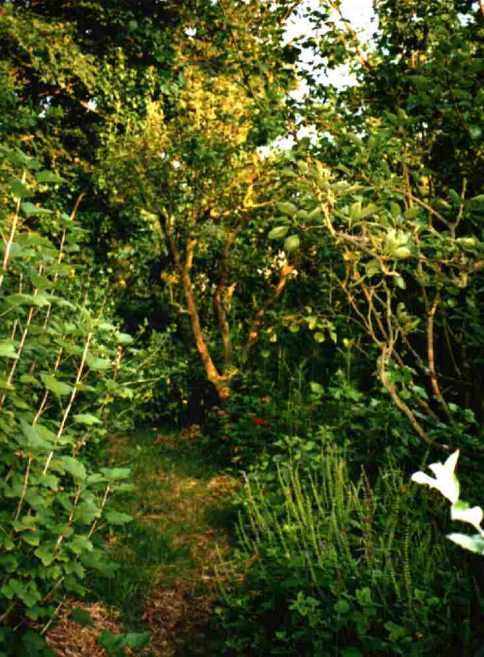
The Chickasaw plum (Prunus angustifolia), also called sand plum or sandhill plum, is a native American wild plum that grows as a thicket-forming shrub 3 to 10 feet tall in the West of its range or as a small tree 14 to 25 feet tall in the East. It blooms with fragrant white flowers in March and April before the leaves appear, then bears small, cherry-sized red, orange or yellow plums from June to August. It is drought-tolerant, grows in almost any soil except strongly alkaline ones, and is one of the best native shrubs for birds, pollinators and wildlife cover. Some trees bear sweet fruit for jelly; others are tart or bitter.
Chickasaw plum key facts
| Botanical name | Prunus angustifolia |
|---|---|
| Other names | Sand plum, sandhill plum, Cherokee plum, Florida sand plum, mountain cherry |
| Native range | Southeastern and south-central US, west to Texas and Oklahoma |
| Size | 3 to 10 foot thicket-forming shrub (West) to 14 to 25 foot small tree (East) |
| Flowers | Small, white, fragrant, March to April before leaves |
| Fruit | ¼ to ½ inch, red, orange-red or yellow, ripening June to August |
| Soil | Sandy to clay-loam; avoid strongly alkaline soil |
| Light | Full sun best; tolerates part shade |
| Drought tolerance | High once established |
| Zones | About 5 to 9 |
What is a Chickasaw plum?
Chickasaw plum is one of the native wild plums of North America. Its name honors the Chickasaw people, who, like other Native American nations, ate the fruit fresh and dried it for winter; it was so widely planted near villages that early botanists were unsure where its original range lay. The USDA NRCS Chickasaw plum fact sheet describes it as a short, thickly branched shrub that forms dense thickets by suckering in the western part of its range and a small tree in the East, with narrow, shiny, finely toothed leaves, slender zigzag reddish twigs and short side twigs that end in sharp points.
It is closely related to the American plum and other native plums, and it is distinct from the European, Japanese and hybrid plums grown in orchards. See our guide to types of plum trees for how native plums fit into the plum family.

What does a Chickasaw plum look like?
- Habit: A dense, twiggy shrub or small tree with a rounded crown, often spreading into a thicket by root suckers.
- Leaves: Narrow, lance-shaped, about 1 to 2½ inches long, glossy, often folded upward along the midrib like a trough.
- Bark: Smooth and reddish-brown with horizontal lenticels when young, becoming rough and scaly on old trunks.
- Thorns: Short side twigs that end in sharp spur-like tips.
- Flowers: Clusters of small, five-petaled white flowers less than ½ inch across, covering bare branches in early spring.
- Fruit: Small, glossy, round plums, red, orange-red or yellow with a light bloom, each with a small, rough stone.
Where does Chickasaw plum grow?
Chickasaw plum grows naturally across the Southeast and south-central US, from Florida and the Carolinas west to Texas, Oklahoma and Kansas, on sandy hills, old fields, fencerows, roadsides and woodland edges. The USDA fact sheet notes that it grows in almost any soil except strongly alkaline ones, occurs naturally on sandy soils, performs well on heavier clay-loam soils and is drought-tolerant. The NC State Extension plant toolbox lists it as a native, deciduous small tree or shrub for sunny, well-drained sites. In gardens it grows in roughly zones 5 to 9. Check your zone with the growing zone finder.
Is Chickasaw plum fruit edible?
Yes, but quality varies from tree to tree. The USDA notes that some trees bear edible fruit while others are very bitter. Good trees produce small, juicy, sweet-tart plums that are excellent fresh off the branch in early summer and even better cooked into jelly, jam, sauce and wine; the fruit has been used this way since the 1800s and was cultivated from 1874. Because the plums are small and the stones relatively large, most people cook them and strain out the pits. Taste fruit before harvesting a whole thicket, and gather from trees that are clearly sweet.
Selected forms with better fruit exist, such as the ‘Caddo Chief’ variety from Louisiana listed by the USDA, and some nurseries sell named native plum selections.
Why plant Chickasaw plum for wildlife?
Chickasaw plum is a keystone native shrub for wildlife. According to the USDA fact sheet:
- Its thickets provide nesting, loafing and roosting cover for songbirds and game birds, including northern bobwhite, brown thrasher, northern mockingbird and gray catbird.
- Field sparrows, Bell’s vireos, loggerhead shrikes and painted buntings depend on shrubs like it for nesting.
- Lesser prairie-chickens use it for resting, escape and thermal cover.
- Many birds and mammals eat the fruit, and deer and other animals use the thickets for cover.
The early flowers are also an important nectar and pollen source for native bees and early-season pollinators, and the leaves host caterpillars of several native moths and butterflies. If you are creating habitat, pair it with other native flowering plants; see our guide on how to plant a pollinator garden.
How do you use Chickasaw plum in the landscape?
- Wildlife hedgerow: Plant a row or cluster and let it sucker into a thicket.
- Windbreak: The USDA recommends it for the outer row of windbreaks.
- Erosion control: Its suckering roots help stabilize blowing soil, stream banks and gullies.
- Native landscape specimen: Train a single trunk and remove suckers for a small, early-blooming ornamental tree.
- Edible landscaping: Plant selected, good-fruiting plants near the house for jelly plums.
How do you plant Chickasaw plum?
- Choose a sunny site. It tolerates part shade but flowers and fruits best in full sun.
- Allow room to spread if you want a thicket, or plan to mow or cut suckers if you want a single shrub.
- Plant in late winter or early spring while dormant. Conservation plantings often use one-year-old bare-root seedlings 18 to 24 inches tall.
- Dig a hole as deep as the roots and twice as wide; the planting hole size calculator helps.
- Water deeply after planting and weekly during the first summer.
- Control weeds and grass. The USDA stresses that weed and grass control in the first and second years is critical for survival. Mulch helps; use the mulch calculator.
- Protect young plants from rabbits, deer and livestock with guards or fencing.
How do you care for Chickasaw plum?
Once established, Chickasaw plum needs very little care. Water only during long droughts in the first two years. Fertilizer is rarely needed; too much encourages soft growth. Prune in late winter to remove dead or crossing branches, and cut or mow suckers if you do not want the plant to spread. For a tree form, choose one strong trunk and remove competing stems and suckers each year. Fire, mowing and browsing set the plant back but rarely kill it; it resprouts readily from the roots.
Do Chickasaw plums need a pollinator?
Native plums are generally better at setting fruit when cross-pollinated by bees between different plants. A thicket grown from seedlings provides that naturally, because each seedling is genetically different. A single plant propagated from suckers or cuttings may fruit poorly on its own. If you want fruit, plant at least two or three seedlings or different selections, or plant near other native or hybrid plums that bloom at the same time.
When do Chickasaw plums ripen?
The fruit ripens from June through August, among the earliest of all plums. Ripe plums turn fully red, orange-red or yellow, depending on the plant, and soften slightly. Birds and animals find them quickly, so check thickets every few days and pick as soon as the fruit is colored and sweet. Small plums ripen over several weeks, so a single thicket can be picked several times.
How do you make Chickasaw plum jelly?
- Rinse the plums and remove stems and leaves.
- Simmer the whole fruit in a little water until soft and split.
- Mash gently and strain through a jelly bag to collect clear juice.
- Cook the juice with sugar and, if needed, pectin, following a tested jelly recipe.
- Process jars according to tested home-canning guidelines for your altitude.
Native plums are naturally high in pectin and acid, so they gel well and give a tart, bright, deep pink to red jelly. The National Center for Home Food Preservation has tested jam and jelly methods.
What pests and diseases affect Chickasaw plum?
| Problem | Sign | Notes |
|---|---|---|
| Plum curculio | Wormy, dropping fruit with crescent scars | The USDA lists it as the primary insect pest |
| Brown rot | Fruit rots with tan spores | Major disease; little natural resistance |
| Bacterial leaf spot | Small holes and spots on leaves | Major disease; worse in wet years |
| Black knot | Black, corky swellings on twigs | Prune out in winter |
| Tent caterpillars | Silk nests in branch forks in spring | Remove nests by hand when small |
| Rabbits and deer | Chewed bark, rubbed stems | Protect young plants |
In wildlife and conservation plantings, these problems are usually tolerated. For better fruit, collect dropped plums and prune out diseased wood. The pest identifier can help with unfamiliar insects.
Is Chickasaw plum invasive?
No. It is a native plant in the Southeast and south-central US, and the USDA lists no known environmental concerns. It does spread by root suckers into thickets, which is good for wildlife but can be unwelcome in small, formal gardens. Mow or cut suckers regularly if you want to keep it contained, and do not plant it next to lawns you want to keep clear.
Chickasaw plum vs American plum
| Trait | Chickasaw plum | American plum |
|---|---|---|
| Botanical name | Prunus angustifolia | Prunus americana |
| Range | Southeast and south-central US | Much of central and eastern North America, farther north |
| Hardiness | About zones 5 to 9 | About zones 3 to 8 |
| Leaves | Narrow, glossy, trough-shaped | Broader, duller, toothed |
| Fruit | ¼ to ½ inch, red to yellow, ripens June to August | About 1 inch, red to yellow, ripens late summer |
| Use | Jelly, wildlife, erosion control | Jelly, wildlife, hardy rootstock and breeding |
American plum is a parent of cold-hardy hybrids such as Toka and Superior.
How do you propagate Chickasaw plum?
The easiest way is to dig rooted suckers from the edge of an existing thicket in late winter and replant them. You can also grow it from seed: collect ripe fruit, clean the pits and either sow them outdoors in fall or give them several weeks of cold, moist stratification in the refrigerator before sowing in spring. Seedlings vary in fruit quality, which is fine for wildlife plantings. Our guide on how to grow a cherry tree from seed explains stratification, which works the same way for plum pits.
Where can you buy Chickasaw plum?
Native plant nurseries, state forestry nurseries and conservation district tree sales often sell Chickasaw plum as inexpensive bare-root seedlings in late winter, sometimes in bundles meant for hedgerows and wildlife plantings. Some specialty fruit nurseries sell named selections chosen for larger or sweeter fruit. Buy plants grown from seed collected in your region when you can, because local seed sources are best adapted to your climate and support local wildlife.
Can Chickasaw plum be a rootstock?
Native plums, including Chickasaw, have been used as rootstocks for plums and peaches in the South because they are well adapted to sandy, poor soils and local conditions. They can sucker heavily, however, so most commercial trees use other rootstocks. For home growers, Chickasaw plum is best enjoyed as a native shrub in its own right.
Another small, hardy plum often used as a rootstock and hedge is the cherry plum tree.
For other trees and berries to grow alongside this one, see the home fruit tree guide.
Free printable: the Year-Round Garden & Preserving Planner
Planting dates for 24 crops, monthly tasks, blanching times, canning safety numbers and a winter storage chart in one 8-page PDF. Enter your email to download it instantly and get our seasonal garden newsletter.
No spam. Unsubscribe any time. We never sell your email.
Frequently asked questions
Can you eat Chickasaw plums?
Yes. Sweet-fruited plants are good fresh and excellent in jelly, but some plants bear bitter fruit, so taste before harvesting.
How tall does a Chickasaw plum get?
Usually 3 to 10 feet as a thicket-forming shrub in the West, and up to 14 to 25 feet as a small tree in the East.
When do Chickasaw plums bloom?
In March and April, before the leaves emerge.
Does Chickasaw plum spread?
Yes. It spreads by root suckers into thickets, which can be controlled by mowing or cutting suckers.
Is Chickasaw plum drought tolerant?
Yes. Once established it tolerates drought and poor sandy soils well.
Sources: USDA NRCS, Chickasaw Plum Fact Sheet; NC State Extension, Prunus angustifolia; National Center for Home Food Preservation, Jams and Jellies.