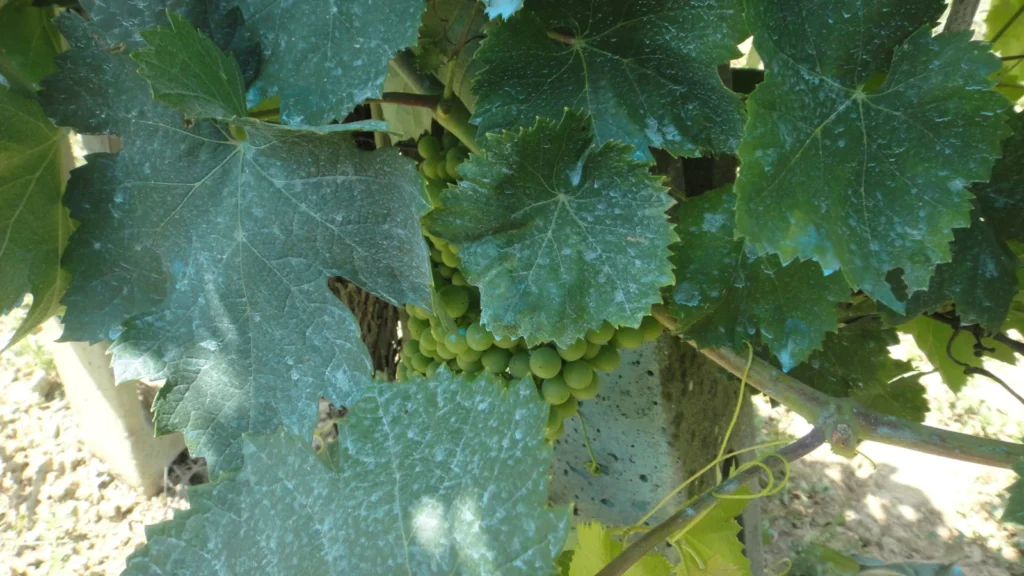
Copper fungicide is a protective spray made from copper compounds, such as copper hydroxide, copper sulfate, copper oxychloride or copper octanoate (copper soap), that kills fungal spores and bacteria on plant surfaces before they infect. Gardeners use it mainly as a dormant or early-season spray on fruit trees against peach leaf curl, bacterial canker, fire blight, shot hole and some leaf spots, and on vegetables against blights and bacterial spots. Copper only prevents infection; it does not cure disease already inside the plant. Use it only according to the label, avoid spraying stone fruit leaves in summer, never mix it with surfactants or acidifiers unless the label allows, and limit total use, because copper accumulates in soil.
Copper fungicide quick reference
| Feature | Details |
|---|---|
| What it is | Fungicide and bactericide based on copper compounds |
| Common forms | Copper hydroxide, copper sulfate, copper oxychloride, cuprous oxide, copper octanoate, Bordeaux mixture |
| How it works | Releases copper ions that disrupt proteins and enzymes in fungi and bacteria |
| Type of action | Protective only; no cure for established infections |
| Typical uses | Peach leaf curl, bacterial canker, fire blight, blights and leaf spots |
| Organic use | Some products allowed in certified organic growing, with limits |
| Main risks | Leaf injury on sensitive plants; soil accumulation; aquatic toxicity |
What is copper fungicide and how does it work?
Copper has been used to protect crops since the 1800s. The Wikipedia article on copper pesticides explains that copper fungicides slowly release positively charged copper ions, which bind to proteins and enzymes in fungal and bacterial cells and disrupt their function. Copper ions kill pathogens on the plant surface, but once a pathogen enters plant tissue, it is no longer affected at normal spray concentrations. That is why copper is a preventive spray applied before infection periods.
The University of Delaware Extension article on caution with copper fungicides explains that low-solubility fixed copper products dry on leaves and then release small amounts of copper ions each time the leaf is wetted, which kills pathogen cells but can also injure plant cells if enough copper gets in.
What is Bordeaux mixture?
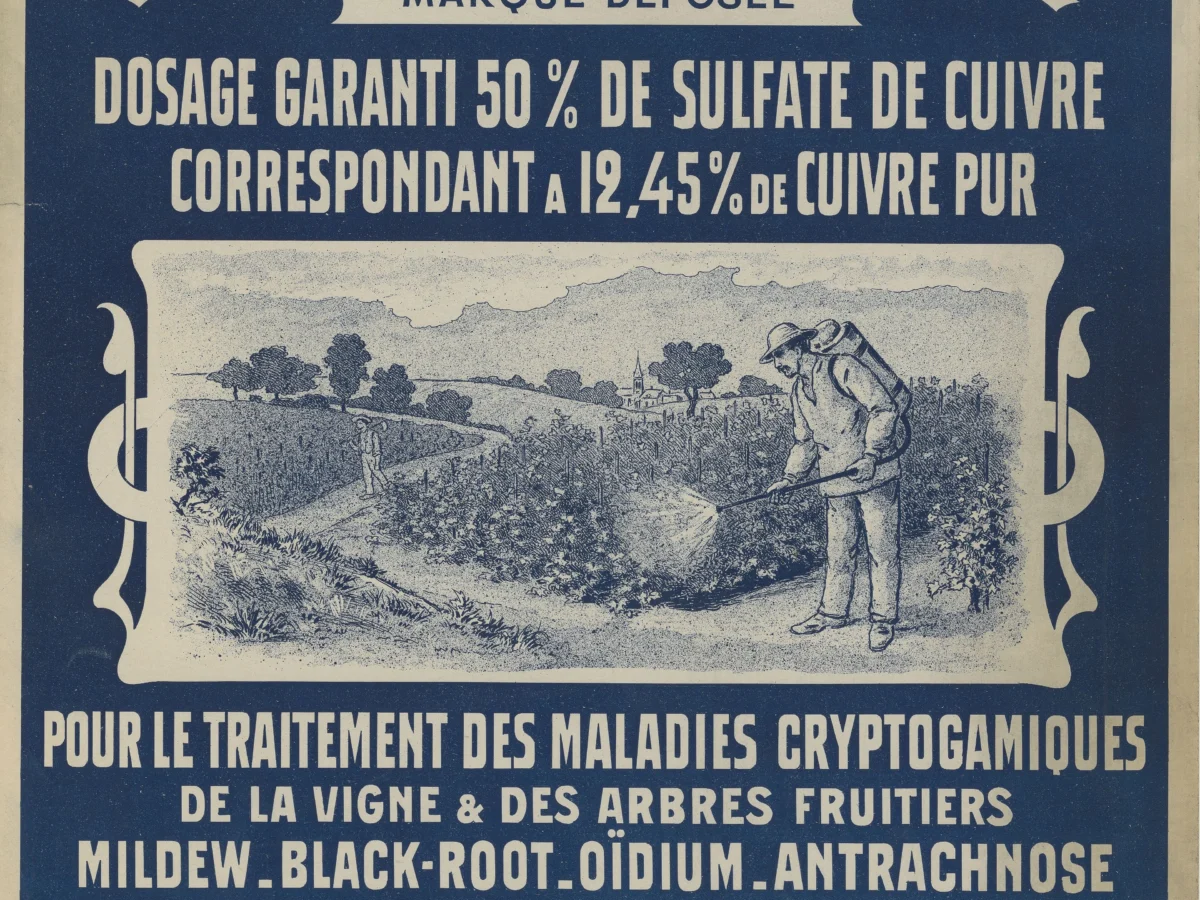
Bordeaux mixture is the original copper fungicide, a blend of copper sulfate and hydrated lime in water, developed in the Bordeaux region of France in the 1880s after a vineyard owner noticed that vines splashed with a blue copper and lime mixture to deter grape thieves were free of downy mildew. The Wikipedia article on Bordeaux mixture tells the story and describes how the lime reduces the solubility of copper, making it longer lasting and less likely to burn leaves. Bordeaux is still used, but modern fixed coppers are more convenient and consistent for home gardeners.
Which diseases does copper fungicide control?
| Disease | Plants | Typical timing |
|---|---|---|
| Peach leaf curl | Peach, nectarine | After leaf fall in autumn and/or before bud swell in late winter |
| Bacterial canker | Cherry, plum, apricot | Autumn leaf fall and late dormant |
| Fire blight | Apple, pear | Dormant to green tip (fixed copper) |
| Shot hole | Peach, apricot, cherry | After leaf fall, dormant |
| Bacterial spot | Peach, tomato, pepper | Label-specific, often early season |
| Early and late blight | Tomato, potato | Before and during wet weather, per label |
| Downy mildew | Grape, cucurbits | Protective, per label |
For peach leaf curl, the UC IPM peach leaf curl guide recommends a dormant-season fungicide spray timed to leaf drop or just before buds swell, because once leaves emerge and curl, treatment is too late. See our guides to dwarf peach trees and when to prune cherry trees for related care.
When should you spray copper on fruit trees?
Timing is everything, because copper only protects.
- Autumn, at leaf fall: On stone fruits, a spray as most leaves drop protects leaf scars from bacterial canker and reduces overwintering leaf curl and shot hole spores.
- Late dormant, before bud swell: The key spray for peach leaf curl and a second protection against canker.
- Dormant to green tip on apples and pears: Reduces fire blight bacteria on bark and cankers.
- During the growing season: Only on crops and products whose labels allow it, such as some tomato and grape uses. Avoid copper on stone fruit leaves in the growing season unless the label specifically permits it.
Spray on a calm, dry day when no rain is expected for at least 24 hours and temperatures are above freezing. Cover all surfaces, including the undersides of branches and buds. Check your local frost and leaf-fall dates with the frost date tool.
Can copper damage plants?
Yes. Copper injury, called phytotoxicity, shows as purple or brown spots, leaf yellowing, leaf drop, or russeting and scarring on fruit. The Wikipedia article notes that the leaves of stone fruit trees are more sensitive to copper than apple leaves. The University of Delaware explains that copper ions enter plants where cuticles are thin, such as new leaves and leaf margins, and that injury is greater when copper is applied to wet leaves or in slow-drying conditions, when mixed with surfactants or spreader-stickers, which let copper spread over more of the leaf and penetrate the cuticle, and in acidic conditions, since copper becomes more soluble with spray acidifiers or acid-forming products.
| To reduce copper injury |
|---|
| Use the lowest labeled rate that gives control |
| Spray dormant trees rather than leafy stone fruits |
| Spray when foliage will dry quickly, not in cool, slow-drying weather |
| Do not add surfactants, spreaders or acidifiers unless the label allows |
| Do not tank-mix with other products unless the label allows |
| Test on a few leaves of sensitive plants first |
Is copper fungicide organic?
Some copper products are allowed in certified organic production, but organic does not mean harmless. Copper is a heavy metal that does not break down, and certification bodies set limits on how much can be used. The Wikipedia article notes that the UK Soil Association permits certain copper fungicides only when there is a major threat to crops and caps total copper at 6 kilograms per hectare per year to keep soil copper within limits. Look for products listed by the Organic Materials Review Institute (OMRI) if you garden organically, and still use them sparingly.
Pesticide label and legal note: Copper fungicides are registered pesticides. In the US, using any pesticide in a manner inconsistent with its label is a violation of federal law (FIFRA). Use only products labeled for your plant and site, follow the rate, timing, protective equipment, re-entry and pre-harvest intervals, and never apply near or into water, since copper is highly toxic to fish and aquatic invertebrates. Store products locked away from children and pets, and check state and local restrictions.
Does copper build up in the soil?
Yes. Copper pesticides must be used in quantities that minimize long-term buildup, because accumulated copper in soil can inhibit root growth and harm soil microorganisms and earthworms. Vineyards and orchards sprayed heavily for decades can have high soil copper. In a home garden, limit copper to the sprays you really need, rely on prevention first, and avoid routine spraying “just in case.”
How do you mix and apply copper fungicide?
- Read the entire label, including the crops listed, rates, timing, protective equipment and re-entry interval.
- Wear protective gear: chemical-resistant gloves, long sleeves, eye protection and any respirator the label requires. Copper products can cause serious eye irritation.
- Measure carefully and mix only what you will use, adding the product to a partly filled sprayer, then topping up with water.
- Agitate often, since many copper products settle out.
- Spray to thorough coverage, just to the point of runoff, avoiding drift onto ponds, streams and nontarget plants.
- Clean the sprayer thoroughly afterward, and dispose of rinse water and leftovers as the label directs.
What are the alternatives to copper?
- Choose resistant varieties, such as leaf curl resistant peaches and scab-resistant apples.
- Improve air flow by pruning and spacing so leaves dry quickly.
- Clean up fallen leaves, mummified fruit and diseased wood.
- Water at the base rather than overhead.
- Use other labeled products where appropriate, such as lime sulfur on some dormant fruit trees, sulfur for powdery mildew, or biological fungicides containing Bacillus species, following each label.
For pest problems, our neem oil spray guide covers a botanical option. If you are unsure what disease you are seeing, start with the plant problem identifier.
Which copper product should home gardeners choose?
| Product type | Characteristics | Notes |
|---|---|---|
| Copper hydroxide | Fixed copper; good activity | Common in dormant fruit sprays |
| Copper oxychloride | Fixed copper; persistent | Widely used on fruit and vegetables |
| Copper octanoate (copper soap) | Lower copper content; often OMRI listed | Popular in home garden ready-to-use sprays |
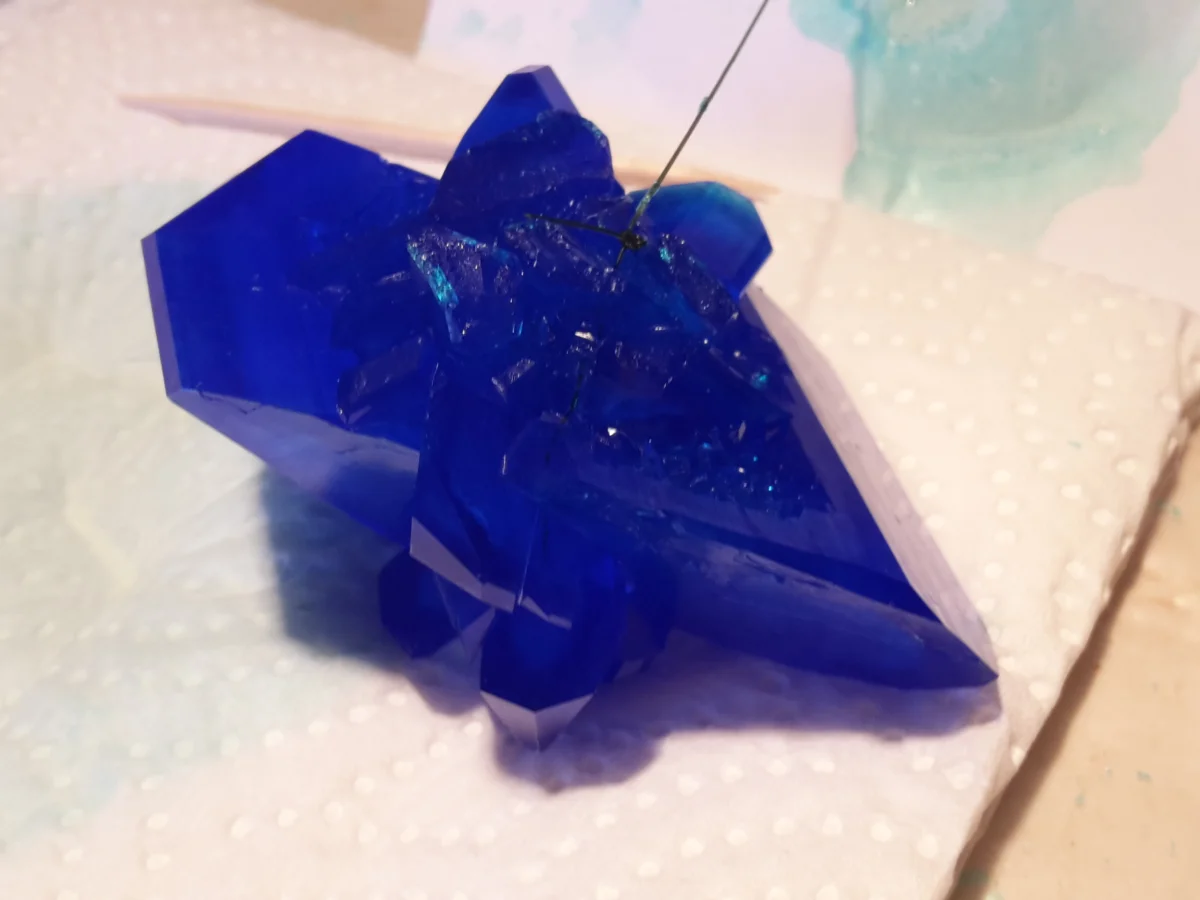
| Copper sulfate pentahydrate | Highly soluble | More likely to burn leaves; mainly used in Bordeaux |
| Bordeaux mixture | Copper sulfate plus lime | Traditional; must be mixed fresh |
For most home orchards, a fixed copper such as copper hydroxide, labeled for dormant fruit tree use, is the practical choice for leaf curl and canker sprays. Copper soap products are convenient for vegetables, with lower copper per application.
How many copper sprays do you need?
Usually far fewer than people think. For peach leaf curl, one well-timed dormant spray is often enough in drier areas, with a second in wet climates. For bacterial canker on cherries and plums, one spray at autumn leaf fall and one in late dormancy are typical. Spraying more often rarely adds protection and increases soil copper and the risk of injury. Keep a simple record of spray dates and products each year so you stay within label limits.
Does copper resistance develop?
Some bacteria can. Strains of Pseudomonas syringae, the cause of bacterial canker, and Erwinia amylovora, the cause of fire blight, have developed tolerance to copper in some regions, so copper may work less well over time. Combining copper with resistant varieties, good sanitation, careful pruning timing and other labeled products slows resistance and keeps copper effective when you need it.
Can you use copper fungicide in winter?
Yes, dormant-season sprays are the main use on fruit trees. Apply on a dry day when temperatures are above freezing and no rain or frost is expected for at least 24 hours, so the spray dries and sticks to bark and buds. Avoid spraying just before a hard freeze, since a wet film can freeze on buds. Combining a dormant copper spray with a dormant horticultural oil is common, but only when both labels allow the mixture.
Is copper safe around children and pets?
Copper fungicides can cause serious eye irritation and are harmful if swallowed in quantity. Keep children and pets away from treated areas until the spray has dried, or for any longer re-entry interval stated on the label, and store concentrates in their original containers in a locked cabinet. Wash hands, gloves and clothing after spraying, and never transfer copper products into food or drink containers. For a gentler option against insects rather than diseases, see neem oil spray.
This article is part of our fruit trees guide, which groups all our fruit growing advice by crop.
Making and using Bordeaux mixture safely
University of California IPM’s Bordeaux mixture pest note gives the standard 10-10-100 formula: 10 lb copper sulfate, 10 lb lime and 100 gal water. A 1-gallon home batch uses about 3 1/3 tablespoons of copper sulfate and 10 tablespoons of dry hydrated lime. The mixture is applied in fall and winter while plants are dormant, because it adheres well in rain; applying after trees break dormancy generally is not recommended because it can injure leaves, and fixed copper sprays are the better spring choice. Bordeaux has a high pH, leaves a salty deposit and is more phytotoxic than fixed copper sprays. It is used for fire blight on pears and apples, leaf curl and shot hole on peaches and nectarines, walnut blight, olive peacock spot, and mildews on grapes.
- Apply the mixture the same day it is made, since it deteriorates; do not add anything to it or mix it with most other pesticides.
- Rinse equipment at least three times, with a little vinegar in the rinse water, because it corrodes metal tanks and pump parts.
- Wear goggles and protective clothing; use a dust- and mist-filtering respirator with hydrated lime; copper sulfate is very toxic and corrosive, so store stock solutions labelled and out of children’s reach.
- Use on dormant plants away from buildings and fences, because it leaves blue-green stains.
Safety and legal note: Copper is toxic to fish and aquatic life and can accumulate in soil with repeated use: keep it away from ponds and drains and never exceed label rates. Copper products may be restricted or banned in some places. Rules vary by country and region.
Free printable: the Year-Round Garden & Preserving Planner
Planting dates for 24 crops, monthly tasks, blanching times, canning safety numbers and a winter storage chart in one 8-page PDF. Enter your email to download it instantly and get our seasonal garden newsletter.
No spam. Unsubscribe any time. We never sell your email.
Frequently asked questions
What does copper fungicide treat?
It prevents fungal and bacterial diseases such as peach leaf curl, bacterial canker, fire blight, shot hole, blights and leaf spots.
When should I spray copper on fruit trees?
Usually at autumn leaf fall and in late winter before bud swell, following the label.
Can copper fungicide cure an infected plant?
No. It only protects against new infections.
Is copper fungicide safe for vegetables?
Products labeled for vegetables can be used as directed, observing the pre-harvest interval and protective equipment.
Can copper fungicide burn plants?
Yes, especially stone fruit leaves, wet or slow-drying foliage, and when mixed with surfactants or acidifiers.
Is copper fungicide safe for bees?
It is generally low in toxicity to bees, but avoid spraying open flowers and follow the label.
Reviewed October 2026. Sources: University of Delaware Extension, Caution with Copper Fungicides and Spray Surfactants; Wikipedia, Copper pesticide; Wikipedia, Bordeaux mixture; UC IPM, Peach Leaf Curl.
Additional sources: University of California IPM, Bordeaux Mixture (Pest Note 7481)