A dwarf peach tree is a peach that stays small, either because it is a genetic dwarf, such as Bonanza, El Dorado or Pix Zee, which naturally grows only about 4 to 6 feet tall, or because it is a normal variety grafted onto a dwarfing rootstock, which keeps it around 8 to 12 feet. Genetic dwarf peaches bear full-size fruit on compact, bushy trees that fit patios and large containers, start fruiting in 2 to 3 years and are usually self-fruitful. They need full sun, regular water and feeding, protection from cold in containers and the same care against peach leaf curl as full-size trees.
Dwarf peach tree facts
| Type | Height | How it stays small | Examples | Best for |
|---|---|---|---|---|
| Genetic dwarf | About 4 to 6 feet | Very short internodes; natural trait | Bonanza, El Dorado, Pix Zee, Bonfire, Honey Babe | Containers, patios, tiny yards |
| Dwarfing rootstock | About 8 to 12 feet | Rootstock limits vigor | Most varieties on dwarfing peach rootstocks | Small gardens |
| Pruned standard | Kept about 8 to 10 feet | Annual summer pruning | Any variety | Backyard orchards |
| Columnar peach | Narrow, up to about 15 feet unpruned | Upright growth habit | SunHigh-type columnar peaches | Narrow spaces |
What is a genetic dwarf peach?
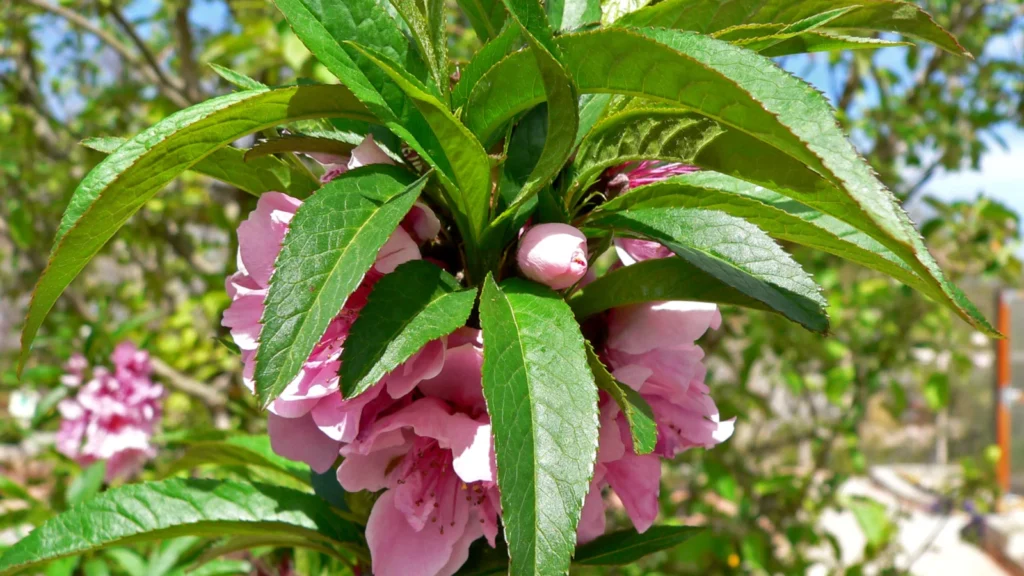
A genetic dwarf peach carries a natural trait that makes the spaces between leaves and buds on its shoots extremely short. The tree grows into a dense, rounded bush with long, overlapping leaves, often looking like a small palm tree, while the fruit is normal size. The Utah State University article on dwarf fruit trees notes that peaches have more genetic dwarf options than other fruit, that Bonanza is the most common, that Pix Zee is becoming popular, and that Bonfire has dark red leaves and darker pink blossoms. It also explains that genetic dwarfs are generally sturdier than trees on dwarfing rootstock and may not need staking.
Genetic dwarf nectarines, such as Nectar Babe and Garden Delight, work the same way. For full-size peaches and nectarines, see our peach tree and nectarine tree guides.

Which dwarf peach varieties are best?
| Variety | Type | Fruit | Notes |
|---|---|---|---|
| Bonanza | Genetic dwarf | Yellow freestone, sweet | The classic patio peach; low chill; showy pink flowers |
| El Dorado | Genetic dwarf | Yellow freestone | Compact; early to mid season |
| Pix Zee | Genetic dwarf | Yellow freestone | Popular modern patio peach |
| Bonfire | Genetic dwarf | Small yellow fruit | Grown mainly for deep burgundy leaves |
| Honey Babe | Genetic dwarf | Yellow-orange freestone | Very sweet; needs moderate chill |
| Nectar Babe, Garden Delight | Genetic dwarf nectarines | Smooth-skinned nectarines | Same care as dwarf peaches |
| Contender, Reliance on dwarfing rootstock | Rootstock dwarf | Full-size fruit | Cold-hardy choices for northern gardens |
Chill needs vary from low to moderate; check the label for your climate. For a very cold-hardy standard peach, see the Contender peach.
How big does a dwarf peach tree get?
Genetic dwarfs typically reach about 4 to 6 feet tall and wide in the ground, and stay smaller in containers. Peaches grafted onto dwarfing rootstock reach about 8 to 12 feet, and standard peaches can be kept at about 8 to 10 feet with regular summer pruning. USU notes that the columnar peach SunHigh stays narrow but can reach 15 feet if unpruned. Choose the size that fits your space and how you want to harvest.
Do dwarf peach trees produce full-size peaches?
Yes. Genetic dwarfs and peaches on dwarfing rootstock produce normal-size fruit for the variety; only the tree is smaller. The total crop is smaller, often 10 to 30 pounds from a mature genetic dwarf in the ground and less from a container tree, compared with several bushels from a full-size tree.
Are dwarf peach trees self-pollinating?
Most peaches, including popular dwarf varieties such as Bonanza and El Dorado, are self-fruitful, so a single tree produces fruit. Bees still do the work, so place container trees where pollinators can reach them, and if you grow a dwarf peach indoors or in a sheltered spot during bloom, hand-pollinate with a small paintbrush.
How do you grow a dwarf peach tree in a container?
- Choose a big pot. Use a container at least 15 to 20 gallons, about 18 to 24 inches wide, with drainage holes. Larger pots dry out more slowly and protect roots better.
- Use a good mix. A well-drained potting mix with some compost; avoid garden soil.
- Full sun. At least 6 to 8 hours of direct sun.
- Water often. Water when the top inch or two of mix is dry; in summer this may be daily. Steady moisture is vital while fruit sizes.
- Feed regularly. Container trees need a balanced fertilizer every few weeks from spring to midsummer, or a slow-release product in spring.
- Protect in winter. Container roots are less hardy than the top. In cold climates, move the pot into an unheated garage or shed after leaf fall, or wrap and insulate it, and keep the mix barely moist.
- Repot every few years into fresh mix, trimming circling roots.
Plan the container with the container garden planner or size a fabric pot with the grow bag volume calculator.
How do you plant a dwarf peach in the ground?
Choose full sun, good air flow and well-drained soil, ideally on high ground away from frost pockets, because peaches bloom early. Plant in early spring while dormant, using the planting hole size calculator, keeping the graft union above the soil, then water deeply and mulch. Space genetic dwarfs about 5 to 6 feet apart and rootstock dwarfs about 10 to 12 feet apart. Check your zone with the growing zone finder; most peaches grow in about zones 5 to 9, depending on variety.
How do you prune a dwarf peach tree?
Genetic dwarfs need very little pruning. Each year after harvest or in late winter, remove dead, crossing and crowded branches from the dense interior so light and air can reach it, and cut out any weak or damaged wood. Peaches fruit on one-year-old wood, so do not remove too much of last year’s growth. Rootstock dwarfs and standard peaches are trained to an open center and pruned more heavily each year; see when to prune peach trees.
Do dwarf peaches need fruit thinning?
Yes. Dwarf peaches often set more fruit than the small tree can support. When fruit is about the size of a marble, thin to one peach every 6 to 8 inches, or fewer on container trees. Thinning gives larger, sweeter peaches and prevents branch breakage. When the fruit colors, see when to pick peaches for ripeness signs.
What problems affect dwarf peach trees?
| Problem | Sign | What to do |
|---|---|---|
| Peach leaf curl | Red, puckered spring leaves | Dormant spray after leaf fall or before bud swell; see peach leaf curl |
| Aphids | Curled, sticky new leaves | Hose off; insecticidal soap if needed |
| Spider mites | Stippled leaves, fine webbing, worse on hot patios | Hose leaves; keep the tree watered |
| Brown rot | Rotting fruit with tan spores | Thin fruit; remove mummies |
| Frost damage | Brown blossoms after cold night | Move containers under cover during frost |
| Root rot in pots | Wilting despite wet soil | Improve drainage; water less in cool weather |
For other issues, try the plant problem identifier.
Plant patent note: Several dwarf peaches and nectarines, especially newer introductions such as some ornamental-leaved and patio varieties, are protected by US plant patents or trademarks. Propagating them by grafting or cuttings without a license is not allowed. Buy trees from licensed nurseries, and check the tag before propagating any dwarf peach.
Where do genetic dwarf peaches come from?
Natural dwarf peach mutations have been known for a long time, particularly in China, but the modern patio peaches sold in North America were developed in California in the mid-1900s by breeders who crossed dwarf peach types with standard varieties to improve fruit quality. Bonanza, released in the 1960s, became the best known. Breeders continue to release new genetic dwarf peaches and nectarines with better flavor, disease tolerance and ornamental foliage. Because they flower heavily and stay small, many people grow them as much for their spring blossoms as for their fruit.
How do you protect a dwarf peach from peach leaf curl?
Peach leaf curl is the most common disease of peaches and nectarines, including dwarfs. Infection happens as buds swell in cool, wet late winter, so prevention is the key. The UC IPM peach leaf curl guide recommends a single dormant fungicide treatment after leaf fall in autumn or before bud swell in late winter. A big advantage of container dwarfs is that you can simply move them under a roof overhang, into a carport or unheated greenhouse from late winter until the leaves expand, keeping rain off the buds and avoiding most infections without spraying.
Dwarf peach tree care calendar
| Season | Task |
|---|---|
| Late fall | Dormant leaf curl treatment after leaf drop; move containers to shelter in cold areas |
| Late winter | Light pruning; keep rain off container trees’ swelling buds |
| Bloom | Protect from frost; hand-pollinate sheltered trees |
| Spring | Thin fruit when marble-sized; start regular feeding |
| Summer | Water consistently; watch for mites and aphids; harvest |
| After harvest | Light summer pruning; reduce feeding |
How much sun and water does a dwarf peach need?
Like all peaches, dwarfs need full sun, at least 6 to 8 hours a day, to flower well and ripen sweet fruit. In the ground, water deeply once or twice a week during dry weather. In containers, check daily in summer, because a small root ball dries out quickly on a hot patio; water until it drains from the bottom, and never let the pot sit in standing water. Mulch the surface of the pot or the root zone to keep moisture even. Inconsistent watering is the most common cause of small, split or dropped fruit on container peaches.
How long do dwarf peach trees live?
Peaches are relatively short-lived fruit trees in general, often productive for about 10 to 15 years, sometimes longer with good care. Genetic dwarfs in containers typically stay productive for many years if repotted every few years with fresh mix and root pruning. Trees in the ground live longest in well-drained soil with good air circulation and consistent care against leaf curl and borers.
Are dwarf peach trees worth growing?
For small gardens, patios and balconies, absolutely. A genetic dwarf peach gives you spring blossoms, attractive foliage and homegrown peaches in a space no bigger than a large pot, often within two or three years. The trade-offs are smaller total harvests and the extra watering that containers require, but for many gardeners the chance to pick a sun-warmed peach from their own patio is well worth it.
Before you buy, check the variety’s chill hours and hardiness against your local climate, and choose a self-fruitful variety if you only have room for one tree. A little planning at the nursery is the difference between a decorative shrub and a patio peach that fruits every summer.
What is the best dwarf peach for beginners?
Bonanza is the most widely available and forgiving choice: self-fruitful, compact, quick to bear and suited to mild-winter climates. In colder regions, choose a hardier variety on a dwarfing rootstock instead, or grow a genetic dwarf in a container you can move into shelter for winter. Whatever you choose, start with a healthy tree, a large pot or well-drained bed and a plan for leaf curl.
Related reading: how long it takes a peach tree to bear fruit, white peaches and dwarf apricot trees.
Looking for the next tree to plant? Our guide to growing fruit trees at home compares options by climate and space.
Free printable: the Year-Round Garden & Preserving Planner
Planting dates for 24 crops, monthly tasks, blanching times, canning safety numbers and a winter storage chart in one 8-page PDF. Enter your email to download it instantly and get our seasonal garden newsletter.
No spam. Unsubscribe any time. We never sell your email.
Frequently asked questions
How tall does a dwarf peach tree get?
Genetic dwarfs reach about 4 to 6 feet; peaches on dwarfing rootstock about 8 to 12 feet.
Do dwarf peach trees need a pollinator?
Most, including Bonanza and El Dorado, are self-fruitful.
Can you grow a dwarf peach in a pot?
Yes. Use a container of at least 15 to 20 gallons, full sun and regular water and feeding.
How long until a dwarf peach tree fruits?
Usually 2 to 3 years after planting.
Do dwarf peaches get peach leaf curl?
Yes. They need the same dormant-season protection as full-size peaches.
Are dwarf peaches as tasty as regular peaches?
Good varieties such as Bonanza and Honey Babe are sweet and flavorful; fruit is full size.
Sources: Utah State University, Dwarf fruit trees bring fruit to small spaces; UC IPM, Peach Leaf Curl.