A flower garden is one of the most rewarding things you can create. A bed of bright annuals by the front door, a long perennial border that changes every few weeks, a bulb display that announces spring, or a wild, buzzing pollinator patch can transform how a home looks and feels, and how much time you want to spend outside. The best flower gardens are not the most expensive or the most complicated; they are the ones that are planned around the site, planted with the right flowers, and arranged so something is always in bloom.
This complete guide takes you through every step of creating a flower garden from scratch: understanding the different types of flowers, choosing the site, preparing the soil, picking a garden style, the principles of good design, planning blooms from early spring to late fall, the best flowers for sun, shade and dry soil, planting, care through the seasons, solving common problems, and sample plans you can copy. It is written for beginners, but there is plenty here for experienced gardeners planning a new bed too.
Annuals, perennials, biennials and bulbs
Every flower garden is built from four kinds of plants. Understanding how each behaves is the foundation of good planning. Michigan State University Extension’s flower gardening guide (PDF) notes that most flower gardeners start with annuals such as zinnias and marigolds because they are easy to grow and flower within weeks of sowing, and that many gardens end up combining annuals, perennials and bulbs.
| Type | Life cycle | Bloom | Strengths | Drawbacks |
|---|---|---|---|---|
| Annuals | Grow, flower, set seed and die in one season | Long, often all summer to frost | Fast, cheap from seed, nonstop color, easy to change each year | Must be replanted every year |
| Perennials | Live for three years or more, dying back in winter and regrowing in spring | Usually a few weeks each | Come back every year; many spread; good foliage and texture | Need planning for continuous color; some slow to establish |
| Biennials | Grow leaves in year one, flower and die in year two | Late spring to summer of year two | Classic cottage flowers; many self-seed | Two-year wait for flowers |
| Bulbs (and corms, tubers) | Store energy underground; most are perennial | Concentrated, often spring | Early color when little else blooms; easy | Foliage must be left to die back naturally |
Which should you choose?
- For instant, season-long color in your first year, rely mainly on annuals.
- For a garden that improves every year with less replanting, build around perennials and fill gaps with annuals while they establish.
- For early spring color, plant bulbs in fall.
- For the fullest, most continuous display, combine all four. Most experienced gardeners do exactly this.
Step 1: Choose the right site
Sun
Light decides which flowers you can grow more than any other factor. Watch the site through a full day in late spring or summer and count the hours of direct sun.
| Light | Direct sun | What grows well |
|---|---|---|
| Full sun | 6 hours or more | Most annuals and perennials: zinnias, petunias, coneflowers, salvia, roses, lavender |
| Part sun / part shade | About 3 to 6 hours | Impatiens, begonias, astilbe, columbine, bleeding heart, hydrangeas |
| Shade | Less than about 3 hours | Hostas, ferns, impatiens, begonias, coleus, hellebores |
The sunlight requirement finder helps you match plants to your light, and our guide to shade garden plants covers the shadier spots in detail.
Other things to check
- Drainage: most flowers dislike soggy soil. Avoid spots where water stands after rain, or build raised beds.
- Water access: new plantings need regular water, so choose a site the hose can reach.
- Visibility: place flowers where you will see and enjoy them: from a window, along a path, by the front door or around a patio.
- Competition: avoid planting right under large trees, whose roots take water and nutrients.
- Wind: tall flowers need shelter or staking in exposed sites.
Step 2: Prepare the soil
Good soil is the difference between flowers that merely survive and flowers that thrive. Most garden flowers prefer loose, well-drained soil with plenty of organic matter.
- Test the soil. A soil test from your Cooperative Extension office shows pH and nutrient levels, so you add only what your soil needs. Most flowers grow well in slightly acidic to neutral soil; our guide to garden lime explains pH.
- Remove grass and weeds, either by digging or by smothering them under cardboard for several weeks.
- Loosen the soil 8 to 12 inches deep with a garden fork.
- Add compost: spread 2 to 3 inches over the bed and mix it into the top few inches. The compost calculator works out how much you need.
- Shape the bed with a gentle crown so water drains away, and cut a clean edge. Our guide to garden edging ideas covers edges.
Make it big enough. Beds that are too narrow look skimpy. A border at least 3 to 4 feet deep gives room for layers of plants; 5 to 8 feet allows a really full display.
Step 3: Choose a flower garden style
| Style | What it looks like | Best for |
|---|---|---|
| Border | A long bed against a fence, wall or hedge, viewed from one side; tallest plants at the back | Property edges, along paths |
| Island bed | A freestanding bed viewed from all sides; tallest plants in the middle | Open lawns |
| Cottage garden | Informal, abundant mix of flowers, herbs and roses | Relaxed, romantic gardens |
| Formal bed | Symmetrical shapes, neat edges, repeated plants | Front gardens, traditional homes |
| Cutting garden | Rows of flowers grown to pick | Bouquets all summer |
| Pollinator garden | Native flowers and host plants for bees and butterflies | Wildlife and vegetable gardens |
| Container garden | Pots, window boxes and hanging baskets | Patios, balconies, small spaces |
| Wildflower meadow | A naturalistic mix of native flowers and grasses | Larger, low-maintenance areas |
For specific styles, see our guides to cut flower gardens, pollinator gardens and rock gardens.
Step 4: Design principles that make a garden look good
Layer by height
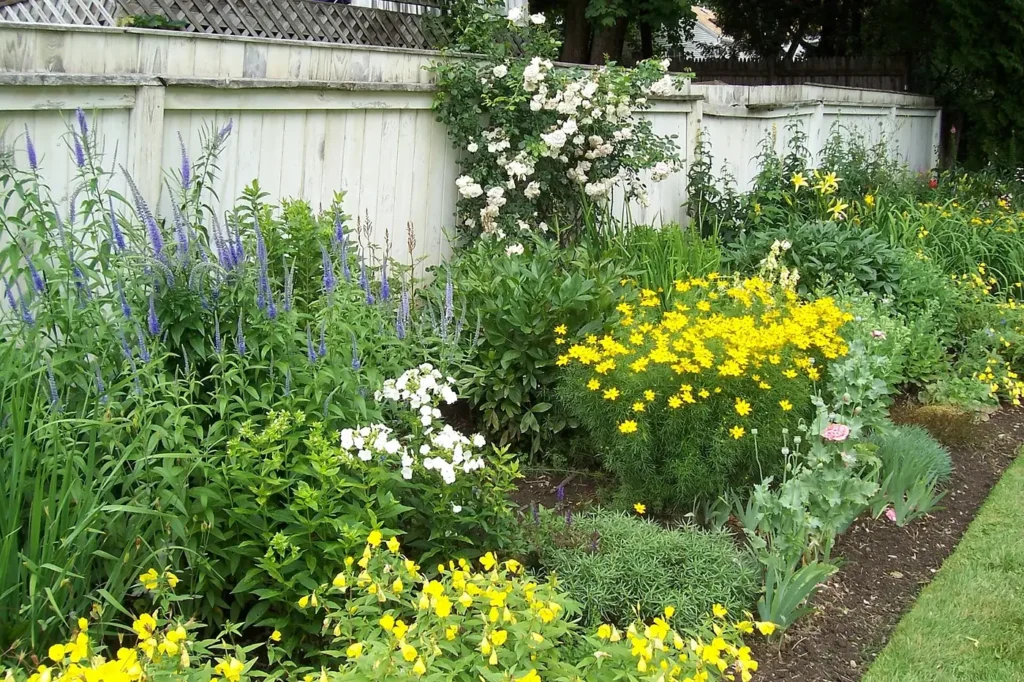
In a border, place tall plants at the back, medium plants in the middle and low plants at the front, so nothing is hidden. In an island bed, put the tallest plants in the center. Break the rule occasionally: an airy, see-through tall plant near the front adds depth.
Plant in groups
Single plants dotted around look spotty. Plant in groups of three, five or seven of the same plant, or in drifts that flow into one another. Larger groups read better from a distance.
Repeat plants and colors
Repeating the same plant or color at intervals along a border ties the design together and leads the eye through the garden.
Use color deliberately
Michigan State’s guide includes a color wheel for planning combinations. A few simple approaches:
| Approach | How it works | Example |
|---|---|---|
| Harmonious (analogous) | Colors next to each other on the color wheel | Purple, blue and pink; or yellow, orange and red |
| Complementary | Colors opposite each other, for contrast | Purple salvia with yellow coreopsis |
| Monochromatic | Shades of one color | A white garden that glows at dusk |
| Hot | Reds, oranges and yellows | A bold, energetic border |
| Cool | Blues, purples, pinks and whites | A calm, restful bed that looks larger |
White and silver plants act as peacemakers between colors that might clash, and light colors stand out in shade and at dusk.
Do not forget foliage
Flowers come and go, but leaves are there all season. Combine different leaf shapes, textures and colors: bold leaves next to fine ones, silver beside green, purple foliage for contrast. Many perennials have good foliage texture and fall color, which carries the garden between blooms.
Add structure and a focal point
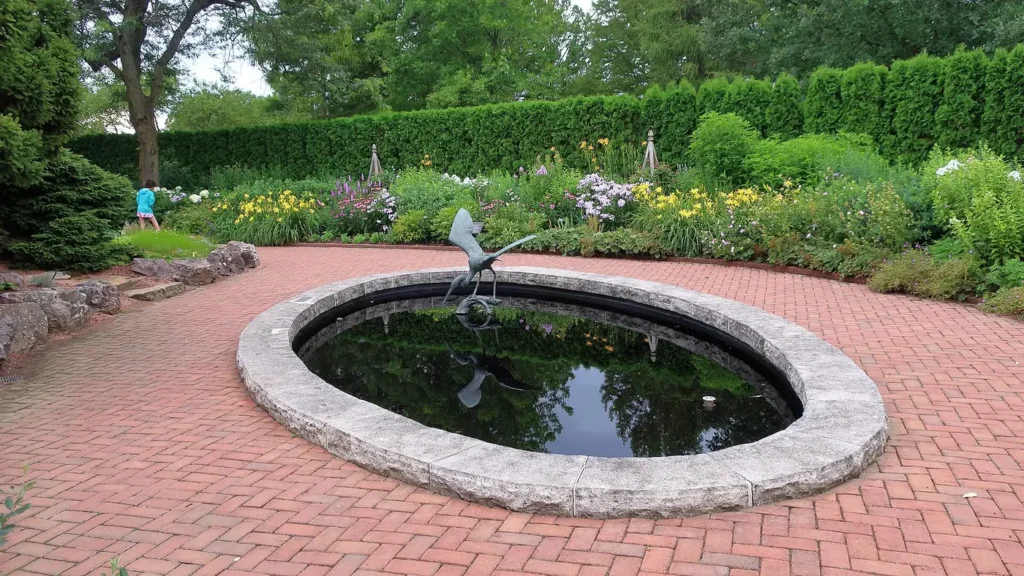
Evergreen shrubs, ornamental grasses, a bench, an urn, an arch or a birdbath give the garden a backbone, especially in winter. Our garden trellis ideas cover arches and obelisks for climbing flowers.
Step 5: Plan blooms from spring to fall
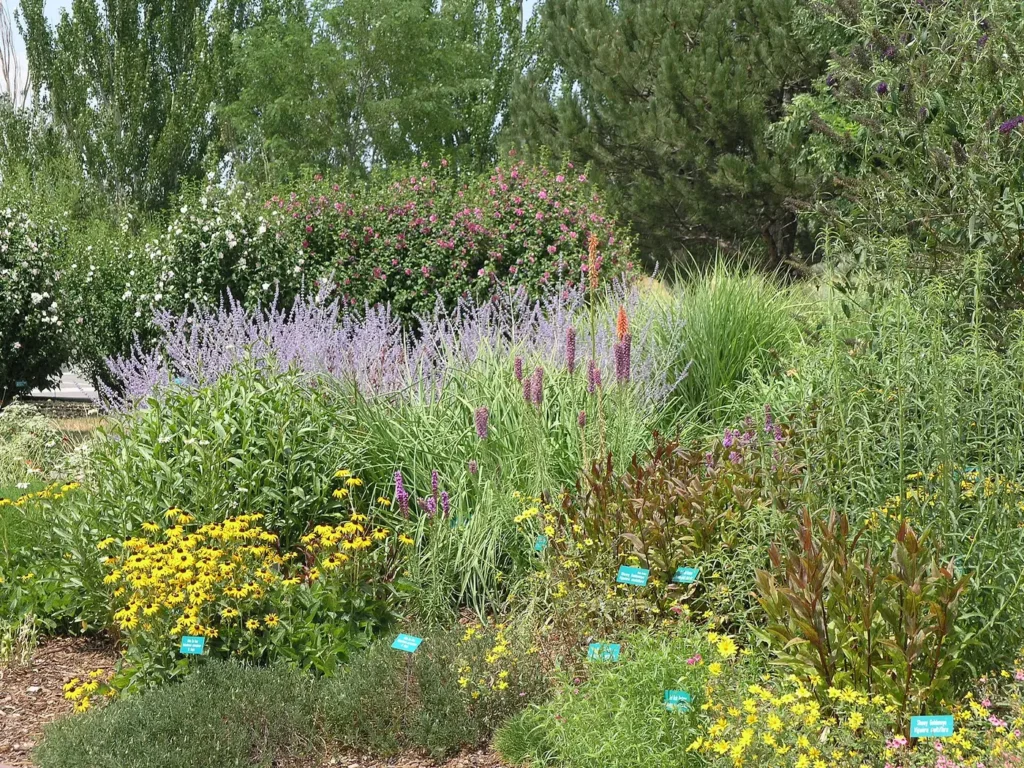
The secret to a garden that always has something in flower is planning the bloom sequence. Most perennials bloom for only a few weeks, so choose plants that flower at different times and arrange them so each season has color spread through the bed. Annuals then fill gaps with long-lasting color.
| Season | Bulbs | Perennials and biennials | Shrubs and annuals |
|---|---|---|---|
| Early spring | Snowdrops, crocus, early daffodils, grape hyacinth | Hellebores, creeping phlox, basket-of-gold | Forsythia; pansies and violas |
| Mid to late spring | Tulips, daffodils, alliums | Columbine, bleeding heart, peonies, irises, foxglove | Lilacs, azaleas |
| Early summer | Lilies begin | Salvia, catmint, coreopsis, lupines, roses, dianthus | Petunias, snapdragons |
| Midsummer | Lilies, gladiolus | Coneflowers, daylilies, bee balm, phlox, lavender, black-eyed Susans | Zinnias, marigolds, cosmos, sunflowers |
| Late summer to fall | Dahlias, fall crocus | Asters, sedum, goldenrod, Russian sage, Japanese anemone | Mums, ornamental grasses |
| Winter interest | — | Seed heads, hellebores in mild areas | Evergreens, winterberry, ornamental grasses |
How to map your bloom sequence
- List every plant you want to grow with its bloom months, height and color.
- Check each season has several plants in bloom, spread through the bed rather than clustered in one spot.
- Interplant bulbs among later-emerging perennials such as daylilies and hostas, whose leaves will hide the fading bulb foliage.
- Fill gaps with annuals, especially in mid to late summer, when many perennials are between flushes.
- Keep a garden journal of what bloomed when, and adjust next year.
Check which perennials survive your winters with the USDA Plant Hardiness Zone Map or our growing zone finder, and time spring plantings with the frost date tool.
The best flowers for a flower garden
Easy annuals for sun
| Annual | Height | Bloom | Why grow it |
|---|---|---|---|
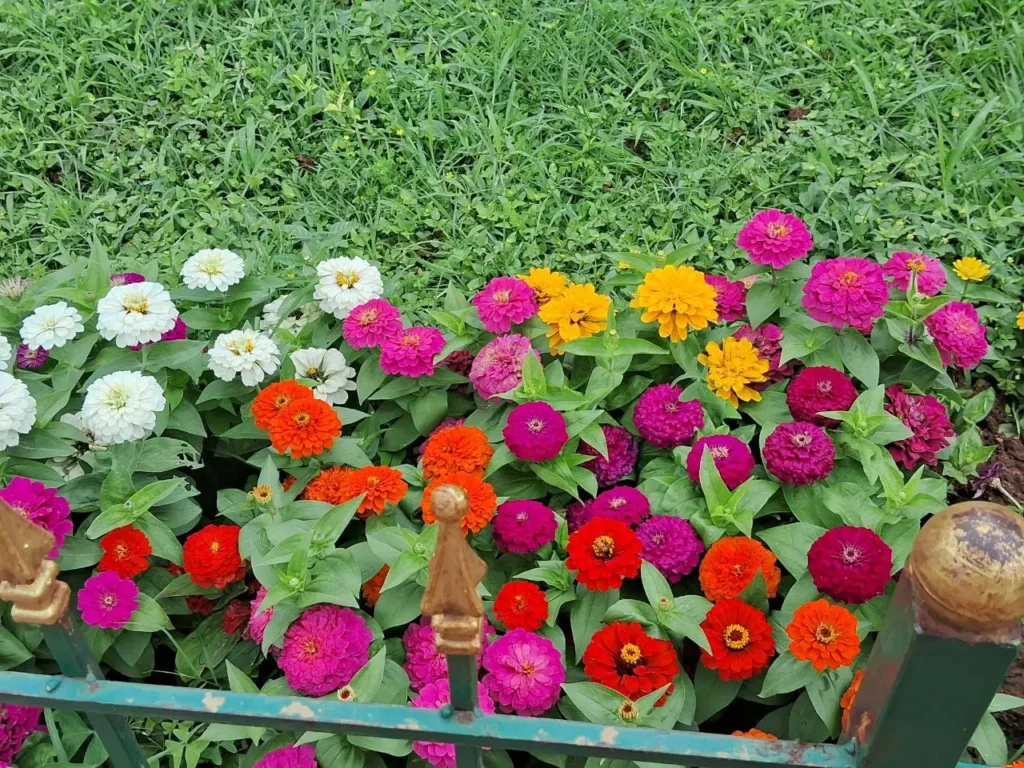
| Zinnia | 1 to 4 ft | Early summer to frost | Easy from seed, bright colors, great cut flower |
| Marigold | 6 in to 3 ft | Early summer to frost | Tough, cheerful edging |
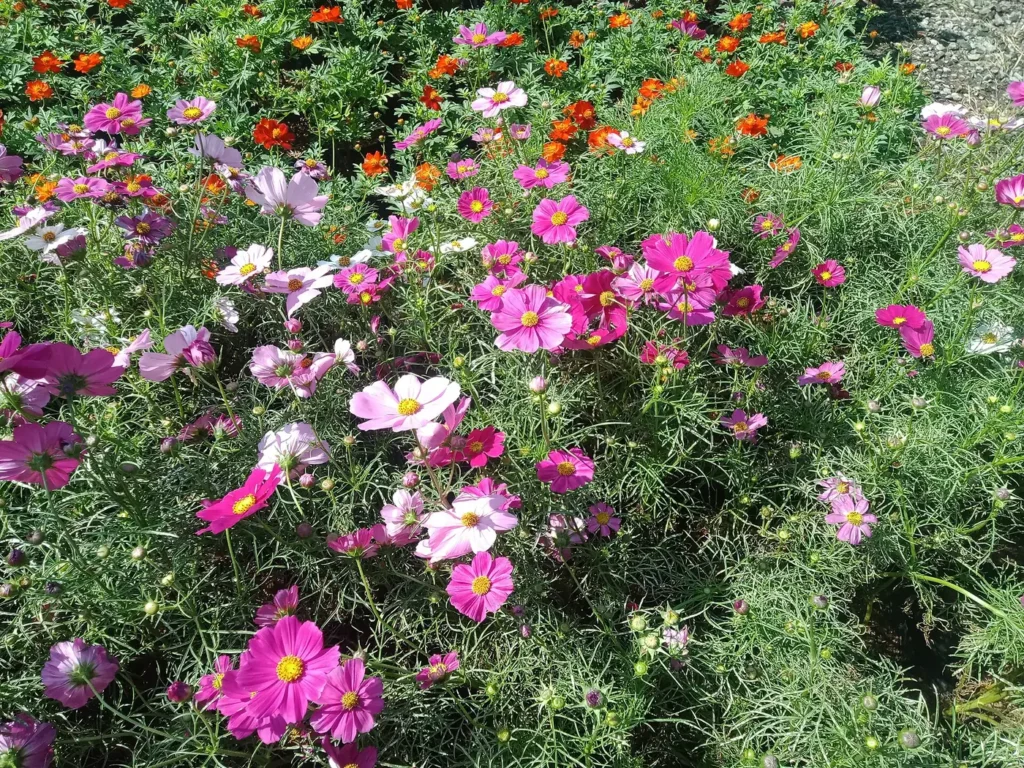
| Cosmos | 2 to 5 ft | Midsummer to frost | Airy, self-sows, loved by bees |
| Petunia | 6 to 18 in | Late spring to frost | Long-flowering; good in containers |
| Sunflower | 2 to 10 ft | Midsummer | Bold; children love them |
| Salvia (annual) | 1 to 3 ft | Summer to frost | Spikes of red, blue or purple |
| Snapdragon | 1 to 3 ft | Spring and fall | Cool-season color and cut flowers |
| Celosia | 1 to 3 ft | Summer to frost | Unusual plumes and crests |
| Nasturtium | 1 ft (trailing types longer) | Summer | Edible flowers; thrives in poor soil |
| Sweet alyssum | 4 to 6 in | Spring to fall | Fragrant edging; attracts beneficial insects |
| Lantana | 1 to 3 ft | Summer to frost | Heat-loving; butterflies love it |
| Vinca (annual periwinkle) | 6 to 18 in | Summer | Thrives in heat and dry spells |
Reliable perennials for sun
| Perennial | Height | Bloom | Notes |
|---|---|---|---|
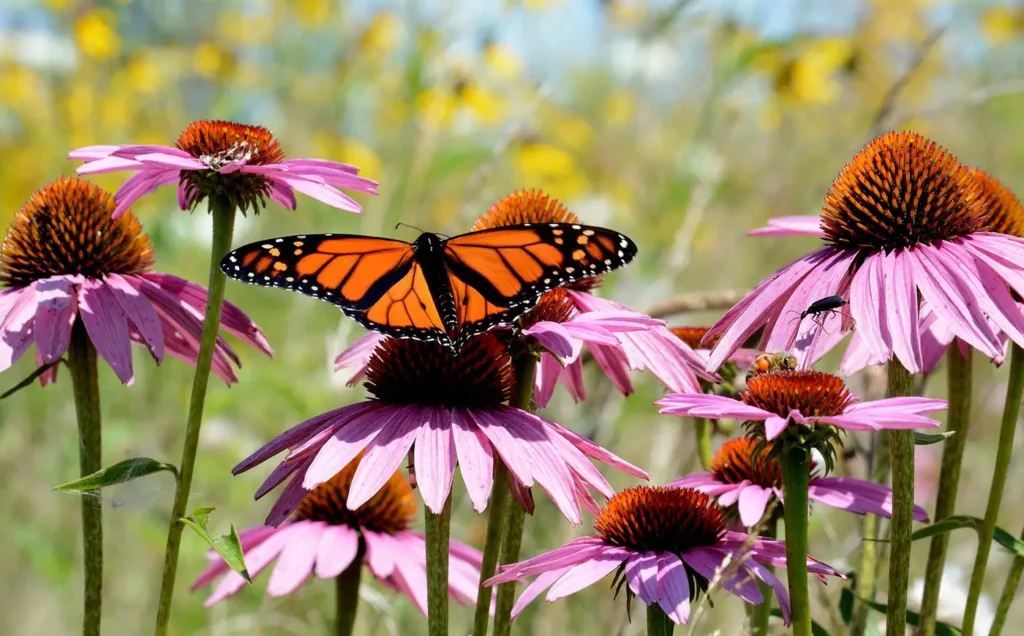
| Purple coneflower | 2 to 4 ft | Summer | Native, tough, pollinator magnet |
| Black-eyed Susan | 2 to 3 ft | Mid to late summer | Long bloom; spreads steadily |
| Daylily | 1 to 4 ft | Summer | Nearly indestructible |
| Garden phlox | 2 to 4 ft | Mid to late summer | Fragrant; choose mildew-resistant varieties |
| Catmint (Nepeta) | 1 to 3 ft | Late spring to summer | Long-flowering; reblooms after shearing |
| Perennial salvia | 1 to 3 ft | Late spring to summer | Blue and purple spikes |
| Coreopsis | 1 to 3 ft | Summer | Yellow daisies for a long season |
| Bee balm | 2 to 4 ft | Midsummer | Hummingbirds and bees |
| Peony | 2 to 3 ft | Late spring | Long-lived; spectacular flowers |
| Iris | 1 to 4 ft | Late spring | Bold, sword-shaped leaves |
| Lavender | 1 to 3 ft | Summer | Fragrant; needs sharp drainage |
| Sedum (stonecrop) | 1 to 2 ft | Late summer to fall | Drought-tolerant; fall color |
| Aster | 1 to 5 ft | Fall | Essential late food for pollinators |
| Russian sage | 3 to 4 ft | Summer to fall | Silvery, airy, drought-tolerant |
| Yarrow | 1 to 3 ft | Summer | Tough, flat flower heads |
Many of these are covered in more depth in our guides to growing roses and pollinator gardens.
Flowers for shade
- Annuals: impatiens, begonias, coleus (for foliage), torenia, browallia.
- Perennials: astilbe, bleeding heart, hellebores, columbine, foxglove (biennial), Japanese anemone, coral bells, hostas and ferns for foliage.
Flowers for hot, dry sites
- Annuals: zinnias, vinca, portulaca, lantana, cosmos, gomphrena.
- Perennials: lavender, Russian sage, sedum, yarrow, blanket flower, coneflower, black-eyed Susan, ornamental grasses.
Spring bulbs to plant in fall
| Bulb | Bloom | Notes |
|---|---|---|
| Crocus and snowdrops | Late winter to early spring | The first flowers of the year |
| Daffodils | Early to mid spring | Deer and rodents avoid them; return reliably |
| Tulips | Mid to late spring | Many varieties bloom best the first year |
| Grape hyacinth | Spring | Blue carpets beneath taller bulbs |
| Alliums | Late spring to early summer | Globe-shaped heads; deer-resistant |
Plant spring bulbs in fall, generally about two to three times as deep as the bulb is tall, pointy end up. Leave the foliage to die back naturally after flowering, since it feeds next year’s flowers.
Step 6: Planting your flower garden
When to plant
| What | When |
|---|---|
| Frost-tender annuals (zinnias, marigolds, petunias) | After your last spring frost |
| Cool-season annuals (pansies, snapdragons, sweet alyssum) | Early spring and again in fall |
| Perennials and shrubs | Spring or early fall, when temperatures are mild |
| Spring bulbs | Fall, before the ground freezes |
| Summer bulbs (dahlias, gladiolus) | After the last frost, once soil warms |
Find your dates with the frost date tool and the planting calendar.
Seeds or plants?
Many annuals, including zinnias, cosmos, marigolds, sunflowers and nasturtiums, grow easily from seed sown directly in the garden, which is far cheaper. Slower annuals such as petunias and begonias, and most perennials, are easier to buy as plants. To grow your own transplants, see our guide on starting seeds indoors; Clemson Extension’s guide to starting seeds indoors covers lights and timing in detail.
How to plant
- Lay out the plants in their pots according to your plan, and adjust before digging.
- Water plants an hour before planting.
- Dig a hole as deep as the pot and about twice as wide.
- Loosen circling roots gently before setting the plant in place.
- Plant at the same depth it grew in the pot.
- Firm the soil and water thoroughly.
- Mulch around plants, keeping it away from stems.
Spacing
Space plants according to their mature width on the label. It is tempting to crowd young plants for instant impact, but crowding leads to poor airflow, disease and constant dividing. Fill gaps with annuals while perennials grow. The plant spacing calculator works out how many plants you need for a bed.
Step 7: Caring for your flower garden
Watering
Water new plantings regularly until established, then water deeply about once a week in dry weather rather than a little every day. Water at the base of plants, ideally in the morning, to keep leaves dry and reduce disease. Containers and hanging baskets may need water daily in summer. Our guide on how often to water explains how to check soil moisture, and the garden watering calculator turns it into gallons.
Mulching
Mulch holds moisture, keeps weeds down and gives beds a finished look. University of Illinois Extension’s advice on edging and mulching beds notes that flowerbeds typically need about an inch of mulch once settled, compared with 2 to 3 inches in shrub beds. Shredded bark, leaf mold and compost all work well. The mulch calculator works out how much to buy.
Feeding
Compost-rich soil carries most flowers. Annuals and container plants, which bloom heavily all season, benefit from regular feeding; follow product labels. Too much nitrogen produces leafy plants with fewer flowers, and many tough perennials, such as yarrow, lavender and Russian sage, flower best in lean soil.
Deadheading
Removing faded flowers stops plants putting energy into seeds and encourages many annuals and perennials to keep blooming, and some to rebloom. Pinch or snip spent flowers back to a leaf or bud. Leave the last flowers of the season on plants such as coneflowers and black-eyed Susans if you want seeds for birds.
Pinching and cutting back
- Pinch the tips of young zinnias, cosmos and mums to make them bushier with more flowers.
- Shear catmint, salvia and similar perennials by about a third after their first flush to encourage a second.
- Cut back tall, late-flowering perennials such as asters and phlox by a third to a half in early summer for sturdier, shorter plants.
Staking
Tall or floppy flowers such as peonies, delphiniums, dahlias and tall asters need support. Put stakes, grow-through rings or twiggy branches in place early in spring, so plants grow up through them.
Dividing perennials
Every few years, many perennials become crowded and flower less, often with a dead center. Dig them up in spring or early fall, split them into sections with a spade or knife, and replant the healthiest outer pieces. Dividing also gives you free plants.
A year in the flower garden
| Season | Tasks |
|---|---|
| Late winter | Plan new beds; order seeds; start slow annuals indoors; cut back ornamental grasses |
| Early spring | Clear old stems; divide summer and fall bloomers; add compost; plant cool-season annuals |
| Late spring | Plant tender annuals after last frost; set stakes; mulch; pinch young plants |
| Summer | Water deeply; deadhead; shear early bloomers; watch for pests and mildew |
| Fall | Plant spring bulbs and new perennials; divide spring bloomers; collect seeds |
| Winter | Leave seed heads for birds and overwintering insects; review the year’s notes |
Common flower garden problems
| Problem | Likely cause | Fix |
|---|---|---|
| Few flowers, lots of leaves | Too much shade or too much nitrogen | Move to more sun; feed less |
| White powder on leaves | Powdery mildew | Better airflow; resistant varieties; water at the base |
| Plants flopping over | Too much shade, rich soil or no support | Stake early; cut back tall perennials in early summer |
| Holes in leaves | Slugs, caterpillars or beetles | Identify the pest; hand-pick |
| Sticky leaves, curled tips | Aphids | Hose off; encourage ladybugs |
| Yellow leaves | Overwatering, poor drainage or nutrient shortage | Check soil moisture and drainage |
| Flowers eaten overnight | Deer or rabbits | Fencing or resistant plants |
| Gaps in midsummer | Bloom sequence not planned | Add annuals and late-summer perennials |
For diagnosis, try the plant problem identifier, the pest identifier and the yellow leaf identifier. For deer and rabbits, see our guide to keeping animals out of your garden.
Sample flower garden plans
Beginner’s 4 × 8 ft sunny annual bed
| Row | Plants |
|---|---|
| Back | 6 tall zinnias and 4 cosmos |
| Middle | 8 salvia and 6 snapdragons |
| Front | 10 marigolds and sweet alyssum along the edge |
Low-maintenance 4 × 12 ft perennial border (sun)
| Position | Plants | Bloom |
|---|---|---|
| Back | 3 Russian sage, 3 tall asters | Summer to fall |
| Middle | 5 coneflowers, 5 black-eyed Susans, 3 daylilies | Summer |
| Front | 5 catmint, 5 sedum, daffodils planted between | Spring to fall |
Shade bed
Hostas and ferns for structure, astilbe and bleeding heart for flowers, impatiens or begonias for summer-long color at the front, and hellebores for late winter bloom.
Pollinator bed
Coneflowers, bee balm, black-eyed Susans, milkweed, asters and goldenrod, planted in groups for continuous food from summer into fall.
Container combination
Use the “thriller, filler, spiller” formula: one tall plant such as salvia or an ornamental grass, mounding fillers such as petunias or coleus, and a trailing plant such as sweet potato vine or calibrachoa spilling over the edge. The container garden planner helps with pot sizes.
Sketch your own beds with the garden layout generator.
Flower bed ideas for specific spots
Front yard and entrance beds
The bed by the front door is seen every day, so give it long-lasting color and tidy structure. Use a backbone of small evergreen shrubs or boxwood, a few reliable perennials such as catmint and daylilies, and a generous band of annuals at the front that you change each season: pansies in spring, petunias or vinca in summer, mums in fall. Keep plants low enough near the door that they do not block paths or windows.
Foundation beds
Beds along the house often sit in the rain shadow of the eaves, so they dry out quickly. Leave a gap of at least a foot between the house and the first plants for airflow and access, choose plants for the light on that side of the house, and water new plantings regularly.
Mailbox and lamppost beds
These small, sunny islands are perfect for tough, low-maintenance plants that cope with heat reflected from pavement: sedum, black-eyed Susans, lavender, coreopsis, blanket flower, and annual vinca or lantana. A climbing clematis or morning glory can twine up the post.
Beds along fences
A fence makes a ready-made backdrop and support. Train climbing roses, clematis or sweet peas on it, and layer perennials in front. Our guide to garden fence ideas covers fences that double as supports.
Slopes and banks
Slopes are hard to mow and dry out quickly. Plant spreading, drought-tolerant perennials and ground covers such as creeping phlox, sedum and catmint, which hold the soil, or build a rock garden into the slope.
Around trees
Use shade-tolerant, shallow-rooted plants and avoid piling soil over tree roots. Spring bulbs bloom before trees leaf out and are a good choice beneath deciduous trees.
Flowers for special purposes
| Purpose | Flowers to try |
|---|---|
| Fragrance | Lavender, sweet alyssum, peonies, garden phlox, roses, lilies, sweet peas, nicotiana, lilacs |
| Hummingbirds | Bee balm, salvia, cardinal flower, columbine, penstemon, honeysuckle vine, zinnias |
| Butterflies | Coneflower, milkweed, zinnias, lantana, asters, liatris, verbena |
| Usually less browsed by deer | Daffodils, alliums, lavender, catmint, Russian sage, yarrow, salvia, foxglove |
| Cut flowers | Zinnias, cosmos, sunflowers, snapdragons, dahlias, peonies, black-eyed Susans |
| Long bloom season | Catmint, coreopsis, black-eyed Susan, salvia, zinnias, petunias, lantana |
| Evening and moon gardens | White flowers and silver foliage: white phlox, nicotiana, moonflower vine, dusty miller, lamb’s ears |
No plant is completely deer-proof; hungry deer will eat almost anything. Our guide to growing a cut flower garden covers harvesting and vase life for cutting flowers.
Native flowers and why they matter
Native flowers, those that grew in your region before settlement, are adapted to local climate and soil, often need less water once established, and support local insects, including the caterpillars of many butterflies. Penn State Extension’s guide to planting pollinator-friendly gardens recommends choosing plants native to your region and planting a diverse mix. Many of the perennials in this guide, including purple coneflower, black-eyed Susan, bee balm, asters, goldenrod and milkweed, are native to much of North America. Ask your local Extension office or native plant society for species suited to your area.
How to keep a flower garden low-maintenance
- Right plant, right place: plants matched to your light and soil need far less care.
- Favor tough perennials and shrubs over high-maintenance plants that need constant staking, spraying or dividing.
- Plant densely so foliage shades out weeds.
- Mulch bare soil between plants.
- Use drip irrigation or soaker hoses on a timer; see our comparison of drip irrigation and soaker hoses.
- Edge beds to keep lawn grass out.
- Accept a little imperfection: seed heads, a few chewed leaves and self-sown seedlings are part of a living garden.
Flower gardening on a budget
- Grow annuals from seed: a packet of zinnia or cosmos seed fills a bed for the price of a few plants.
- Buy small perennials in quart pots or as plugs; they catch up with larger plants within a season or two.
- Divide and share: many perennials can be divided into several plants, and gardening friends often have extras.
- Let self-seeders work: cosmos, black-eyed Susans, columbine and many others seed themselves.
- Make your own compost. Our composting guide shows how.
Common flower garden mistakes
- Choosing plants for the wrong light, the most common cause of disappointing flower gardens.
- Beds too narrow to hold layers of plants.
- Single plants dotted around instead of groups.
- Everything blooming at once, then nothing for months.
- Skipping soil preparation.
- Overcrowding young perennials.
- Cutting bulb foliage too early.
- Overwatering with daily sprinkles instead of deep, occasional soaks.
Sources and further reading
These university Extension and government resources informed this guide. Recommendations vary by region, so your local Cooperative Extension office is always a good next step.
- Flower Gardening (PDF), Michigan State University Extension
- Planting Pollinator-Friendly Gardens, Penn State Extension
- Growing and Maintaining Cut Flowers in Your Garden, Michigan State University Extension
Frequently asked questions
How do I start a flower garden for beginners?
Choose a spot with at least six hours of sun, remove grass and weeds, add compost, and start with easy annuals such as zinnias, marigolds and cosmos. Add perennials and bulbs as you gain confidence.
What are the easiest flowers to grow?
Zinnias, marigolds, cosmos, sunflowers and nasturtiums are among the easiest annuals. Daylilies, black-eyed Susans, coneflowers and sedum are very easy perennials.
What is the difference between annuals and perennials?
Annuals complete their life cycle in one season and must be replanted each year, but bloom for months. Perennials return each year but usually bloom for a few weeks at a time.
How do I get flowers blooming all season?
Plan a bloom sequence: combine spring bulbs, perennials that flower at different times, and long-blooming annuals to fill gaps. Deadhead regularly to extend flowering.
When should I plant a flower garden?
Plant tender annuals after your last spring frost, perennials in spring or early fall, and spring bulbs in fall.
How much sun do flowers need?
Most flowers need at least six hours of direct sun. For shady spots, choose shade-tolerant flowers such as impatiens, begonias, astilbe and bleeding heart.
How deep should a flower bed be?
At least 3 to 4 feet from front to back, and ideally 5 to 8 feet for a border, so there is room for layers of plants.
Should I deadhead my flowers?
Yes, for most annuals and many perennials. It encourages more flowers. Leave late-season seed heads on coneflowers and black-eyed Susans if you want to feed birds.
How often should I water a flower garden?
Water new plantings regularly, then deeply about once a week in dry weather. Containers may need daily watering in summer.
What flowers bloom all summer?
Zinnias, marigolds, petunias, cosmos, salvia, lantana and vinca bloom from early summer to frost. Among perennials, catmint, coreopsis and black-eyed Susans have long seasons.