Starting a vegetable garden is one of the most rewarding things you can do with a patch of ground, and it is easier than it looks. You do not need a big yard, expensive equipment or years of experience. You need a sunny spot, decent soil, a handful of easy crops and a plan for the first season.
This guide walks you through everything a first-time gardener needs to know, in the order you will need it: choosing the spot, deciding how big to go, preparing the soil, picking what to grow, knowing when to plant, and looking after the garden until harvest. Along the way you will find tables you can use as quick references, and free tools that do the measuring and timing for you.
The 12 steps at a glance
| Step | What to do | Helpful tool |
|---|---|---|
| 1 | Choose a sunny spot near water | Sunlight finder |
| 2 | Start small, about 100 sq ft | Garden size calculator |
| 3 | Choose in-ground beds, raised beds or containers | Raised bed cost calculator |
| 4 | Test and improve the soil | Compost calculator |
| 5 | Choose easy vegetables you like | Plant finder |
| 6 | Find your frost dates | Frost date tool |
| 7 | Plan the layout and spacing | Layout generator |
| 8 | Decide on seeds or transplants | Seed starting calculator |
| 9 | Plant at the right depth and time | Planting depth calculator |
| 10 | Water deeply and consistently | Watering calculator |
| 11 | Mulch, weed and feed | Mulch calculator |
| 12 | Watch for problems and harvest often | Plant problem identifier |
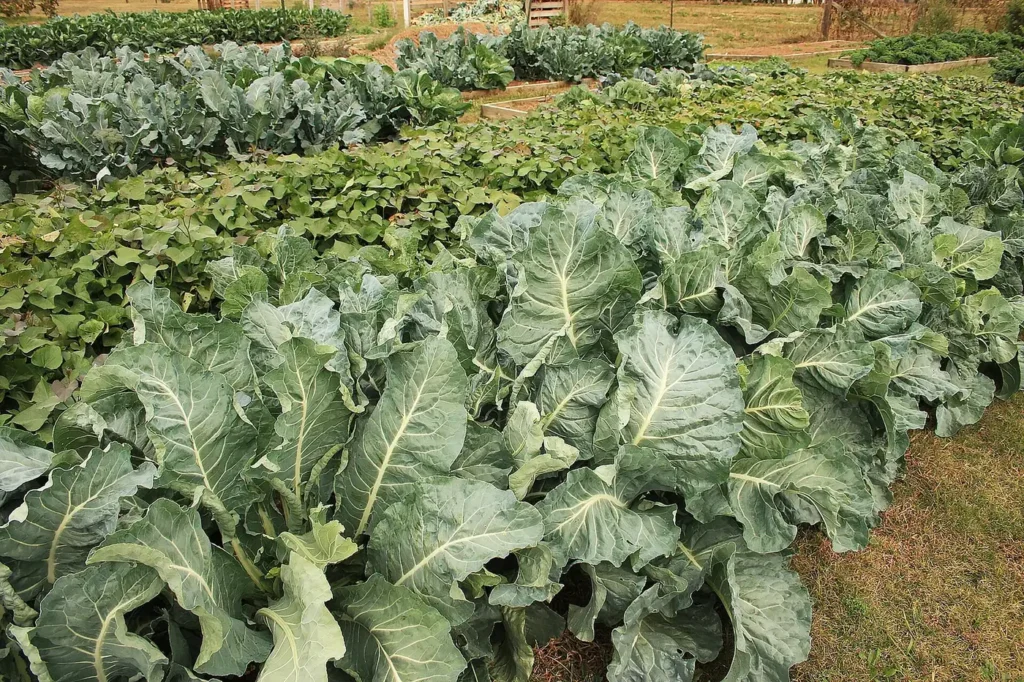
Step 1: Choose a sunny spot near water
Sun is the one thing you cannot add later, so it comes first. Most vegetables need at least six hours of direct sun a day, and fruiting crops such as tomatoes, peppers, squash and beans do best with eight or more. Watch your yard for a full day in late spring or summer, when trees are in leaf, and note where the sun falls each hour.
What makes a good garden site
- Six to eight hours of direct sun. The sunlight requirement finder shows which crops suit the light you have.
- Easy access to water. If the hose does not reach, the garden will go thirsty.
- Good drainage. Avoid low spots where water stands for hours after rain.
- Distance from large trees, which shade the garden and compete for water well beyond their canopy.
- Closeness to the house. A garden you walk past every day gets weeded, watered and picked.
- Shelter from strong wind, which dries soil and damages tall crops.
The University of Maryland Extension’s vegetable garden planning resources cover site selection in more detail, including soil testing before you plant.
Step 2: Start small
The most common beginner mistake is planting far more than you can look after. Weeding, watering and harvesting all grow with the size of the garden, and a neglected large garden produces less than a well-tended small one.
| Garden size | Weekly time | What it can grow |
|---|---|---|
| One 4 × 8 ft bed (32 sq ft) | About 1 hour | Salad greens, herbs, 2 tomatoes, a few peppers |
| About 100 sq ft | 2 to 3 hours | Greens, tomatoes, peppers, beans, carrots, herbs, a zucchini |
| About 300 sq ft | 4 to 6 hours | A wide range of crops, including space-hungry squash and corn |
For a first season, aim for about 100 square feet: an in-ground plot of roughly 10 by 10 feet, or two 4-by-8-foot raised beds. The time estimates above are rough and vary with weather and how much you mulch, but they show how quickly the work grows with size. The garden size calculator measures your space and the growing area left after paths.
Step 3: Choose in-ground beds, raised beds or containers
| Option | Best for | Trade-offs |
|---|---|---|
| In-ground beds | Reasonable soil, larger spaces, tight budgets | More digging and weeding at the start |
| Raised beds | Poor or compacted soil, easier access, tidy look | Cost of frames and soil |
| Containers | Patios, balconies, renters | Need frequent watering and feeding |
If your soil is decent, in-ground beds are the cheapest way to start. Raised beds shine where soil is poor, compacted or drains badly. Oregon State University Extension’s raised bed gardening fact sheet explains the benefits, and our own guides cover building a raised garden bed and how much soil it needs. No yard at all? See our guide to container vegetable gardening.
Step 4: Test and improve the soil
Healthy soil grows healthy plants. Most vegetables prefer loose, crumbly, well-drained soil rich in organic matter, with a pH between about 6.0 and 7.0.
Know your soil type
| Soil type | How it feels | How to improve it |
|---|---|---|
| Sandy | Gritty; falls apart when squeezed; dries fast | Add compost every year to hold water and nutrients |
| Loam | Crumbly; holds shape loosely; ideal | Maintain with an inch or two of compost a year |
| Clay | Sticky when wet; hard and cracked when dry | Add compost, avoid working it wet, consider raised beds |
Prepare the bed
- Get a soil test. Your state Cooperative Extension service usually offers an inexpensive test that shows pH and nutrient levels, with recommendations for vegetables. It saves you from guessing and buying amendments you do not need.
- Remove the grass. Dig it out, or smother it for several weeks under cardboard covered with compost.
- Loosen the soil 8 to 12 inches deep with a garden fork. Avoid working soil when it forms a sticky ball in your hand.
- Add compost. Spread 2 to 3 inches over the bed and mix it into the top few inches. The compost calculator works out how much to buy.
- Rake it level and let it settle for a few days before planting.
Step 5: Choose easy vegetables you like to eat
Start with crops your household actually eats, then favor ones that are forgiving for beginners. These are reliable first-garden choices:
| Crop | Season | Typical days to harvest | Start from |
|---|---|---|---|
| Radishes | Cool | 22 to 30 | Seed |
| Leaf lettuce | Cool | 45 to 55 | Seed |
| Spinach | Cool | 40 to 50 | Seed |
| Peas | Cool | 55 to 70 | Seed |
| Kale | Cool | 50 to 65 | Seed or transplant |
| Bush beans | Warm | 50 to 60 | Seed |
| Zucchini | Warm | 45 to 60 | Seed |
| Cherry tomatoes | Warm | 60 to 70 from transplant | Transplant |
| Peppers | Warm | 60 to 90 from transplant | Transplant |
| Basil | Warm | 60 to 70 | Seed or transplant |
Days to harvest vary by variety, so check the seed packet. Our list of the 10 easiest vegetables for first-time gardeners explains why each is a good pick, and the plant finder filters crops by sun, season and space.
Go easy on zucchini. One or two plants feed most households all summer. Many first-time gardeners plant six and spend August giving them away.
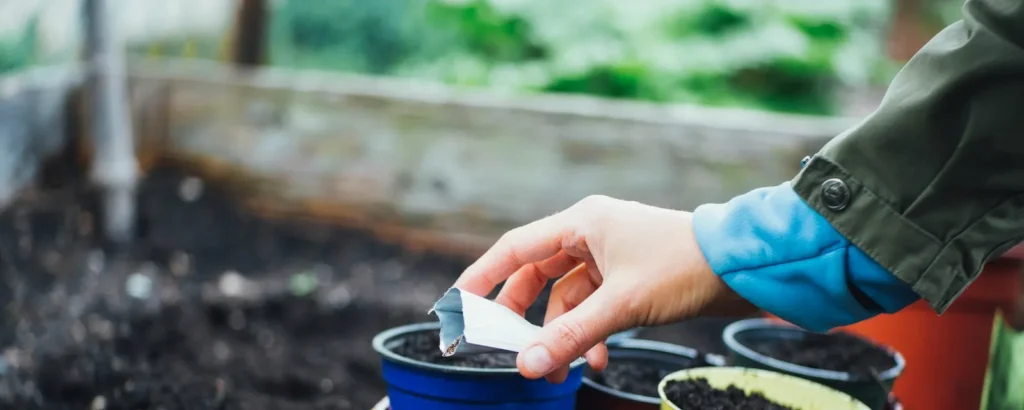
Step 6: Find your frost dates
Timing depends on two dates: your average last spring frost and your average first fall frost. Cool-season crops can go in a few weeks before the last frost; warm-season crops such as tomatoes, peppers, beans and squash must wait until after it, once the soil has warmed.
Do not confuse frost dates with your hardiness zone. The USDA Plant Hardiness Zone Map describes winter cold and helps you choose perennials; frost dates tell you when to plant vegetables. The frost date tool shows your season length and key planting windows, and our guide to understanding frost dates explains how to find yours. Once you have them, the planting calendar gives a date for every crop.
Step 7: Plan the layout and spacing
A quick sketch saves a lot of crowding later.
Layout rules that always work
- Tall crops on the north side: staked tomatoes, pole beans and trellised cucumbers, so they do not shade shorter plants.
- Beds about 4 feet wide, so you can reach the middle without stepping on the soil.
- Paths of 18 to 24 inches between beds, and one wider path for a wheelbarrow.
- Sprawling crops at the edges: squash and melons can run onto paths or lawn.
- Quick crops near the edges, where you can reach them for frequent picking.
Typical spacing
| Crop | Spacing in beds | Plants per sq ft |
|---|---|---|
| Carrots, radishes | 3 in | 16 |
| Beets, spinach, bush beans | 4 in | 9 |
| Lettuce, chard | 6 in | 4 |
| Peppers, kale, broccoli | 12 in | 1 |
| Tomatoes (staked) | 18 to 24 in | 1 per 1 to 4 sq ft |
| Zucchini, squash | 36 in | 1 per 9 sq ft |
The plant spacing calculator and square foot gardening calculator show exactly how many plants fit. For a full walkthrough, see how to plan a vegetable garden layout, or draft one in seconds with the garden layout generator.
Step 8: Decide on seeds or transplants
| Sow seed directly in the garden | Use transplants (bought or home-grown) |
|---|---|
| Beans, peas, carrots, radishes, beets, lettuce, spinach, squash, cucumbers, corn | Tomatoes, peppers, eggplant, broccoli, cabbage, cauliflower, onions from seed |
Seeds are far cheaper per plant; transplants save time on crops that need a long indoor head start. Buying a few transplants in your first year is perfectly fine. If you want to grow your own, our guide on when to start seeds indoors and the seed starting calculator give exact dates, and the seed quantity calculator tells you how much seed to buy.
Step 9: Plant at the right depth and time
Sowing seeds
- Depth: plant two to three times as deep as the seed is wide. Tiny lettuce and carrot seeds are barely covered; beans and squash go about an inch deep. The planting depth calculator gives the depth for each crop.
- Firm the soil gently over the seed so it makes good contact with moist soil.
- Keep the surface moist with light, frequent watering until seedlings appear.
- Thin seedlings to the recommended spacing once they have a couple of true leaves.
Planting transplants
- Harden them off over about a week, setting them outside for a little longer each day so they adjust to sun and wind.
- Plant on a cloudy day or in the evening to reduce transplant shock.
- Set most plants at the same depth they grew in the pot. Tomatoes are the exception: bury them deeper, up to the first set of leaves, and they will grow extra roots along the stem.
- Water well immediately after planting.
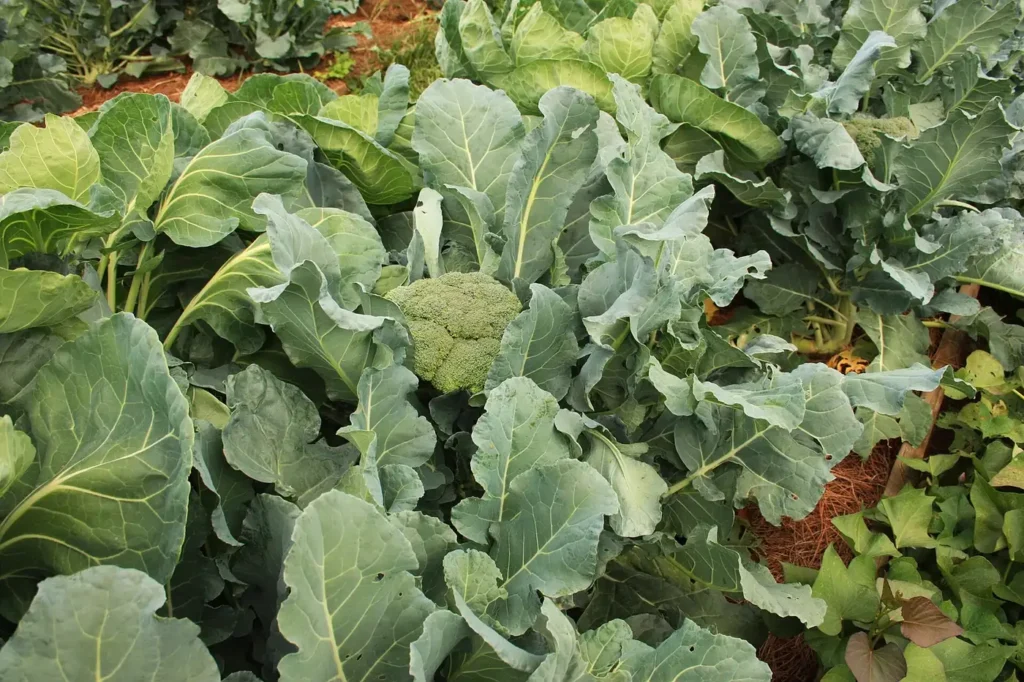
Step 10: Water deeply and consistently
Most vegetable gardens need about an inch of water a week, including rain. NC State Extension’s guide to how much water a summer vegetable garden needs explains that this adds up to roughly two-thirds of a gallon per square foot.
| Situation | How often to water |
|---|---|
| New seeds and seedlings | Lightly, daily or as needed to keep the surface moist |
| Established in-ground garden | Deeply, once or twice a week |
| Raised beds in summer | Deeply, two or three times a week |
| Containers in summer | Often daily |
Always check the soil first: if it is dry 2 to 3 inches down, it is time to water. Water early in the morning, at the base of plants rather than over the leaves. The EPA’s WaterSense program has more tips on watering efficiently. Our guide on how often to water a vegetable garden covers the details, and the garden watering calculator converts it into gallons for your beds.
Step 11: Mulch, weed and feed
Mulch
Once seedlings are a few inches tall, spread 2 to 3 inches of straw, shredded leaves or compost around them. Mulch keeps moisture in, keeps weeds down, protects the soil and reduces splashing that spreads leaf diseases. The mulch calculator works out how much you need.
Weed little and often
Pulling small weeds once or twice a week takes minutes; leaving them for a month takes hours, and they steal water and nutrients in the meantime. A sharp hoe run between rows while weeds are tiny is the fastest method.
Feed hungry crops
Fertilizer labels list three numbers, the N-P-K ratio: nitrogen for leafy growth, phosphorus for roots and flowers, and potassium for overall health. Good compost-rich soil covers much of what most vegetables need. Heavy feeders such as tomatoes, peppers, squash and corn benefit from a side dressing of compost or a balanced fertilizer when they start to flower. Follow the label, and do not overdo nitrogen, which gives lush leaves and little fruit. A soil test tells you exactly what your soil lacks.
Step 12: Watch for problems and harvest often
Walk through the garden every day or two. Turn leaves over to look for insects, check soil moisture, and pick anything that is ready. Catching problems early makes them far easier to fix.
| What you see | Likely cause | First step |
|---|---|---|
| Small round holes in leaves | Flea beetles | Row cover on young plants |
| Large ragged holes, slime trails | Slugs or snails | Hand-pick at dusk |
| Yellow lower leaves | Nitrogen shortage, overwatering or aging | Check soil moisture, then feed |
| Wilting in moist soil | Root problems or wilt disease | Check drainage and roots |
| Dark patch on tomato bottoms | Blossom end rot | Water more evenly and mulch |
If something looks wrong, the plant problem identifier and pest identifier help you work out the cause, and our guide to common tomato problems covers the most-grown crop in detail.
Harvest regularly. Beans, zucchini, cucumbers, herbs and lettuce all produce more when you pick often, and vegetables taste best picked young. Our harvest date calculator shows when each planting should be ready.
A simple first-year calendar
| When | What to do |
|---|---|
| Late winter | Choose the spot, plan the layout, order seeds, get a soil test |
| Early spring | Prepare beds and add compost; sow peas, spinach, radishes and lettuce |
| Around the last frost | Harden off transplants; plant kale and broccoli |
| After the last frost | Plant tomatoes, peppers and basil; sow beans, squash and cucumbers |
| Summer | Water, mulch, weed and harvest; sow more beans and lettuce in batches |
| Late summer | Sow fall crops: lettuce, spinach, kale, carrots and radishes |
| Fall | Harvest, clear spent plants, add compost, plant garlic |
For a printable version of these steps, Texas A&M AgriLife Extension’s Planning a Garden guide (PDF) is a useful free reference.
Get more from the same space
Succession planting
Instead of sowing all your lettuce, radishes or beans at once, sow a short row every two to three weeks. You get a steady supply instead of a glut followed by nothing. When an early crop such as peas or spring lettuce finishes, replant the space with a summer crop, then a fall crop.
Interplanting
Fast crops such as radishes and lettuce can grow between slow crops such as broccoli and tomatoes, and be harvested before the larger plants need the room.
Season extension
Lightweight row cover protects plants from light frosts and insects. A simple cold frame or low tunnel lets you plant earlier in spring and harvest greens later into fall.
Common beginner mistakes
- Too much shade. Fewer than six hours of sun means poor harvests of fruiting crops.
- Too big too soon. Start with about 100 square feet.
- Planting warm-season crops too early, before the soil has warmed.
- Crowding plants. Seedlings look tiny but grow fast.
- Shallow, daily watering instead of deep, less frequent soaks.
- Letting weeds get ahead early in the season.
- Planting everything at once, then facing a glut followed by nothing.
- Not keeping notes. A simple record of what you planted and when makes next year far easier.
How much will it cost?
A small in-ground garden can be started for around $100 or less if you grow mostly from seed and make or source compost cheaply. Raised beds with bought soil cost considerably more, mainly because of the soil. Our guide to starting a vegetable garden on a budget shows where to save, and the garden cost calculator totals your own plan.
Frequently asked questions
How do I start a vegetable garden for beginners?
Pick a spot with at least six hours of sun, start with about 100 square feet, improve the soil with compost, choose a few easy crops you like, plant at the right time for your frost dates, then water, mulch and weed regularly.
When should I start a vegetable garden?
Plan in late winter. Sow cool-season crops such as peas and lettuce a few weeks before your last spring frost, and plant warm-season crops such as tomatoes and beans after it.
What is the easiest vegetable to grow?
Radishes, leaf lettuce, bush beans, zucchini and cherry tomatoes are among the easiest and most productive crops for beginners.
How big should a beginner vegetable garden be?
About 100 square feet, such as a 10-by-10-foot plot or two 4-by-8-foot raised beds, is a manageable size for a first season.
Do I need raised beds to grow vegetables?
No. In-ground beds work well on reasonable soil and cost less. Raised beds help where soil is poor, compacted or poorly drained.
How much sun does a vegetable garden need?
At least six hours of direct sun a day, and eight or more for tomatoes, peppers, squash and other fruiting crops. Leafy greens tolerate a little less.
What should I put in my soil before planting vegetables?
Two to three inches of compost mixed into the top few inches of soil suits most gardens. A soil test shows whether you also need lime, sulfur or specific nutrients.
Should I start with seeds or plants?
Both. Sow beans, peas, lettuce, radishes, carrots and squash as seed, and buy or grow transplants of tomatoes, peppers and broccoli.