A Meyer lemon tree in a pot grows well almost anywhere if you give it a large, well-draining container (start at 5 to 7 gallons and move up to 15 to 20 gallons), a fast-draining citrus potting mix, at least 8 hours of bright sun, deep watering whenever the top 1 to 2 inches of mix are dry, regular feeding with a citrus fertilizer containing micronutrients, and protection from temperatures below about 32°F. Outdoors in summer and indoors by a sunny window or grow light in winter, a potted Meyer lemon can flower and fruit year-round, often within one to two years of buying a grafted tree.
Meyer lemon container care checklist
| Factor | Recommendation |
|---|---|
| Botanical name | Citrus × meyeri |
| Pot size | 5 to 7 gallons at first; eventually 15 to 20 gallons |
| Potting mix | Fast-draining citrus or cactus mix with bark |
| Light | 8 to 12 hours of bright light; full sun outdoors |
| Water | When the top 1 to 2 inches are dry; never let it sit in water |
| Fertilizer | Citrus fertilizer with micronutrients, spring to early fall |
| Temperature | Ideal 55 to 85°F; protect below about 32°F |
| Height in pot | About 4 to 6 feet |
| Fruit | Ripens 6 to 9 months after flowering |
What is a Meyer lemon?
The Meyer lemon is a natural hybrid between a citron-lemon type and a mandarin or orange, brought to the United States from China in 1908 by USDA plant explorer Frank Meyer. The Wikipedia article on Meyer lemon explains that the original trees carried a virus that threatened other citrus, so a virus-free selection, the Improved Meyer lemon, was released by the University of California in 1975. That is the tree sold today.
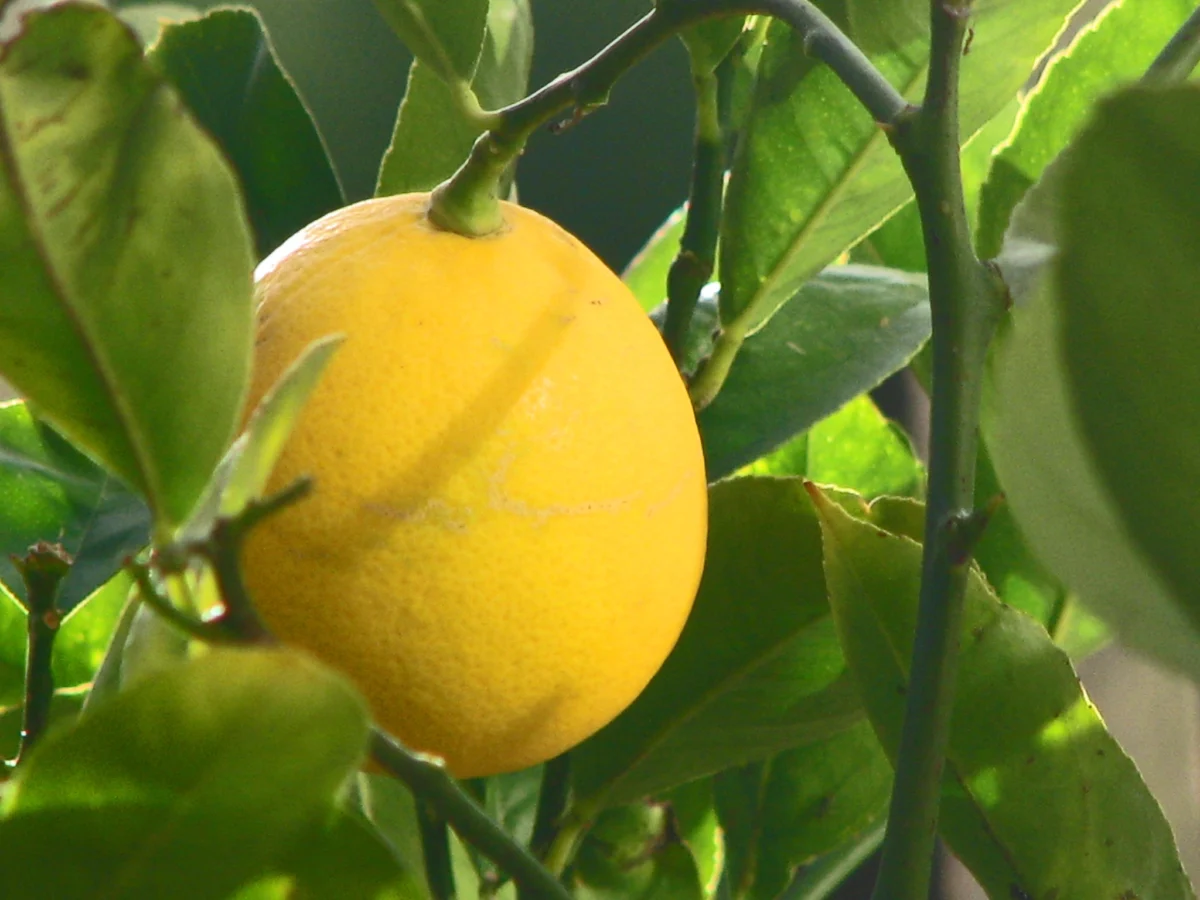
Meyer lemons are rounder, smoother and thinner-skinned than common Eureka or Lisbon lemons, with deep yellow-orange skin when ripe and juicy, sweeter, less acidic flesh with a floral aroma. The tree is naturally compact, more cold-tolerant than most lemons, and bears heavily, which is why it is the most popular citrus for containers.
What size pot does a Meyer lemon need?
Start a young tree from a 1- to 3-gallon nursery pot in a container about 2 to 4 inches wider, typically 5 to 7 gallons. Repot every two to three years into a container one size larger, up to about 15 to 20 gallons for a mature tree. Moving straight into a huge pot leaves a lot of wet soil around a small root system, which invites root rot. Choose a pot with large drainage holes. Terra cotta breathes and helps prevent overwatering but is heavy and dries quickly; plastic, resin and fabric pots are lighter and easier to move indoors. Put large pots on a rolling plant caddy. The container garden planner and the grow bag volume calculator help size containers.
What potting mix is best for a Meyer lemon?
Citrus roots need air as much as water. Use a commercial citrus or cactus and palm potting mix, or blend a quality potting mix with about one-third fine pine bark and some perlite or pumice for drainage. Avoid garden soil and heavy, peat-only mixes that stay soggy. A slightly acidic pH, around 6.0 to 7.0, suits citrus. Do not put gravel at the bottom of the pot; it raises the wet layer rather than improving drainage.
How do you plant a Meyer lemon in a pot?
- Choose a grafted tree from a reputable nursery; grafted trees fruit sooner than cuttings or seedlings.
- Add mix to the bottom of the pot so the top of the root ball will sit about an inch below the rim.
- Loosen circling roots gently and set the tree in place, with the graft union well above the soil.
- Do not bury the trunk; keep the root flare at or slightly above the surface.
- Fill around the roots with mix, firming lightly, and water thoroughly until water runs from the drainage holes.
- Top with a thin layer of bark mulch, kept a couple of inches away from the trunk.
How much light does a potted Meyer lemon need?
Light is the most important factor for flowering and fruit. Outdoors, give full sun for at least 8 hours a day from spring to fall. Indoors, place the tree in the brightest window available, usually south- or southwest-facing, and add a full-spectrum LED grow light for 10 to 12 hours a day in winter if the window light is weak. Low light causes leaf drop, weak growth and no flowers. The sunlight requirement finder helps judge outdoor spots. The Royal Horticultural Society citrus growing guide recommends keeping container citrus in a bright, frost-free place in winter and moving it outdoors to a sheltered, sunny spot in summer.
How often should you water a Meyer lemon in a pot?
Water deeply when the top 1 to 2 inches of mix feel dry, until water drains from the bottom. In summer outdoors, that might be every two to four days, or daily for small pots in heat; in winter indoors, it may be once every 7 to 14 days. Check with your finger or a moisture meter rather than watering on a schedule. Never leave the pot standing in a saucer of water. Overwatering is the most common cause of trouble in potted citrus, leading to yellow leaves and root rot, while underwatering causes leaf curl and fruit drop. Use the garden watering calculator as a starting point.

How do you fertilize a potted Meyer lemon?
Citrus are heavy feeders, and container trees lose nutrients each time they are watered. Use a fertilizer formulated for citrus, which has more nitrogen than phosphorus and includes micronutrients such as iron, zinc, manganese and magnesium. Feed every four to six weeks with a liquid or water-soluble citrus fertilizer, or apply a slow-release citrus fertilizer according to the label, from late winter through early fall. Reduce or stop feeding in winter when growth slows indoors. Yellow leaves with green veins usually point to iron, zinc or manganese deficiency; the yellow leaf identifier can help. The garden fertilizer calculator helps convert label rates.
What temperatures can a Meyer lemon tolerate?
Meyer lemons grow best between about 55 and 85°F. They tolerate brief dips to the low 30s, and established in-ground trees can survive brief frosts in the upper 20s, but potted trees are more vulnerable because the roots are above ground. Bring the pot indoors or into a protected space when nights drop toward 32°F, and move it back out in spring after the danger of frost has passed. Check your dates with the frost date tool. Outdoors year-round, Meyer lemons generally grow in about USDA zones 9 to 11; check yours with the growing zone finder.
How do you move a Meyer lemon indoors and out?
Sudden changes in light, temperature and humidity often cause potted citrus to drop leaves. Transition gradually over one to two weeks: in spring, start the tree in shade outdoors and slowly move it into full sun, as you would harden off seedlings; in fall, bring it into a bright, cool room before nights get cold. The hardening-off schedule calculator works for this too. Indoors, keep the tree away from heating vents and cold drafts, and raise humidity with a pebble tray or humidifier, since dry indoor air encourages spider mites.
Why is my Meyer lemon not flowering or fruiting?
| Cause | What to do |
|---|---|
| Too little light | Move to full sun or add a grow light |
| Tree too young | Grafted trees usually fruit in 1 to 2 years; seedlings take many years |
| Too much nitrogen | Use a balanced citrus fertilizer, not a lawn feed |
| No pollinators indoors | Hand-pollinate with a small brush |
| Stress (drought, cold, moving) | Keep conditions steady |
Meyer lemons are self-fertile, but indoors there are no bees, so gently brush pollen from flower to flower with a small paintbrush when blooms are open.
Why are the leaves falling off?
Leaf drop is the most common complaint. The usual causes are a sudden change in light or temperature (moving indoors or out), overwatering or underwatering, cold drafts, very dry indoor air, or root problems. Check soil moisture first, then the tree’s location. A healthy tree that drops some leaves after a move usually regrows them within weeks once conditions stabilize.
Citrus quarantine note: Many US states and countries regulate the movement of citrus plants to stop the spread of the Asian citrus psyllid and citrus greening disease (huanglongbing), which has no cure and kills trees. Buy trees from a licensed nursery in your state, do not ship or carry citrus plants across state or national borders without checking quarantine rules, and report suspected psyllids or greening symptoms to your local agriculture department or extension office.
How do you prune a potted Meyer lemon?
Meyer lemons need little pruning. In late winter or early spring, remove dead or crossing branches, shorten overly long shoots to keep a balanced shape, and remove any shoots growing from below the graft union, which come from the rootstock. Pinch the tips of vigorous shoots to encourage bushiness. Thin heavy fruit clusters on young trees so branches are not overloaded. Wear gloves, since some branches have thorns.
When are Meyer lemons ripe?
Fruit takes about six to nine months to ripen after flowering, and trees may carry flowers, green fruit and ripe fruit at the same time. Meyer lemons are ripe when the skin turns deep yellow to yellow-orange and the fruit gives slightly when squeezed. They hold well on the tree for several weeks, which makes it easy to pick as needed. Cut fruit from the branch with pruners rather than pulling.
What pests affect potted Meyer lemons?
Indoors, watch for spider mites, scale, mealybugs and aphids; outdoors, also watch for citrus leaf miner, which leaves silvery, winding tunnels in new leaves. Rinse leaves regularly, wipe off scale and mealybugs with a cotton swab dipped in rubbing alcohol, and use horticultural oil or insecticidal soap according to the label for heavier infestations. The pest identifier helps identify what you see. For a gentle botanical option, see our guide to neem oil spray.
Should you repot or root-prune an old potted Meyer lemon?
Once a tree reaches the largest pot you can manage, keep it healthy by root pruning every three to four years in late winter. Slide the tree out, shave about an inch or two of roots from the sides and bottom of the root ball with a sharp knife, and replant in the same container with fresh mix. Lightly thin the canopy at the same time to balance the reduced roots. This refreshes the soil and keeps the tree productive for decades.
For another subtropical fruit you can start indoors, see how to grow lychee from seed.
Planning more fruit? Browse every variety, planting and care article in our complete fruit tree growing guide.
Free printable: the Year-Round Garden & Preserving Planner
Planting dates for 24 crops, monthly tasks, blanching times, canning safety numbers and a winter storage chart in one 8-page PDF. Enter your email to download it instantly and get our seasonal garden newsletter.
No spam. Unsubscribe any time. We never sell your email.
Frequently asked questions
How big of a pot does a Meyer lemon need?
Start with 5 to 7 gallons and move up gradually to 15 to 20 gallons for a mature tree.
How often should you water a potted Meyer lemon?
When the top 1 to 2 inches of mix are dry, which varies from every few days in summer to every week or two indoors in winter.
Can a Meyer lemon tree live indoors all year?
It can survive, but it flowers and fruits much better with summers outdoors or strong grow lights.
Do you need two Meyer lemon trees for fruit?
No, Meyer lemons are self-fertile, though hand-pollination helps indoors.
How cold can a potted Meyer lemon get?
Bring it inside before temperatures drop to about 32°F.
Why are my Meyer lemon leaves yellow?
Most often overwatering or a micronutrient deficiency; check drainage and use a citrus fertilizer.
Sources: Wikipedia, Meyer lemon; Royal Horticultural Society, How to Grow Citrus; Wikipedia, Citrus greening disease.