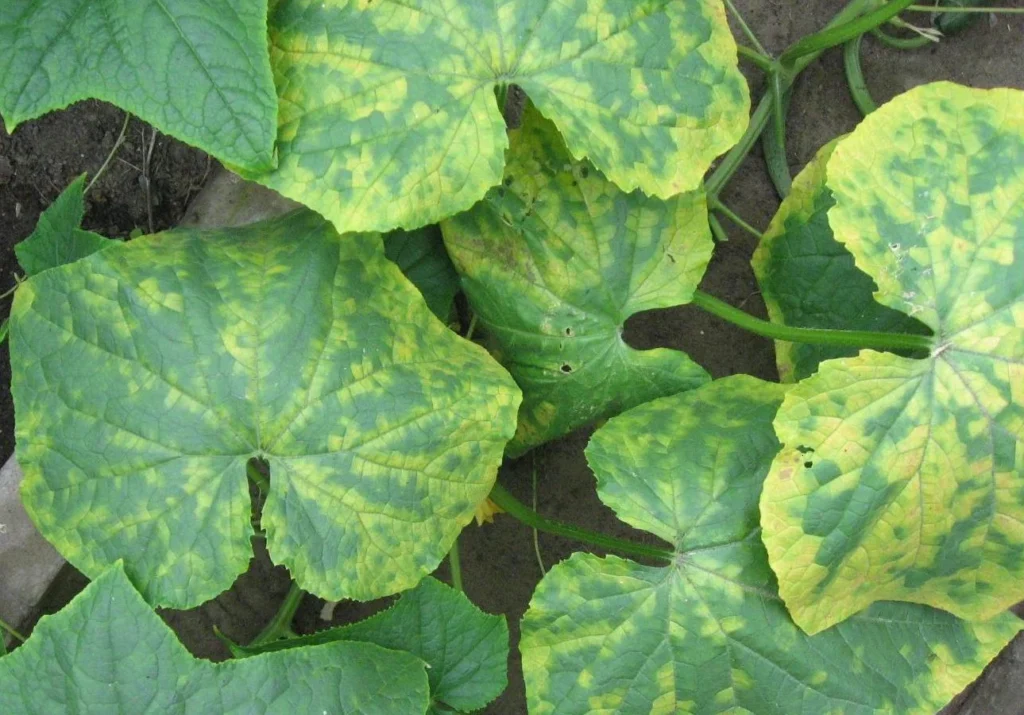
Mosaic viruses are plant viruses that cause a mottled, patchy pattern of light green, yellow and dark green on leaves, often with puckering, curling, narrowing or crinkling, along with stunted growth, poor yields and sometimes distorted or discolored fruit. The most common in gardens are cucumber mosaic virus, which infects more than 1,200 plant species including cucumbers, squash, peppers, tomatoes, spinach, beans and many flowers; tobacco mosaic and tomato mosaic viruses, which infect tomatoes and peppers; and bean common mosaic virus. There is no cure for virus-infected plants. Manage mosaic viruses by removing and destroying infected plants promptly, controlling aphids and other carriers, removing weeds that host viruses, planting resistant varieties and certified virus-free seed, and washing hands and tools when handling plants, especially if you smoke.
Common mosaic viruses in gardens
| Virus | Main hosts | How it spreads |
|---|---|---|
| Cucumber mosaic virus (CMV) | Cucumbers, squash, melons, peppers, tomatoes, spinach, celery, beans, petunias, delphiniums, lilies and many more | Aphids (in seconds), some seed, weeds |
| Tobacco mosaic virus (TMV) | Tomatoes, peppers, tobacco, petunias | Hands, tools, clothing, tobacco products; very stable |
| Tomato mosaic virus (ToMV) | Tomatoes, peppers | Seed, hands, tools; very stable |
| Bean common mosaic virus | Beans | Infected seed, aphids |
| Zucchini yellow mosaic and watermelon mosaic viruses | Squash, zucchini, pumpkins, melons | Aphids |
| Rose mosaic | Roses | Grafting with infected budwood |
What are mosaic viruses?
Plant viruses are tiny infectious particles that multiply inside plant cells, disrupting chlorophyll production and growth. The Wikipedia article on cucumber mosaic virus describes it as one of the most widespread plant viruses in the world, with an exceptionally wide host range and transmission by more than 80 aphid species. Tobacco mosaic virus has a special place in science as the first virus ever discovered, in the late 1800s. The Washington State University HortSense fact sheet on tomato mosaic viruses notes that infected plants cannot be cured and should be removed to protect healthy plants.

How do you recognize mosaic virus?
- Mottled leaves with patches of light and dark green or yellow in a mosaic pattern.
- Puckered, crinkled, curled or blistered leaves, sometimes narrow and fern-like (“shoestring” leaves on tomatoes).
- Stunted plants with shortened stems and bunched growth at the tips.
- Poor fruit set and small, misshapen, mottled or warty fruit, especially cucumbers and squash.
- Yellow rings or line patterns on leaves or fruit with some viruses.
- Flower color breaking in petunias and other ornamentals.
Similar symptoms can result from herbicide drift, nutrient deficiencies, cold injury or insect feeding. Herbicide damage often causes cupped, twisted new growth across many plants of different types at once, while viruses usually affect scattered individual plants. If you are unsure, ask your local plant diagnostic lab, or check the yellow leaf identifier and the plant problem identifier.
How do mosaic viruses spread?
- Aphids: cucumber mosaic, zucchini yellow mosaic and watermelon mosaic viruses are carried on aphid mouthparts and transmitted within seconds as aphids probe plants. Insecticides rarely act fast enough to stop this. See aphids.
- Touch and tools: tobacco and tomato mosaic viruses are extremely stable and spread on hands, tools, stakes, clothing and pots, surviving in plant debris and on surfaces for months or years.
- Tobacco products: cigarettes and other tobacco can carry TMV; smokers handling tomatoes and peppers can transfer it.
- Seed: tomato mosaic and bean common mosaic viruses can be seed-borne; some CMV strains are seed-borne in certain plants.
- Weeds and perennials: many weeds, such as chickweed, pokeweed, milkweed and nightshades, and perennial flowers harbor CMV and act as reservoirs.
- Thrips and other insects: thrips transmit tomato spotted wilt virus (not a mosaic virus but similar in impact). See thrips.
What should you do if a plant has mosaic virus?
- Remove the plant promptly, roots and all, and bag it for the trash. Do not compost it.
- Wash your hands with soap and water after handling infected plants, before touching healthy ones.
- Disinfect tools with a 10 percent bleach solution or a commercial disinfectant, and rinse afterward. Tobacco mosaic is hard to inactivate, so thorough cleaning matters.
- Control aphids on nearby plants with water sprays, insecticidal soap and natural enemies.
- Remove weeds around the garden that may host viruses.
- Watch nearby plants closely for new symptoms.

Safety note: When disinfecting tools with bleach, wear gloves, work in a ventilated area and never mix bleach with other cleaners. Do not save seed from infected plants, and buy certified seed and transplants from reputable suppliers. Plant viruses do not infect people or animals.
How do you prevent mosaic viruses?
- Plant resistant varieties. Many tomatoes carry resistance to tobacco and tomato mosaic viruses (look for “TMV” or “ToMV” on labels), and many cucumbers resist cucumber mosaic virus (“CMV”). Some squash and bean varieties resist their mosaic viruses.
- Use certified virus-free seed and transplants, and avoid saving seed from infected plants.
- Cover young cucurbits with row cover until flowering to keep aphids off during the most vulnerable period; see cucumber beetles for row cover tips.
- Use reflective mulch under squash and cucumbers, which repels aphids and delays virus spread.
- Control weeds in and around the garden.
- Wash hands and tools regularly when working with tomatoes and peppers, and do not use tobacco products while handling them.
- Plant early so crops are established before aphid populations peak.
- Rotate crops and clean up debris at the end of the season.
Mosaic virus in cucumbers, squash and melons
Cucumbers with mosaic virus have mottled, curled leaves, stunted vines and pale, warty or misshapen fruit that may taste bitter. Squash and zucchini infected with zucchini yellow mosaic virus develop yellow, distorted leaves and knobby, discolored fruit. Remove infected plants, protect young plants with row covers, and choose resistant varieties; seed catalogs list cucumber, zucchini and squash varieties with resistance to one or more mosaic viruses. Plant a second, protected crop in midsummer if early plantings are lost.
Mosaic virus in tomatoes and peppers
The UConn IPM guide to mosaic diseases of tomatoes describes the symptoms of each virus and emphasizes sanitation and resistant varieties.
Tomatoes infected with tobacco or tomato mosaic virus show light and dark green mottling, sometimes fern-like leaves, and uneven ripening with internal browning of fruit. Peppers develop mottled, distorted leaves and small, misshapen fruit. Choose resistant varieties, wash hands and tools, and avoid handling plants after using tobacco products. Cucumber mosaic virus causes shoestring leaves and severe stunting in tomatoes, and spreads from weeds and flowers via aphids. See common tomato problems for other issues.
Still not sure what you are looking at? Compare symptoms in the plant pests and diseases library.
Free printable: the Year-Round Garden & Preserving Planner
Planting dates for 24 crops, monthly tasks, blanching times, canning safety numbers and a winter storage chart in one 8-page PDF. Enter your email to download it instantly and get our seasonal garden newsletter.
No spam. Unsubscribe any time. We never sell your email.
Mosaic virus FAQ
Can plants recover from mosaic virus?
No. Infected plants stay infected and should be removed.
Can you eat vegetables from plants with mosaic virus?
Yes, plant viruses do not infect people, though fruit quality may be poor.
Does mosaic virus stay in the soil?
Tobacco and tomato mosaic can persist in plant debris; most others survive in weeds, seed or insects rather than soil.
How do aphids spread mosaic virus?
They pick up virus particles on their mouthparts while feeding and transmit them to the next plant within seconds.
Is there a spray for mosaic virus?
No; no spray cures plant viruses. Prevention is the only control.
Can smoking spread tobacco mosaic virus?
Yes, tobacco products can carry it; wash hands thoroughly before handling tomatoes and peppers.
Mosaic virus on flowers and ornamentals
Cucumber mosaic virus infects many popular flowers, including petunias, delphiniums, lilies, dahlias, salvias, zinnias, vincas and impatiens, as well as perennials such as hostas, which have their own serious virus, hosta virus X. Symptoms include mottled or streaked leaves, ring spots, stunting and color breaking in petals, where flowers show irregular streaks or flecks of lighter color. Some color-breaking was once prized: the famous striped “broken” tulips of the 1600s tulip mania were caused by a virus. Today, infected ornamentals should be removed, because they serve as reservoirs that aphids carry to vegetables nearby. Hostas with mottled, puckered or ink-bleed patterns along veins should be destroyed rather than divided or shared.
Mosaic virus in beans
Bean common mosaic virus causes light and dark green mottling, leaf puckering and downward cupping, and reduced pod set. It is carried in seed and spread by aphids. Buy certified disease-free seed of resistant varieties, which most modern bush and pole bean cultivars are, and do not save seed from mottled plants. Remove infected plants early in the season before aphids spread the virus further.
Mosaic virus on houseplants and indoor seedlings
Indoor plants are less often infected, but tomato and pepper seedlings grown indoors can pick up tobacco or tomato mosaic virus from contaminated seed, hands or reused pots and trays. Start with fresh or disinfected trays, buy seed from reputable suppliers, and wash hands before handling seedlings. Mottled houseplants are more likely to be suffering from nutrient deficiencies, spider mite stippling or natural variegation than from a virus; see spider mites for stippling symptoms.
How is mosaic virus diagnosed?
Visual symptoms are a good guide, but viruses can only be confirmed by laboratory tests such as ELISA or PCR, which detect virus proteins or genetic material. Many university plant diagnostic labs offer testing for a modest fee, and some garden suppliers sell simple immunostrip test kits for common viruses such as tobacco mosaic and cucumber mosaic. Testing is worthwhile if several plants show symptoms, if you grow plants for sale, or if you want to know whether a seed source is contaminated. For a single mottled plant, removing it is usually simpler and cheaper than testing.
Common mistakes with mosaic viruses
- Leaving infected plants in place in the hope they recover; they serve as a virus source for the rest of the season.
- Composting infected plants, especially tomatoes with tobacco or tomato mosaic, which can survive in debris.
- Relying on insecticides to stop aphid-spread viruses; aphids transmit the virus before most sprays act.
- Saving seed from infected beans, tomatoes or peppers.
- Ignoring weeds and flower beds nearby that harbor cucumber mosaic virus.
- Handling plants after smoking or after touching infected plants without washing your hands.
Mosaic virus vs. nutrient deficiency
Nutrient deficiencies usually produce more regular patterns: iron and manganese deficiency cause yellowing between green veins on new leaves, and magnesium deficiency causes yellowing between veins on older leaves. Mosaic patterns are irregular, patchy and often accompanied by puckering or distortion. Deficiencies affect many plants in the same bed in a similar way and improve after correcting soil pH or feeding, while viruses affect scattered plants and never improve. A soil test helps rule out nutrient problems; see the yellow leaf identifier.
Planning a garden that stays ahead of viruses
Because mosaic viruses cannot be cured, the best strategy is to reduce the chances of infection from the start. Choose resistant varieties of tomatoes, cucumbers, squash and beans; start seedlings in clean trays; keep a weed-free border around vegetable beds; cover young squash and cucumbers with row cover until flowering; and inspect plants weekly for mottling, puckering and aphid colonies. Separate tomatoes and peppers from flower beds that contain petunias and other susceptible ornamentals. If a virus does appear, remove the plant immediately and replant with a resistant variety or a crop from a different family. Keeping notes on which varieties and beds were affected helps you plan better next year.
Which crops are most at risk?
Cucurbits such as cucumbers, zucchini, summer squash, pumpkins and melons are the most frequently hit in home gardens, because aphid-spread mosaic viruses build up during summer and late plantings are especially exposed. Tomatoes and peppers come next, mostly from tobacco and tomato mosaic viruses carried on hands, tools and seed, and from cucumber mosaic virus carried by aphids from nearby weeds and flowers. Beans are vulnerable when grown from saved seed. Spinach, celery, lettuce and many flowers also suffer from cucumber mosaic virus. Leafy greens are less often lost entirely, but infected plants grow slowly and look mottled. If one family of crops is hit every year, try planting it earlier, protecting it under row cover, and moving it farther from flower beds and weedy edges.
Keeping a simple garden journal of which plants showed mottling, when symptoms appeared, and how many plants were lost will show patterns over a few seasons, helping you choose resistant varieties and planting dates that keep virus losses low.
References used in this guide: Washington State University HortSense, Tomato Mosaic Viruses; UConn IPM, Mosaic Diseases of Tomatoes; Wikipedia, Cucumber mosaic virus.