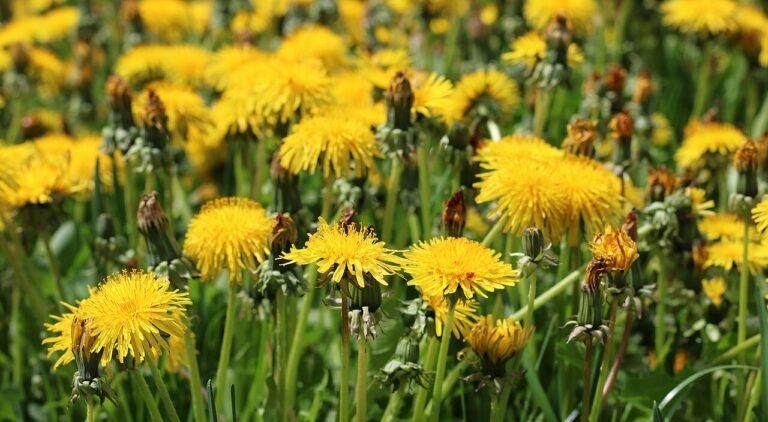
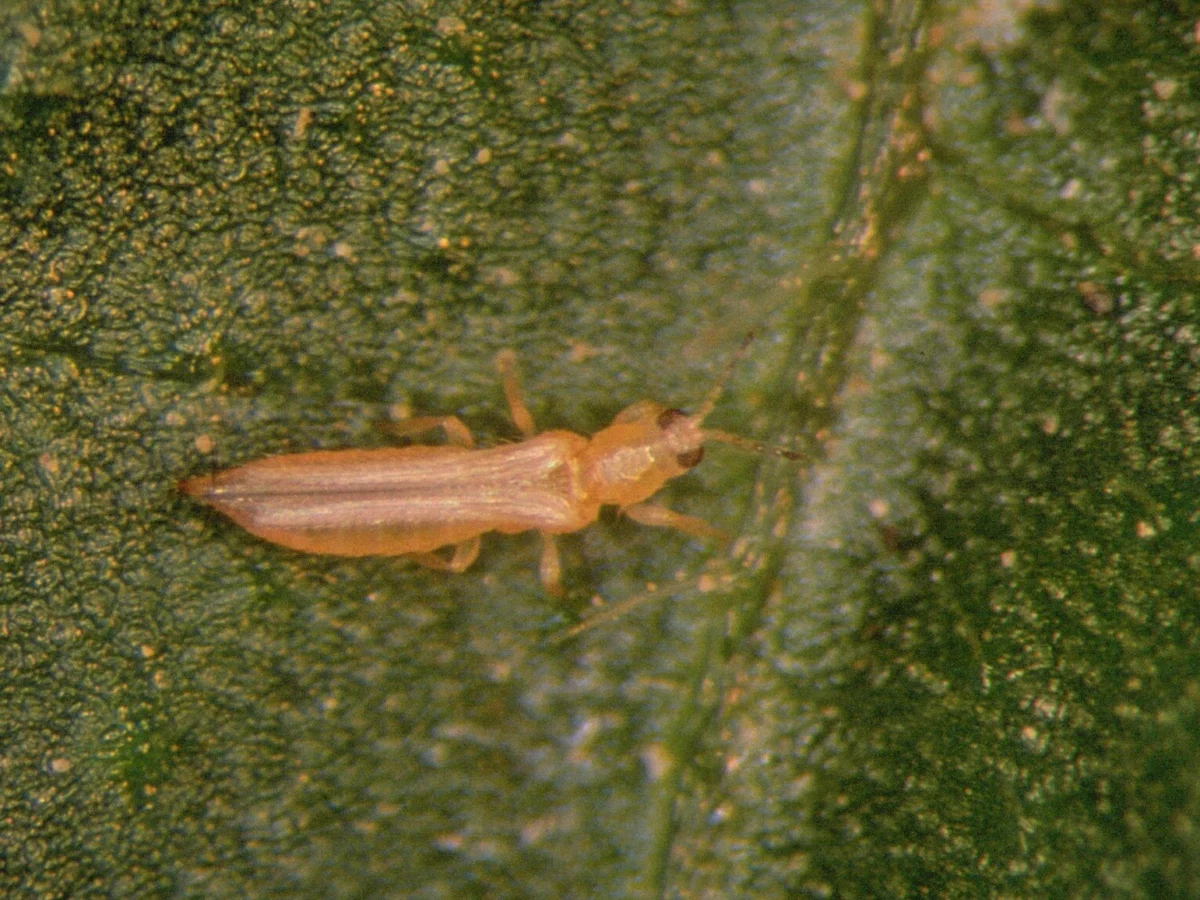
Thrips are tiny, slender insects, about 1/25 inch long, with fringed wings, that rasp the surface of leaves, flowers and fruit and suck up the cell contents. Their feeding leaves silvery or bronze streaks and patches dotted with tiny black specks of excrement, distorted or scarred flowers and buds that fail to open, and scarred fruit. Western flower thrips and onion thrips are the most common garden species, and some thrips spread tomato spotted wilt virus. To control thrips, remove and destroy infested flowers and buds, hose plants down, use blue or yellow sticky traps to monitor, encourage predators such as minute pirate bugs, lacewings and predatory mites, and spray insecticidal soap, horticultural oil or spinosad products labeled for thrips, repeating every five to seven days.
Thrips quick reference
| Feature | Details |
|---|---|
| Size | About 1/25 inch (1 to 2 mm) |
| Appearance | Slender, cigar-shaped; pale yellow, tan, brown or black; fringed wings |
| Larvae | Pale yellow or white, wingless, fast-moving |
| Damage | Silvery or bronze streaks, black specks, distorted flowers and leaves, scarred fruit |
| Common species | Western flower thrips, onion thrips, gladiolus thrips, chilli thrips |
| Favored plants | Onions, garlic, beans, tomatoes, peppers, cucumbers, roses, gladiolus, chrysanthemums, houseplants |
| Viruses spread | Tomato spotted wilt virus and impatiens necrotic spot virus |
What are thrips?
Thrips are insects in the order Thysanoptera, a name meaning “fringe wings.” The Wikipedia article on thrips notes there are about 6,000 species; many feed on plants, while some are beneficial predators of mites and other small insects. Their asymmetrical mouthparts puncture plant cells and suck out the contents, leaving empty cells that fill with air and appear silvery. The Montana State University fact sheet on thrips on vegetables and flowers explains that thrips often hide in flowers, buds and leaf folds, which makes them hard to see and to reach with sprays.
How do you know if you have thrips?
- Silvery, papery streaks or patches on leaves, especially onions, beans and houseplants.
- Tiny black dots of excrement on damaged areas.
- Flower damage: brown-edged, streaked or deformed petals, and buds that turn brown and fail to open, common on roses and gladiolus.
- Distorted new leaves that are curled, crinkled or scarred.
- Scarred or russeted fruit on peppers, tomatoes, nectarines and strawberries.
- Tiny moving slivers when you tap a flower over white paper.
Thrips damage can resemble spider mite stippling, but mite damage comes with webbing and fine dots, while thrips leave streaks with black specks. See our guide to spider mites for comparison, or use the pest identifier.
What is the thrips life cycle?
Female thrips insert tiny eggs into leaves, petals or stems. Larvae hatch in a few days and feed for one to two weeks, then drop into the soil or leaf litter, or stay in flowers, to pass through two non-feeding pupal stages before emerging as winged adults. In warm weather the whole cycle takes as little as two weeks, so populations build quickly in summer and in greenhouses. Because eggs are protected inside plant tissue and pupae are in the soil, sprays reach only part of the population at a time, which is why repeated treatments are necessary.
How do you get rid of thrips?
- Remove infested flowers and buds. Thrips concentrate in flowers; deadheading and destroying damaged blooms removes many larvae and eggs.
- Hose plants down to knock thrips off foliage and raise humidity, which they dislike.
- Monitor with sticky traps. Blue sticky traps attract western flower thrips especially well; yellow traps also work. Use them to see when populations rise.
- Spray soap or oil. Insecticidal soap and horticultural or neem oil kill thrips they contact; spray thoroughly, including flowers if the label allows, every five to seven days for several weeks.
- Use spinosad for heavy infestations. Spinosad products labeled for thrips are effective on many plants; spray in the evening when bees are not foraging, because spinosad is toxic to bees while wet.
- Encourage natural enemies and avoid broad-spectrum insecticides, which kill predators and to which western flower thrips are often resistant.
- Clean up weeds and debris, where thrips breed and overwinter.

Which natural enemies eat thrips?
The University of Maryland Extension guide to thrips management in greenhouses describes how predatory mites and minute pirate bugs are used to control thrips and why monitoring with sticky cards helps time releases.
| Natural enemy | Notes |
|---|---|
| Minute pirate bugs (Orius) | Important predators of thrips outdoors and in greenhouses |
| Predatory mites (Amblyseius, Neoseiulus cucumeris) | Eat young thrips larvae; widely used in greenhouses |
| Soil-dwelling predatory mites (Stratiolaelaps) | Eat thrips pupae in the soil |
| Green lacewing larvae | General predators |
| Predatory thrips | Some thrips species eat other thrips and mites |
| Beneficial nematodes | Applied to soil, attack pupae |
Pesticide label note: Western flower thrips are resistant to many insecticides. Use only products labeled for thrips on your plant, follow the label exactly, rotate modes of action, observe pre-harvest intervals on vegetables, and do not spray spinosad or other bee-toxic products on open flowers when bees are foraging.
Thrips on onions and garlic
Onion thrips cause silvery blotches and white streaks on onion, leek and garlic leaves, and heavy feeding reduces bulb size. They hide deep in the leaf sheaths, so a strong spray of water directed into the plant center helps. Plant onions away from previous onion crops and weedy edges, keep plants well watered, and consider straw mulch, which in some studies reduces thrips numbers by encouraging predators. Varieties with glossy, upright leaves tend to suffer less damage.
Thrips on houseplants
Indoors, thrips attack ficus, monstera, pothos, peace lily, orchids, African violets and many others, leaving silvery patches and black specks. Isolate the plant, rinse it well, wipe leaves, and treat with insecticidal soap or oil labeled for indoor plants every five to seven days for at least four weeks. Replace the top inch or two of potting mix, or top-dress with sand, to disrupt pupation in the soil, and use sticky traps to catch adults. Check plants nearby, since thrips fly between them. For yellowing that is not caused by pests, see why plant leaves turn yellow.
Thrips on roses and flowers
Western flower thrips are attracted to light-colored and fragrant blooms. Damaged rose buds turn brown at the edges and may not open. Pick off and destroy affected buds and spent flowers, keep plants well watered, and if needed spray buds with a product labeled for thrips on roses. See our rose garden guide for general rose care. Gladiolus thrips cause silvery streaks on gladiolus leaves and flowers; store corms cool and dry and inspect them before planting.
Can thrips spread plant viruses?
Yes. Western flower thrips and several other species transmit tospoviruses, including tomato spotted wilt virus and impatiens necrotic spot virus. Infected tomatoes and peppers develop bronze or ringed spots on leaves and fruit and stunted growth; there is no cure, so remove infected plants promptly. Thrips pick up the virus as larvae and spread it as adults, so controlling young thrips and removing infected plants and weeds are the main defenses. Resistant tomato and pepper varieties are available where the virus is common.
How do you prevent thrips?
- Inspect transplants and cut flowers before bringing them into the garden or home.
- Keep plants well watered; thrips thrive on drought-stressed plants. The garden watering calculator helps.
- Remove weeds around the garden that host thrips and viruses.
- Use reflective mulch under tomatoes and peppers to repel thrips early in the season.
- Grow flowers that support minute pirate bugs and lacewings.
- Clean up crop residue in fall to reduce overwintering sites.
For other garden pests and plant diseases, browse our complete plant pests and diseases library.
Free printable: the Year-Round Garden & Preserving Planner
Planting dates for 24 crops, monthly tasks, blanching times, canning safety numbers and a winter storage chart in one 8-page PDF. Enter your email to download it instantly and get our seasonal garden newsletter.
No spam. Unsubscribe any time. We never sell your email.
Thrips FAQ
What do thrips look like?
Tiny, slender, cigar-shaped insects, yellow to black, about 1/25 inch long, with fringed wings.
What kills thrips naturally?
Insecticidal soap, horticultural or neem oil, predatory mites and minute pirate bugs.
Do thrips bite humans?
They occasionally nip exposed skin in hot weather but are harmless and do not feed on people.
Where do thrips come from?
They fly in from weeds and nearby crops or arrive on new plants and cut flowers.
Do sticky traps get rid of thrips?
They catch adults and show when numbers rise but do not control larvae on their own.
Can plants recover from thrips damage?
Yes. Damaged leaves stay marked, but new growth will be healthy once thrips are controlled.
Which thrips are most common in gardens?
| Thrips | Main hosts | Notes |
|---|---|---|
| Western flower thrips (Frankliniella occidentalis) | Flowers, tomatoes, peppers, cucumbers, strawberries, greenhouse crops | Most widespread; spreads tomato spotted wilt virus; pesticide resistant |
| Onion thrips (Thrips tabaci) | Onions, garlic, leeks, cabbage, beans | Silvery leaf blotches; reduces bulb size |
| Gladiolus thrips | Gladiolus | Silvery streaks; overwinters on stored corms |
| Chilli thrips (Scirtothrips dorsalis) | Peppers, roses, strawberries, ornamentals in warm regions | Attacks young leaves and buds; causes curling and bronzing |
| Greenhouse thrips | Houseplants, avocado, citrus | Dark adults; feeds on leaf surfaces |
| Citrus thrips | Citrus, blueberries | Scars fruit rinds |
How do you treat the soil for thrips?
Many thrips leave the plant to pupate in the top inch or so of soil or leaf litter, which gives you a second place to attack them. In greenhouses and with houseplants, beneficial soil-dwelling predatory mites such as Stratiolaelaps scimitus and beneficial nematodes (Steinernema feltiae) applied to moist soil attack the pupae. Outdoors, cleaning up debris and weeds around beds removes pupation and overwintering sites. For containers, scraping away and replacing the top layer of potting mix, then covering it with a layer of sand, disrupts pupation. Combine soil treatments with foliage sprays for the best results.
Do thrips damage fruit and vegetables?
Yes, though light damage is mostly cosmetic. On peppers and tomatoes, thrips feeding causes small, pale or silvery scars, and on nectarines and strawberries it can cause bronzing or russeting of the skin. Onion thrips reduce leaf area and bulb size in hot, dry summers. The biggest yield losses come from tomato spotted wilt virus, which can stunt or kill tomato and pepper plants, so early control and removing infected plants matter most in vegetable gardens. For other tomato issues, see common tomato problems.
When are thrips worst?
Outdoors, thrips usually peak in late spring and summer, especially during hot, dry spells, and populations often surge when nearby fields of grain or weeds dry down and adults fly into gardens looking for green plants. Indoors and in greenhouses they can be active year-round. Start checking flowers and young leaves weekly as soon as the weather warms, and put out blue or yellow sticky traps near susceptible plants to catch the first arrivals.
Are some thrips beneficial?
Yes. The six-spotted thrips and several black-and-white banded thrips are predators that feed on spider mites, mite eggs and other small insects. They are often seen on fruit trees and shrubs with mite problems. Avoid broad-spectrum sprays, which kill these helpful thrips along with the pests.
Can you use blue sticky traps indoors?
Yes. Blue cards are especially attractive to western flower thrips and work well near houseplants, seedlings and greenhouse benches. Hang or stake them just above the foliage, replace them when covered, and keep them away from pets and children. Counting the thrips caught each week shows whether your treatments are working: falling numbers mean you are winning, while rising numbers mean it is time to repeat sprays or add predatory mites.
Thrips are tiny but manageable: remove infested flowers, keep plants watered, support predators and repeat gentle sprays on schedule, and most gardens stay healthy and productive.
References: Montana State University Extension, Thrips on Vegetables and Flowers; University of Maryland Extension, Thrips Management in Greenhouses; Wikipedia, Thrips.
Identification, damage and what actually works
University of California IPM’s thrips guide describes adults less than 1/20 inch (about 1 mm) long with fringed wings, with wingless immatures. Thrips pass through an egg, two feeding larval stages, two non-feeding stages and an adult, up to about eight generations a year, and in warm weather egg to adult can take as little as two weeks. Feeding leaves scabby silvery to dark brown scars on fruit, leaves and petals, dark specks of excrement and distorted or curled shoot tips. Western flower thrips and onion thrips can spread viruses such as tomato spotted wilt virus. Damage often shows after the thrips have left, and other problems can look similar.
- Monitor: shake flowers or foliage over white paper, or hang bright yellow sticky traps. Many thrips on a trap do not automatically mean control is needed.
- Cultural: keep plants well watered, avoid excess nitrogen, prune off infested parts and avoid shearing, which stimulates susceptible new growth.
- Physical: fine-mesh row covers over young plants and silver or grey reflective mulch, which stops working once the canopy covers about half the soil.
- Soap: insecticidal soap must thoroughly coat infested parts, and repeats may be needed.
- Allies: predatory thrips, lacewings, minute pirate bugs and parasitic wasps help; buying and releasing them seldom gives satisfactory control in a home garden.
UC IPM advises avoiding broad-spectrum sprays such as carbaryl, malathion and pyrethroids because they harm natural enemies and pollinators, can trigger spider mite outbreaks and are not particularly effective on most thrips. Pesticides will not restore damaged tissue, so combine methods. See our plant problem identifier.
Safety and legal note: Insecticidal soap and other sprays can injure some plants and harm pollinators: test on a few leaves first, spray in the evening away from bees, and follow the label. Do not move infested plants into greenhouses or between properties. Rules on pesticide use vary by country and region.
Reviewed October 2026. Sources: University of California IPM, Thrips