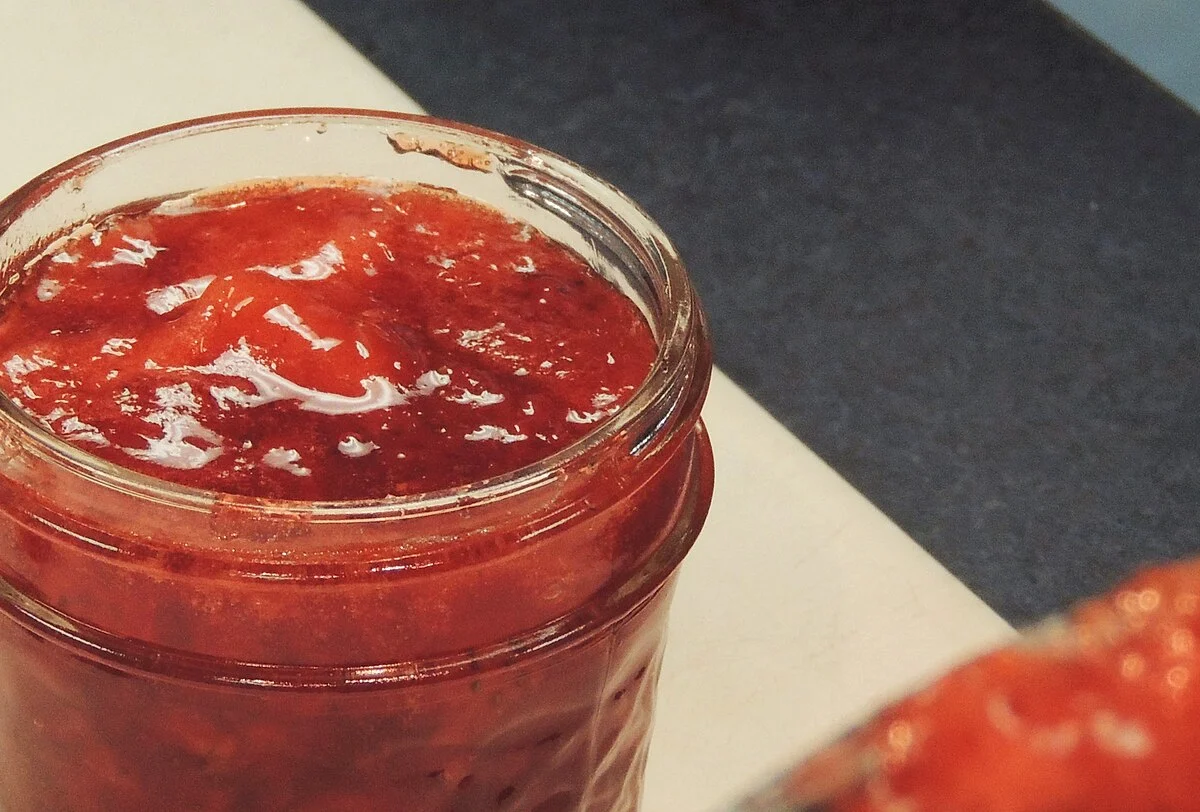
To make jam, crush or chop ripe fruit, combine it with sugar and usually pectin and acid in the exact amounts a tested recipe gives, and boil it hard, stirring, until it reaches the gel point: 220°F at sea level (8°F above the boiling point of water where you live), or until it sheets off a spoon or wrinkles on a chilled plate. Ladle the hot jam into clean, hot half-pint or pint jars with 1/4 inch of headspace, wipe the rims, apply new lids and process in a boiling water bath, typically 10 minutes at altitudes up to 1,000 feet, then cool and check the seals. Make one batch at a time, since doubling recipes often stops jam from setting, and use low- or no-sugar pectin if you want to reduce sugar.
Jam making at a glance
| Item | Guidance |
|---|---|
| Main ingredients | Fruit, sugar, pectin (added or natural), acid |
| Gel point | 220°F at sea level; subtract about 2°F per 1,000 feet of altitude |
| Headspace | 1/4 inch |
| Jar size | Half-pints or pints |
| Processing | Usually 10 minutes in a boiling water bath at 0 to 1,000 feet; follow the recipe |
| Batch size | Make single batches; do not double |
| Less sugar | Use pectin made for low- or no-sugar recipes |
| Freezer jam | No processing; keeps about 3 weeks refrigerated or up to a year frozen |
| Shelf life | Best within 1 year; refrigerate after opening |
What is the difference between jam, jelly and preserves?
- Jam is made from crushed or chopped fruit cooked with sugar until thick and spreadable.
- Jelly is made from strained fruit juice, giving a clear, firm gel without pieces.
- Preserves contain whole or large pieces of fruit in a thick syrup or soft jelly.
- Conserves combine fruits, often with nuts or raisins.
- Marmalade is a soft jelly with pieces of citrus peel and fruit.
- Fruit butters, such as apple butter, are fruit pulp cooked slowly with sugar and spices until smooth and very thick.

How does jam set?
Jam gels because of a balance of four ingredients. Pectin, a natural fiber in fruit, forms a network that traps liquid. Acid helps the pectin strands link together. Sugar draws water away from the pectin so it can gel, and also preserves the jam and helps it keep its color and texture. Cooking concentrates all three. If any one is out of balance, jam can turn out runny, stiff, or crystallized. Fruits vary in natural pectin and acid:
| Natural pectin and acid | Fruits |
|---|---|
| High (often gel without added pectin) | Tart apples, crabapples, sour plums, cranberries, currants, gooseberries, quinces, citrus peel |
| Moderate | Ripe apples, blackberries, sour cherries, grapes (eastern Concord), loquats |
| Low (usually need added pectin or acid) | Strawberries, blueberries, raspberries, peaches, apricots, sweet cherries, pears, figs, rhubarb |
Slightly underripe fruit has more pectin than fully ripe fruit, so recipes without added pectin often call for about a quarter of the fruit to be underripe.
What equipment do you need to make jam?
- A wide, heavy-bottomed stainless steel pot, at least 6 to 8 quarts, so jam can boil hard without boiling over.
- A water bath canner or deep pot with a rack.
- Half-pint or pint canning jars, new flat lids and bands.
- A candy or instant-read thermometer, a metal spoon and a small plate kept in the freezer for gel tests.
- A canning funnel, ladle, jar lifter and headspace tool.
- A potato masher or food processor for crushing fruit.
How do you make strawberry jam with pectin?
Recipes vary by pectin brand, so always follow the insert that comes with your pectin. A typical powdered pectin method looks like this:
- Prepare jars and canner. Wash jars, keep them hot, and heat the water in the canner.
- Prepare the fruit. Wash and hull ripe strawberries and crush them one layer at a time with a masher. Measure exactly the amount the recipe calls for.
- Combine fruit and pectin in the pot, add lemon juice if called for, and a small amount of butter if desired to reduce foaming.
- Bring to a full rolling boil that cannot be stirred down, stirring constantly over high heat.
- Add all the sugar at once, stir to dissolve, return to a full rolling boil and boil hard for exactly 1 minute (or the time on the insert), stirring constantly.
- Remove from heat and skim off foam.
- Fill hot jars with hot jam, leaving 1/4 inch of headspace. Wipe rims and apply lids and bands fingertip-tight.
- Process in a boiling water bath for 10 minutes at 0 to 1,000 feet, adding time for higher altitudes.
- Cool jars undisturbed for 12 to 24 hours and check seals. Jam may take up to two weeks to set fully.
For the canning basics, see water bath canning for beginners.
How do you make jam without added pectin?
High-pectin fruits, or a mix of high- and low-pectin fruits, can gel with long cooking and no added pectin. Combine the prepared fruit and sugar, usually about 3/4 cup of sugar per cup of fruit, with lemon juice for low-acid fruit, and bring the mixture slowly to a boil, stirring until the sugar dissolves. Then boil rapidly, stirring often to prevent scorching, until it reaches the gel point. Jam made without added pectin takes longer, darkens slightly and has a more concentrated fruit flavor, and yields are smaller because more water evaporates.
Kitchen safety: Boiling jam reaches temperatures above 220°F and sticks to skin, causing serious burns. Use a deep pot, long-handled spoon and oven mitts, keep children and pets out of the kitchen, and never leave boiling jam unattended. Follow tested recipes from the National Center for Home Food Preservation or pectin manufacturers, and discard any jar with mold, fermentation, bulging lids or off odors.
How do you test for the gel point?
- Temperature test: cook until the jam reaches 8°F above the boiling point of water at your altitude, which is 220°F at sea level. Check the boiling point of plain water with your thermometer first, since it varies with altitude and weather.
- Spoon or sheet test: dip a cold metal spoon into the boiling jam and hold it up, out of the steam. When the jam falls off in a sheet or two drops run together, it is ready.
- Freezer plate test: remove the pot from the heat, place a spoonful of jam on a plate chilled in the freezer, and return it to the freezer for a minute or two. If the jam wrinkles when pushed with a finger, it has gelled.
How do you make low-sugar or no-sugar jam?
Sugar is part of the gelling system in regular pectin, so you cannot simply cut it from a standard recipe. Instead, use pectin labeled for low- or no-sugar recipes, often called low-methoxyl pectin, which gels with calcium rather than sugar, and follow its instructions. These pectins let you use less sugar, honey, fruit juice concentrate or non-nutritive sweeteners. Low-sugar jams have a fresher fruit taste but darken faster and keep for a shorter time after opening, so refrigerate them once opened and use them within a few weeks. Jam made without sugar and without special pectin must be stored in the refrigerator or freezer.
What is freezer jam?
Freezer jam, also called uncooked jam, is made by mixing crushed fresh fruit with sugar and a special pectin or regular pectin according to package directions, without cooking the fruit. It is not processed in a canner. After standing at room temperature until set, usually 24 hours, it keeps for about three weeks in the refrigerator or up to a year in the freezer. Freezer jam has the brightest color and freshest flavor of any jam and is a great place to start for beginners. Use freezer-safe plastic or glass containers with straight sides, leaving headspace for expansion.
Why didn’t my jam set?
| Problem | Likely cause | Fix |
|---|---|---|
| Runny jam | Not boiled long or hard enough, doubled batch, inaccurate measuring, old pectin, too little sugar or acid | Wait up to two weeks; if still runny, recook following the pectin maker’s remaking directions, or use as syrup |
| Stiff or rubbery jam | Overcooked or too much pectin | Use as a filling; cook less next time |
| Sugar crystals | Too much sugar, undissolved sugar, or overcooking | Stir until sugar dissolves before boiling; wipe sugar from the pot sides |
| Fruit floats to the top | Fruit not crushed finely or jam filled too soon | Let jam stand 5 minutes, stirring, before filling jars |
| Darkening at the top | Too much headspace or storage too warm | Fill to 1/4 inch headspace; store cool and dark |
| Mold on surface | Seal failure or inadequate processing | Discard the entire jar; do not scrape off mold |
The Colorado State University Extension tips for jams and jellies covers more troubleshooting and altitude advice.
What fruits make the best jam?
Strawberries, raspberries, blackberries, blueberries, peaches, apricots, plums, cherries, figs and grapes all make excellent jam. Mixing fruits gives interesting flavors, for example strawberry-rhubarb, peach-raspberry or blueberry-lemon. Use fruit at its peak of flavor, and avoid overripe, bruised or moldy fruit. Frozen unsweetened fruit works well and lets you make jam any time of year; thaw it in the refrigerator and use it with its juice. If you grow your own, see our guides to strawberries, blueberry bushes and raspberries in pots, and protect late berries from spotted wing drosophila.
Is it safe to skip water bath processing?
Older methods such as inverting hot jars, sealing with paraffin wax, or open-kettle canning without processing are no longer recommended because they allow mold growth and seal failures. Mold can produce mycotoxins, so scraping it off is not safe. Process all shelf-stable jams and jellies in a boiling water bath for the tested time, or make refrigerator or freezer jam instead. The USDA Complete Guide to Home Canning contains tested jam and jelly recipes with and without added pectin.
For a refresher on processing, the Michigan State University Extension basics of water bath canning walks through each step.
Common jam making mistakes
- Doubling or tripling a batch, which often prevents setting.
- Reducing sugar in a regular pectin recipe.
- Using old pectin past its date.
- Measuring fruit and sugar loosely instead of exactly.
- Boiling too gently: a full rolling boil that cannot be stirred down is needed.
- Skipping processing or using paraffin seals.
- Swapping pectin types (liquid and powdered are added differently).
For every canning, freezing, drying and storage guide in one place, visit our food preserving hub.
Free printable: the Year-Round Garden & Preserving Planner
Planting dates for 24 crops, monthly tasks, blanching times, canning safety numbers and a winter storage chart in one 8-page PDF. Enter your email to download it instantly and get our seasonal garden newsletter.
No spam. Unsubscribe any time. We never sell your email.
Jam FAQ
How long does homemade jam last?
Processed, sealed jam is best within a year; once opened, refrigerate and use within about a month.
Can I use honey instead of sugar?
Only in recipes or pectins designed for honey; it changes the gel and flavor.
Why is there foam on my jam?
Air trapped during boiling; skim it off or add a little butter to reduce it.
Can I make jam from frozen fruit?
Yes, thaw unsweetened frozen fruit and use it with its juice.
Do I have to process jam in a water bath?
Yes, for shelf-stable jam; otherwise make refrigerator or freezer jam.
How long does jam take to set?
Usually 24 hours, but some jams take up to two weeks.
How do you make jelly from fruit juice?
Jelly follows the same principles as jam, but uses clear juice. Cook the fruit with a little water until soft, then pour it into a damp jelly bag or a colander lined with several layers of damp cheesecloth and let the juice drip into a bowl for several hours or overnight. Do not squeeze the bag if you want clear jelly. Measure the juice and combine it with sugar and pectin exactly as the recipe directs, boil to the gel point, skim off foam, and fill half-pint jars with 1/4 inch of headspace before processing. Grape, apple, crabapple, currant and mint-apple jellies are classic choices, and high-pectin juices like apple and crabapple can gel without added pectin.
How do you store and use homemade jam?
Store sealed jars in a cool, dark, dry place and use them within a year for the best color and flavor; jams slowly darken and lose flavor over time. After opening, keep jam in the refrigerator and use a clean spoon each time to prevent mold. Regular jams keep about a month once opened; low-sugar jams keep for a shorter time. Beyond toast, homemade jam is excellent in yogurt, oatmeal, thumbprint cookies, cake fillings, glazes for meat, and vinaigrettes.
Getting the most from your fruit harvest
Jam is one of the best uses for gluts of berries and soft fruit that will not keep fresh. When fruit ripens faster than you can process it, freeze it in measured amounts labeled for your favorite recipe, and make jam later when you have time. Combining jam making with other methods, such as drying, freezing and canning fruit in syrup, lets you enjoy a summer harvest all year.
References used in this guide: National Center for Home Food Preservation, USDA Complete Guide to Home Canning; Colorado State University Extension, Tips and Tricks for Jams and Jellies; Michigan State University Extension, Basics of Water Bath Canning.