The Arbequina olive tree is a small, self-fruitful olive variety from Catalonia, Spain, grown for its mild, buttery olive oil and its small brown-black fruit. It is one of the most cold-tolerant and compact olives, popular for patios and containers, and it usually starts bearing in 2 to 5 years. Arbequina olives must be cured before eating, and because fruiting olives shed pollen, some cities and counties restrict planting or selling them. This guide covers size, hardiness, planting, care, pollination, harvest, curing and the common problems.
Arbequina olive tree overview
| Botanical name | Olea europaea ‘Arbequina’ |
|---|---|
| Origin | Catalonia, Spain (named after the village of Arbeca) |
| Hardiness | Usually rated for zones 8 to 11 |
| Height | Often 15 to 25 feet in the ground; easily kept smaller; dwarf in pots |
| Pollination | Self-fruitful; bigger crops with another olive nearby |
| Years to fruit | About 2 to 5 years |
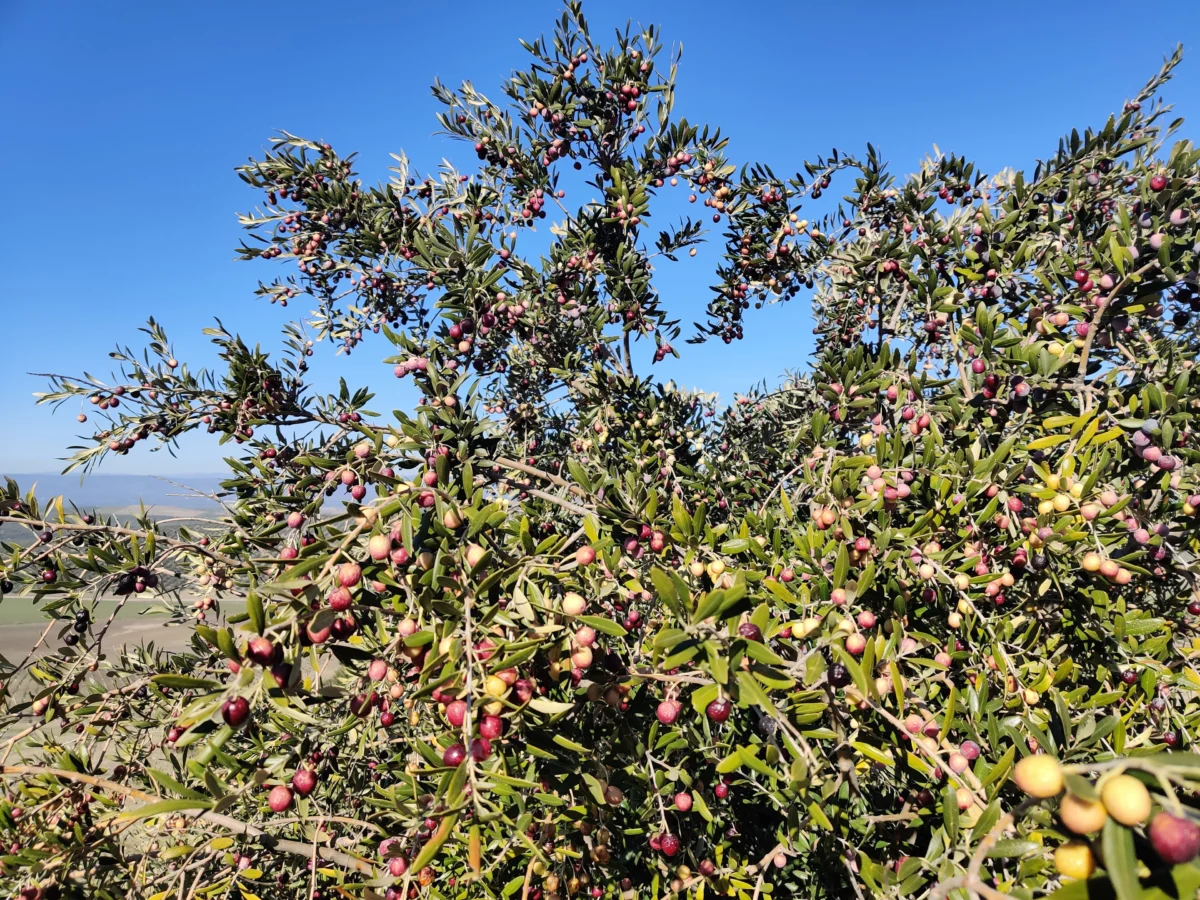
| Fruit | Small, round, ripens green to purple-black in fall; mild oil |
| Disease note | Resistant to verticillium wilt |
What is an Arbequina olive?
Arbequina is a Spanish olive cultivar and one of the world’s most widely planted oil olives, especially in super-high-density orchards because the trees stay small and bear early. The fruit is small and round with a high oil content. Arbequina oil is known for mild, fruity, sometimes almond-like flavor with little bitterness. In home gardens it is valued as an ornamental evergreen with silvery leaves that also produces a crop.
How cold hardy is an Arbequina olive tree?
Arbequina is one of the hardier olives. The grower Monrovia rates Arbequina for USDA zones 8 to 11. University of California Cooperative Extension’s olive freeze damage fact sheet lists Arbequina among the hardy varieties, alongside Leccino, Mission, Picual and Hojiblanca, and gives critical temperatures at or below about 20°F, varying with conditions. It places Sevillano, Kalamata and Picholine in a moderate group and Manzanillo, Koroneiki, Empeltre, Frantoio and Moraiolo in the sensitive group. It also notes that hardiness increases as trees are exposed to gradual cooling through autumn and winter.
Young trees are more tender than established ones, and long, hard freezes can kill branches even on mature trees. Use the growing zone finder to check your zone, and the frost dates tool for your first and last freezes. In colder areas, grow Arbequina in a container and move it into a cool, bright space for winter; olives need some winter chill to flower well, so a cool garage window is better than a warm living room.
How big does an Arbequina olive tree get?
In the ground, Arbequina usually grows into a small, rounded tree about 15 to 25 feet tall over many years. The UC Marin Master Gardeners olive guide notes that olives can reach 20 to 25 feet, but they respond well to pruning. In a container, an Arbequina can be kept around 4 to 8 feet.
How to plant and care for Arbequina
- Sun: Full sun, at least 6 to 8 hours a day.
- Soil: Any well-drained soil. Olives tolerate poor, rocky and alkaline soil but not soggy ground. UC Marin suggests planting on a mound if drainage is poor.
- Planting: Dig a hole as deep as the root ball and twice as wide, keep the crown above the soil line, plant at nursery depth and water deeply. Mulch, keeping it about 3 inches from the trunk; the mulch calculator estimates how much you need. If a tall tree leans, see how to stake a tree.
- Water: Water regularly the first two summers. UC Marin says young trees need more water than mature ones, should be watered deeply and less often to a depth of 2 feet, and that mature trees generally need watering about once a month. Overwatering increases pruning needs and pest and disease risk. The garden watering calculator helps with amounts.
- Fertilizer: Olives need little. UC Marin says mature trees do not need fertilizer; for young trees it suggests about 1 ounce of organic urea or blood meal under each drip emitter monthly. See our fruit tree fertilizer guide.
- Pruning: Remove suckers after planting. UC Marin says to prune annually after harvest and, when the tree is about 3 feet tall, to reduce scaffold branches to 3 to 5. Olives fruit on the previous year’s growth, so heavy pruning reduces next year’s crop. See our guide to loppers for the right tool.
Growing Arbequina in a container
Arbequina is one of the best olives for pots. Choose a large container with drainage holes, a fast-draining potting mix, and a spot with full sun. Water when the top few inches of mix are dry, and feed lightly in spring. Container trees dry out faster than trees in the ground, so check them often in summer, but never let them sit in water. Repot every two to three years into a slightly larger pot, and top-dress with fresh mix in between. Bring pots to a sheltered spot when temperatures approach the low 20s, since roots are more exposed in a container than in the ground.
Is Arbequina self-pollinating?
Yes. UC Marin Master Gardeners list Arbequina as self-fruitful, so a single tree can produce olives. Crops are often larger when another olive variety blooms nearby, such as ‘Arbosana’ or ‘Koroneiki’. Olives are wind-pollinated, so bees are not essential.
How long does it take an Arbequina olive tree to produce fruit?
Arbequina is known for early bearing. Young nursery trees often fruit lightly in 2 to 3 years, and UC Master Gardeners report that olives generally bear by about year 4 or 5. UC Marin says a mature tree can produce up to 40 pounds of olives, typically fruiting in alternate years. Olive trees tend to alternate bear, with a heavy crop one year and a light crop the next; thinning a heavy crop and even watering reduce the swing.
When do you harvest Arbequina olives?
Arbequina olives ripen in fall, turning from green through reddish-purple to dark brown or black. UC Cooperative Extension’s olive harvest and curing publication describes three harvest stages: green-ripe, turning color, and naturally black ripe. Green-ripe fruit releases a creamy white juice when squeezed. Pick green-to-purple fruit for brine-cured table olives with a firmer texture, or fully dark fruit for the mildest oil and softer cured olives. Process fresh olives within a few days of harvest; green-ripe olives store better than black-ripe ones, at 41 to 50°F, but colder storage for more than two weeks can cause browning.
How do you cure Arbequina olives?
Olives straight from the tree are extremely bitter because of a compound called oleuropein. They must be cured before eating. The UC publication lists four home methods, and the numbers below come from it. Recipes differ, so always follow a tested, current recipe from your extension service.
- Water-cured: cut the olives, soak them in water and change the water daily for at least a week, then finish in a brine of salt and white wine vinegar. Refrigerate.
- Brine-cured: start with about ¾ cup of salt per gallon of water at 60 to 80°F, then switch to 1½ cups per gallon after 7 days and cure for at least 2 months, refreshing the brine monthly for less bitterness.
- Dry salt-cured: layer olives with salt at about 1 pound of salt per 2 pounds of olives, stir weekly for about a month, and expect to wait 5 to 6 weeks.
- Lye-cured: uses food-grade lye and a long rinse. This is the fastest method but the most hazardous, since lye causes serious burns.
A UC Cooperative Extension home olive-curing guide warns that olives are low-acid and carry a botulism risk. Olives that are canned must be processed in a pressure canner, not a boiling-water bath. Keep olives fully submerged so air does not darken them, use glass, stoneware or food-grade plastic (never galvanized or aluminum containers), skim off mold or scum from the brine as it appears, and discard any olives that become soft or smell bad.
Arbequina for oil or for the table?
Arbequina is best known as an oil olive, but home growers often cure a few jars of table olives instead because a single tree produces a modest crop. Pressing oil at home usually needs far more fruit than one patio tree provides, and the oil should be made soon after picking. For a small harvest, curing is the more practical use. If you only want ornamental value and a few olives to share, a well-pruned tree in a large pot will do both jobs.
Seasonal care calendar
- Late fall: harvest ripe fruit; apply copper to guard against peacock spot if your climate has wet winters, as directed on the label.
- Winter: protect young trees from hard freezes and avoid pruning until the danger of frost has passed.
- Spring: flowering; avoid heavy watering or fertilizing right at bloom. Remove suckers and check for olive knot galls as they become visible.
- Summer: deep, infrequent watering for young trees; hang fruit fly traps before fruit appears.
- Early fall: thin heavy crops and make sure irrigation is even as the fruit sizes up.
Common Arbequina problems
| Problem | Cause | What to do |
|---|---|---|
| Tunnels and maggots in fruit | Olive fruit fly | Hang yeast-baited traps early; remove all fruit and pick up fallen fruit |
| Dark spots on leaves, leaf drop | Peacock spot (olive leaf spot) | Improve airflow; UC Marin suggests copper fungicide in late fall before rains, applied per the label |
| Galls (knots) on twigs | Olive knot bacteria | Remove galls in the dry season; disinfect tools |
| Heavy crop then no crop | Alternate bearing | Thin heavy crops; water evenly |
| Sunburned or borer-damaged trunk | Hot sun, young bark | Paint the lower two-thirds of the trunk with a 50/50 mix of water and white interior latex paint |
UC Marin Master Gardeners suggest traps baited with torula yeast and water to monitor olive fruit fly, hung before fruit appears. Use the pest identifier to check other pests. For olive knot, the University of California IPM program says leaf scars stay susceptible for up to 7 days after leaf drop and pruning wounds for at least 14 days, so avoid pruning in the rainy season and sterilize tools with a 10 percent bleach solution; see its olive knot page.
Pollen and local rules
Fruiting olive trees release large amounts of allergenic pollen in spring. Some local governments in the US Southwest restrict planting or selling pollen-producing olives; for example, the University of Arizona notes that Pima County codes prohibit selling mulberry and pollen-producing olive trees. Check your city and county code before planting an Arbequina. Where fruiting olives are restricted, a fruitless olive tree may be the allowed choice.
Safety and legal note: Lye is caustic and can cause severe burns; wear gloves and eye protection and keep it away from children and pets. Olives are low-acid, so use only tested curing and canning recipes and a pressure canner for canned olives. Copper sprays and other pesticides must be used exactly as the label directs. Ordinances on pollen-producing olives and rules on selling home-cured foods vary by city, county, state and country.
Free printable: the Year-Round Garden & Preserving Planner
Planting dates for 24 crops, monthly tasks, blanching times, canning safety numbers and a winter storage chart in one 8-page PDF. Enter your email to download it instantly and get our seasonal garden newsletter.
No spam. Unsubscribe any time. We never sell your email.
Frequently asked questions
Can you eat Arbequina olives off the tree?
No. Raw olives are very bitter and must be cured in water, brine, salt or lye before eating.
No. Raw olives are very bitter and must be cured in water, brine, salt or lye before eating.
Does Arbequina need a second tree?
No. It is self-fruitful, though another variety nearby can increase the crop.
No. It is self-fruitful, though another variety nearby can increase the crop.
Can Arbequina grow in a pot?
Yes. It is one of the best olives for containers. Use a large, well-drained pot and give it full sun.
Yes. It is one of the best olives for containers. Use a large, well-drained pot and give it full sun.
How fast does an Arbequina olive tree grow?
Moderately. It often adds about a foot a year when young and fruits earlier than most olive varieties.
Moderately. It often adds about a foot a year when young and fruits earlier than most olive varieties.
Is Arbequina good for olive oil?
Yes. It is one of the most widely planted oil varieties and gives a mild, fruity oil.
Yes. It is one of the most widely planted oil varieties and gives a mild, fruity oil.
How cold can an Arbequina olive tolerate?
It is among the hardier olives, but damage begins at or below about 20°F, and young trees are more tender.
It is among the hardier olives, but damage begins at or below about 20°F, and young trees are more tender.
Planning more fruit? Browse every variety, planting and care article in our complete fruit tree growing guide.
Last reviewed October 2026. Key references: UC Marin Master Gardeners, Olive; UC Cooperative Extension, olive freeze damage; UC Cooperative Extension, olive harvest and curing; Monrovia, Arbequina Fruiting Olive; University of Arizona, Pollen and Allergies. Local ordinances change; check yours before planting.