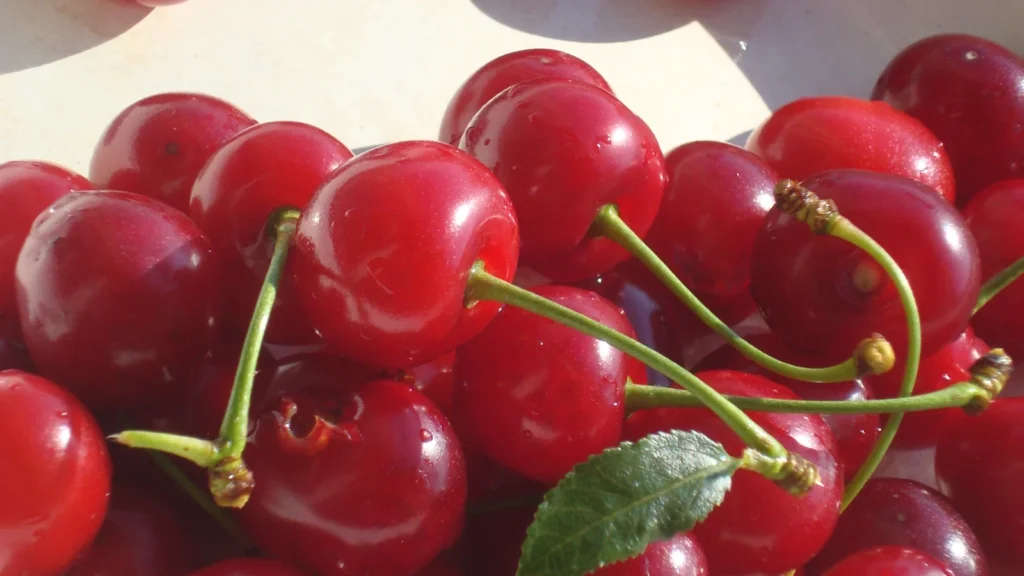
Dwarf cherry trees are cherries that stay small enough to pick from the ground, usually 6 to 15 feet tall. There are three main kinds: sweet cherries such as Stella, Lapins or Black Gold grafted onto dwarfing rootstocks like Gisela 5, which keep them around 8 to 12 feet; naturally small sour (tart) cherries such as North Star and the Romance series from the University of Saskatchewan, which grow 6 to 8 feet; and bush cherries such as Nanking cherry. Dwarf cherries bear in 2 to 4 years, fit small yards and large containers, and are far easier to net against birds than full-size trees.
Dwarf cherry types compared
| Type | Height | Examples | Hardiness |
|---|---|---|---|
| Sweet cherry on Gisela 5 | About 8 to 12 feet | Stella, Lapins, BlackGold, WhiteGold, Bing | Zones 5 to 8 (variety-dependent) |
| Genetic dwarf sour cherry | About 6 to 10 feet | North Star, Meteor | Zones 4 to 8 |
| Romance series (dwarf sour) | About 6 to 8 feet | Carmine Jewel, Juliet, Romeo, Crimson Passion, Cupid | Zones 2 to 7 |
| Bush cherry | About 6 to 10 feet | Nanking cherry, Hansen bush cherry | Zones 2 to 7 |
| Compact sweet cherry | About 8 to 10 feet | Compact Stella, Sweetheart on dwarfing stock | Zones 5 to 8 |
What makes a cherry tree dwarf?
Standard sweet cherries on seedling Mazzard or Mahaleb rootstock can grow 30 to 40 feet tall and take five years or more to bear. Dwarf sweet cherries are grafted onto dwarfing rootstocks, which limit vigor and bring trees into bearing much sooner. The West Virginia University Extension guide to cherry rootstocks describes the Gisela series developed in Germany, explaining that Gisela 5 produces trees roughly 45 to 50 percent the size of a standard, while Gisela 6 gives somewhat larger, more vigorous trees that tolerate heavier soils. The Utah State University overview of dwarf fruit trees notes that Gisela 5 can keep cherry trees under about 10 feet.
Sour cherries (Prunus cerasus) are naturally smaller than sweet cherries, and some varieties are genetic dwarfs. The Wikipedia article on sour cherry describes the species and its main cultivar groups.
Which cherry rootstocks keep trees small?
| Rootstock | Size vs standard | Notes |
|---|---|---|
| Gisela 3 | About 30 to 40% | Very dwarfing; needs support and excellent soil |
| Gisela 5 | About 45 to 50% | Most popular home dwarf; early bearing; may need staking |
| Gisela 6 | About 60 to 70% | More vigorous; tolerates heavier soils |
| Krymsk 5 and 6 | About 60 to 80% | Cold-hardy; tolerant of wet soils |
| Mahaleb | About 80 to 90% | Drought tolerant; dislikes wet soil |
| Mazzard | Standard | Large, long-lived trees |
Dwarfing rootstocks bear heavy crops early, which can overload a young tree. Choosing a variety that sets lighter crops, or thinning, keeps fruit size up.
Which dwarf cherry varieties are best?
Sweet cherries
Stella was the first widely grown self-fertile sweet cherry, with large dark fruit, and it pollinates many other varieties. Lapins is self-fertile, crack-resistant and productive. BlackGold and WhiteGold, from Cornell, are self-fertile, late-blooming and hardier than many sweet cherries, which helps in frost-prone areas. Bing and Rainier are classic but need a pollinator. All can be grown on dwarfing stock.
Sour cherries
Montmorency is the classic pie cherry and is self-fertile. North Star is a genetic dwarf, very hardy and resistant to cracking, with bright red tart fruit. Meteor is a semi-dwarf tart cherry bred in Minnesota for cold climates.
Romance series dwarf sour cherries
Bred at the University of Saskatchewan for the Canadian prairies, Carmine Jewel, Juliet, Romeo, Crimson Passion, Cupid and Valentine are shrubby trees that reach 6 to 8 feet and survive winters to about zone 2 or 3. They are self-fertile and sweeter than traditional pie cherries, good for fresh eating as well as baking.
Bush cherries
Nanking cherry (Prunus tomentosa) is a tough, hardy shrub with small red fruit, good for hedges and wildlife; plant two for best fruit set.
Do dwarf cherries need a pollinator?
Many sweet cherries need a compatible pollinator that blooms at the same time, but self-fertile varieties such as Stella, Lapins, BlackGold, WhiteGold, Sweetheart and Skeena set fruit alone. Sour cherries, including North Star, Montmorency and the Romance series, are self-fertile. In small gardens, choosing a self-fertile variety lets you grow a single tree.
| Variety | Type | Self-fertile? |
|---|---|---|
| Stella | Sweet | Yes |
| Lapins | Sweet | Yes |
| BlackGold, WhiteGold | Sweet | Yes |
| Bing | Sweet | No |
| Rainier | Sweet | No |
| Montmorency | Sour | Yes |
| North Star | Sour | Yes |
| Carmine Jewel, Juliet, Romeo | Sour (Romance) | Yes |
Where do dwarf cherries grow best?
Cherries need full sun, at least 6 to 8 hours, and well-drained soil. They are very sensitive to wet roots and can die from root and crown rot in soggy ground, so plant on a slope or raised bed if drainage is slow. Sweet cherries need cold winters to meet their chill requirement, often 700 hours or more, though low-chill varieties such as Minnie Royal and Royal Lee exist for mild climates. Rain at harvest can split sweet cherries, so crack-resistant varieties help in wetter areas. Check your zone with the growing zone finder and sun exposure with the sunlight requirement finder.
How do you plant a dwarf cherry tree?
- Plant while dormant in late winter or early spring, or in fall in mild climates.
- Choose full sun and well-drained soil with a pH around 6.0 to 7.0.
- Dig a wide hole two to three times the root spread, no deeper than the root system; the planting hole size calculator helps.
- Keep the graft union 2 to 3 inches above the soil, so the variety does not root and lose its dwarfing.
- Stake trees on Gisela 5 and other dwarfing stocks; their roots are less anchored.
- Water deeply and mulch 2 to 3 inches deep, kept away from the trunk.
Space dwarf sweet cherries about 8 to 12 feet apart, Romance series and bush cherries about 5 to 8 feet apart. The plant spacing calculator helps lay out several trees.
Can you grow a dwarf cherry in a container?
Yes. Choose a genetic dwarf sour cherry, a Romance series variety or a sweet cherry on Gisela 5, and plant in a container of at least 15 to 20 gallons with drainage holes and a quality potting mix. Water consistently, since cherries in pots dry quickly in summer, and feed lightly in spring. In cold climates, insulate the pot or move it to an unheated shelter in winter, since roots in containers are less hardy than in the ground. The container garden planner helps size the pot.

How do you prune a dwarf cherry tree?
Train sweet cherries to a central leader or a low open vase, and sour cherries to an open center or a bushy shape. Prune young trees lightly to establish the framework. Mature trees need only thinning cuts to remove dead, crossing and crowded wood and to let light into the canopy. Cherries are prone to bacterial canker and silver leaf, which enter wounds in wet weather, so many growers prune cherries in summer or in dry late-winter weather rather than in damp fall. Our guide on when to prune cherry trees explains timing in detail.
How do you protect cherries from birds?
Birds are the biggest threat to a cherry crop, often stripping a tree in days. A dwarf tree is easy to cover completely with netting just before the fruit colors, secured at the base so birds cannot get underneath. Use the garden netting calculator to size netting, and see our guide to bird scare tape for supplemental deterrents. Yellow-fruited varieties such as Rainier and WhiteGold are sometimes less targeted.
When do dwarf cherries bear fruit, and when are they ripe?
Dwarf cherries on Gisela rootstocks often bear in their second or third year, and Romance series cherries in 2 to 3 years. Sweet cherries ripen in early to midsummer, and sour cherries usually a little later. Ripe sweet cherries are fully colored, firm and sweet; taste a few before harvesting. Pick with the stems attached to help the fruit keep. Sour cherries can be picked without stems for immediate processing.
What problems affect dwarf cherry trees?
| Problem | Sign | What to do |
|---|---|---|
| Birds | Fruit pecked or missing | Net the tree before fruit colors |
| Cherry leaf spot | Purple spots; early yellowing and leaf drop | Rake fallen leaves; protective sprays in wet seasons |
| Brown rot | Blossom blight; rotting fruit | Remove mummies; improve air flow |
| Bacterial canker | Gummy cankers; dieback | Prune in dry weather; avoid wounds |
| Spotted wing drosophila | Soft, collapsing fruit with tiny larvae | Harvest promptly; remove fallen fruit; fine netting |
| Cherry fruit fly | Maggots in fruit | Yellow sticky traps; timed controls |
| Rain cracking | Split fruit after rain | Crack-resistant varieties; covers |
| Root rot | Wilting, decline in wet soil | Plant in well-drained soil |
Check symptoms with the plant problem identifier and the pest identifier.
How much fruit does a dwarf cherry tree produce?
A mature sweet cherry on Gisela 5 commonly produces about 15 to 30 pounds of fruit, and Romance series bushes about 10 to 25 pounds once established. Standard trees can yield far more but are hard to pick and protect. Use the harvest basket calculator to plan containers for picking.
How do you water and feed dwarf cherries?
Water young trees deeply about once a week in dry weather for the first two or three years. Mature trees on dwarfing rootstocks have smaller root systems than standards and need more regular watering during dry spells, especially from bloom to harvest. Avoid heavy watering just before harvest on sweet cherries, which increases cracking. Feed lightly in early spring with compost or a balanced fertilizer; young trees should make about 12 to 24 inches of new growth a year, and mature bearing trees less. Excess nitrogen delays bearing and makes trees more prone to disease. The garden fertilizer calculator helps with amounts, and the garden watering calculator with irrigation.
Sweet or sour: which dwarf cherry should you grow?
Choose sweet cherries if you want fresh-eating fruit and you live where winters are cold enough and springs reliable enough, roughly zones 5 to 8. Choose sour cherries if you want pies, jams and juice, live in a very cold or short-season climate, or want the easiest, most reliable tree. Sour cherries are hardier, self-fertile, less prone to cracking and usually less attractive to birds than sweet cherries. The Romance series blurs the line, with fruit sweet enough to eat fresh in many years.
When should you plant a dwarf cherry tree?
Plant bare-root trees in late winter or early spring while dormant, as soon as the soil can be worked, and container-grown trees from spring to early fall. In mild-winter climates, fall planting gives roots a head start before spring growth. Water new trees weekly through their first summer.
Before buying, check the rootstock on the nursery label as well as the variety: the rootstock decides how big the tree will grow, how soon it bears and how well it copes with your soil. Pair it with our guide on the best soil for fruit trees.
Planning more fruit? Browse every variety, planting and care article in our complete fruit tree growing guide.
What University of Illinois Extension says about cherries
University of Illinois Extension’s cherries page splits the crop into two groups. Sour (tart) cherries such as Montmorency, Meteor and North Star are self-fruitful and can be grown statewide. Sweet cherries are best suited to central and southern Illinois and need cross-pollination from two or more varieties, with the exception of Stella, reported as self-fruitful. The standard rootstocks are Mahaleb for sour and Mazzard for sweet, while dwarfing rootstocks such as Gisela are becoming more popular for both. Dwarf sweet cherries are trained with 5 to 8 scaffolds spaced 5 to 10 inches apart vertically and a trunk height of 5 to 7 feet, compared with 10 to 15 feet for standard trees.
- Pruning: prune sour cherries every year, as they get too dense without it; prune sweet cherries every year but lightly, because heavy pruning disrupts production and increases winter injury risk.
- Diseases: cherry leaf spot is the most common sour cherry disease in Illinois and is controlled with recommended fungicides.
- Birds: cover trees with netting to protect mature fruit.
- Harvest: pick ripe fruit promptly to avoid rain cracking.
Check your zone with our growing zone finder and see the fruit trees hub for more.
Safety and legal note: Use a stable ladder and netting carefully so birds and wildlife are not trapped. Pesticide and fungicide sprays must follow the label and pre-harvest intervals. Rules on pesticide use and netting vary by country and region.
Free printable: the Year-Round Garden & Preserving Planner
Planting dates for 24 crops, monthly tasks, blanching times, canning safety numbers and a winter storage chart in one 8-page PDF. Enter your email to download it instantly and get our seasonal garden newsletter.
No spam. Unsubscribe any time. We never sell your email.
Frequently asked questions
How tall do dwarf cherry trees get?
About 6 to 12 feet, depending on rootstock and variety.
What is the best dwarf cherry tree?
For sweet cherries, Stella or Lapins on Gisela 5; for cold climates, Carmine Jewel or another Romance series sour cherry.
Are dwarf cherry trees self-pollinating?
Sour cherries and self-fertile sweet cherries such as Stella and Lapins are; Bing and Rainier need a pollinator.
How long until a dwarf cherry bears fruit?
Usually 2 to 4 years.
Can dwarf cherry trees grow in pots?
Yes, in containers of 15 to 20 gallons or more.
What is Gisela 5?
A German dwarfing cherry rootstock that keeps trees about half standard size and brings them into bearing early.
Fact-checked against: West Virginia University Extension, Cherry Rootstocks; Utah State University, Dwarf Fruit Trees; Wikipedia, Prunus cerasus.
Reviewed October 2026. Sources: University of Illinois Extension, Cherries