
Few plants are as satisfying to grow from seed as sunflowers. The big seeds are easy to handle, sprout in about a week and race upward all summer. Whether you want 12-foot giants, branching plants covered in flowers or neat single stems for bouquets, the planting basics are the same.
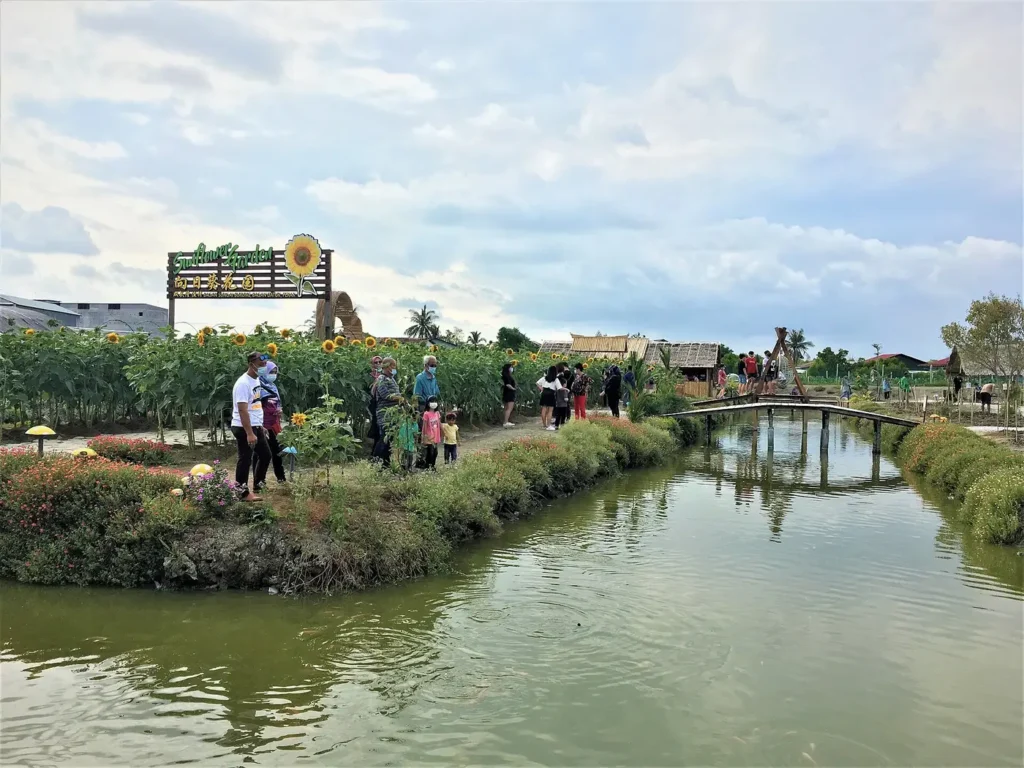
When to plant sunflower seeds
- Outdoors: sow after your last spring frost, when the soil has warmed to at least 50°F and ideally 60°F or more. Seeds in cold, wet soil rot or sprout slowly.
- Indoors: rarely necessary, since sunflowers grow fast and dislike transplanting. If you have a short season or problems with birds digging up seeds, start them two to three weeks before the last frost in deep pots and transplant gently.
- Succession sowing: plant a few seeds every two to three weeks until midsummer for a long season of flowers. Most varieties bloom 60 to 100 days after sowing.
Check your last frost with the frost date tool.
Where to plant sunflowers
- Full sun: at least six to eight hours a day. Sunflowers lean toward the light, so plant tall types on the north side of the garden where they will not shade other crops.
- Loose, well-drained soil: sunflowers have deep taproots. Loosen the soil a foot or more deep.
- Shelter for giants: a fence or wall protects tall varieties from wind.
How deep and how far apart
Plant sunflower seeds about 1 to 1.5 inches deep. Spacing depends on the type:
| Type | Examples | Final spacing |
|---|---|---|
| Single-stem cut flowers | ProCut, Sunrich | 6 inches (tighter spacing gives thinner stems) |
| Branching types | Autumn Beauty, Italian White, Lemon Queen | 18 to 24 inches |
| Giants | Mammoth, American Giant, Russian Giant | 24 to 36 inches |
| Dwarf and container types | Teddy Bear, Sunny Smile | 6 to 12 inches |
How to plant sunflower seeds, step by step
- Loosen the soil and mix in a little compost.
- Sow two or three seeds per spot, 1 to 1.5 inches deep, at the spacing above.
- Water well and keep the soil moist until seedlings emerge in about 7 to 10 days.
- Protect the seeds. Birds and squirrels love sunflower seeds. Cover the area with netting or a row cover until seedlings are a few inches tall. See how to keep animals out of your garden for more ideas.
- Thin to the strongest seedling per spot once they have their first true leaves.
Caring for sunflowers
- Water deeply once or twice a week, especially from bud to bloom.
- Feed lightly. Too much nitrogen gives tall, weak stems; compost at planting is usually enough.
- Stake giants once they pass 4 to 5 feet.
- Cut branching types often to encourage more flowers.
Sunflowers for cutting
Cut sunflowers when the petals are just starting to lift off the center, early in the morning. Pollenless varieties are best for bouquets because they do not drop pollen. They last about a week in a vase; see how to keep cut flowers fresh, and plan a bed with our cut flower garden guide.
Harvesting sunflower seeds
For edible seeds or bird food, wait until the back of the flower head turns yellow-brown and the petals have dried. Cover heads with a paper bag or netting to keep birds off, then cut the head with a foot of stem and hang it somewhere dry. Rub out the seeds once they are fully dry. Sunflowers are excellent for pollinators too; see how to plant a pollinator garden.
For general sowing tips, read our beginner’s guide to planting seeds.
Choosing a sunflower variety
| Variety | Height | Type | Best for |
|---|---|---|---|
| ‘Mammoth Grey Stripe’ | 9 to 12 feet | Single stem | Giant heads and edible seeds |
| ‘Russian Mammoth’ | 9 to 12 feet | Single stem | Tall screens, bird seed |
| ‘ProCut’ series | 4 to 6 feet | Single stem, pollenless | Clean cut flowers with no pollen mess |
| ‘Autumn Beauty’ | 5 to 7 feet | Branching | Mixed bronze, red and yellow blooms over weeks |
| ‘Teddy Bear’ | 2 to 3 feet | Branching | Fluffy double flowers for pots and small beds |
| ‘Elf’ or ‘Sunspot’ | 1 to 2 feet | Dwarf | Containers and kids’ gardens |
Protecting seeds and seedlings
Birds, squirrels and chipmunks love freshly sown sunflower seeds, and slugs and rabbits go after young seedlings. Cover the row with floating row cover or a strip of chicken wire until plants have four to six true leaves. Sow a few extra seeds per spot and thin later, so a few losses do not leave gaps.
Growing sunflowers in containers
Dwarf and branching sunflowers grow well in pots. Choose a container at least 12 inches wide and deep for dwarf types, or a 5 gallon pot for varieties up to 5 feet. Use a quality potting mix, sow two or three seeds per pot and thin to the strongest seedling. Pots dry out quickly in summer, so water whenever the top inch of soil is dry, and feed every few weeks with a balanced fertilizer. Taller types may need a stake.
Do sunflowers really follow the sun?
Young sunflowers do. Before they bloom, the growing tips turn east in the morning and track the sun west during the day, then swing back overnight. Once the flower opens and the stem stiffens, most heads stop moving and settle facing east, which helps them warm up early and attract more pollinators. Plant tall varieties where an east-facing view works for you, such as along a north or west edge of the garden.
Are sunflowers safe for pets?
Sunflowers are listed as non-toxic to cats, dogs and horses by the ASPCA. Eating a lot of leaves or seed shells can still upset a pet’s stomach, and salted roasted seeds are not a good snack for dogs, so keep harvested seed heads out of reach.
Timing: counting back from bloom
Sunflowers are fast, but not instant. The University of Missouri Extension says bloom takes 70 to 120 days depending on the variety and suggests counting back from your desired bloom date to find the planting date. West Virginia University Extension gives a narrower figure for the plants it describes, maturity in 85 to 95 days. A gardener who wants flowers for a late-August party should therefore check the days to maturity on the packet, subtract that from the target date, and sow after the last frost. Our harvest date calculator does this arithmetic for you, and the frost dates tool gives the starting point.
Both universities recommend staggering. Missouri suggests planting every 2 to 3 weeks for continuous bloom, and West Virginia says the same, adding that mixing varieties with different maturity dates also extends the season. Missouri also says that indoor seedlings can be started 4 to 6 weeks before the last average frost date, while West Virginia suggests biodegradable pots for an earlier start and hardening off transplants over about a week before planting out once frost danger has passed. Sunflowers have a taproot, which is why a biodegradable pot that can go straight into the ground is a sensible choice.
Depth and spacing: where the sources differ
The two sources do not agree exactly on depth. Missouri describes a trench about 1 inch (2.5 cm) deep and seed covered with 1 inch of soil. West Virginia says to sow 1 to 2 inches (2.5 to 5 cm) deep. Planting about 1 inch deep sits comfortably within both, and a little deeper is reasonable in light, dry soil. Missouri adds that germination takes about 7 to 10 days and that seedlings should be thinned if too many come up.
Spacing is where height matters. Missouri says varieties 2 to 5 feet tall can be about 6 inches (15 cm) apart, taller ones over 5 feet about 12 inches (30 cm) apart, and giant varieties about 24 inches (60 cm) apart, with seeds no closer than 6 inches. West Virginia gives 6 inches for small varieties and 12 inches for tall ones, with rows 2 to 3 feet (60 to 90 cm) apart, and notes the typical height is about 6 feet though varieties range from 2 to 15 feet. If you are unsure, use our plant spacing calculator to see how many plants fit in your bed at a given spacing.
Site, soil and feeding
Missouri recommends a spot with more than 6 hours of sun and well-drained soil, with weeds removed, the soil turned or tilled, and a handful of compost or potting mix mixed in. West Virginia specifies a pH of 6.0 to 7.0 and well-drained soil, and says to test the soil before planting. For feeding, Missouri suggests fertilizing every 2 to 3 weeks with compost or fertilizer, while West Virginia suggests a slow-release all-purpose fertilizer once the second set of true leaves appears, or splitting the recommended nitrogen into half at planting and half later in the season. These are different approaches for different growing styles, so pick one rather than combining them, and base the amount on a soil test where you can.
Watering for strong roots
Sunflowers tolerate dry weather, but both sources advise regular watering early on. Missouri notes that regular watering builds strong roots that resist toppling in wind. West Virginia says to water regularly early to build a strong root system, to water after fertilizing so nutrients reach the roots, and that mature plants need about 1 inch (2.5 cm) of water per week and can tolerate some drought. A deep weekly soaking is better than a daily sprinkle, because it pushes roots down. Our garden watering calculator can convert an inch of water into minutes for your sprinkler or drip system.
Weeds, support and tall varieties
West Virginia warns that sunflowers cannot outcompete weeds until they mature, so early weed control matters. Hoeing, hand-pulling and mulching all work, and Missouri also recommends hoeing or mulching. For very tall plants, Missouri says to stake or brace varieties that grow taller than 10 feet. In windy sites, plant tall types on the sheltered side of a fence or building.
Pests and diseases
West Virginia lists several problems. Deer can quickly destroy young plants, so use fencing or repellents in high-deer areas. Birds eat seeds, and spinners, scarecrows or owl decoys may deter them. Insects such as leaf-footed bugs, stink bugs and chewing or sap-feeding insects can damage plants, though sunflowers can also serve as a trap crop and attract beneficial insects like bees and butterflies. The same source lists Alternaria and Phoma leaf spot, Rhizopus head rot, rust, white mold, powdery mildew and downy mildew, which are favored by warm, humid weather and long periods of leaf wetness. It says crop rotation, deep plowing of crop residue and proper spacing reduce disease without fungicide. In a home garden, that translates to not planting sunflowers in the same bed year after year, clearing old stalks, and not crowding plants.
Cut flowers and seed harvest
Missouri recommends cutting flowers early in the morning, before the heat of the day, to prevent wilting. West Virginia says cut blooms can last up to a week in room-temperature water. For seed, the same source says to harvest when the back of the seed head turns brown, and to collect seeds by either drying cut heads and then removing the seeds, or letting heads dry on the stalk. It also notes the difference between oilseed sunflowers, grown for oil and birdseed, and confection sunflowers, grown for human snacks, usually roasted or baked. If you want seed to eat, choose a variety sold for that purpose. West Virginia reports that a tablespoon of seed has about 51 calories, 2 g of protein and 4.5 g of fat, and provides magnesium, copper, manganese and vitamin E.
Varieties named by extension services
Missouri lists large varieties such as Titan, Cyclops, Mammoth Russian, Mammoth Grey Striped and American Giant, semi-dwarf and dwarf varieties such as Teddy Bear and Sunspot, fall-colored varieties such as Autumn Beauty, Crimson Queen, Evening Star and Ring of Fire, and cut-flower varieties such as Sonja and Jade. Dwarf types are a better fit for pots and small yards, while giants need room and support.
Safety and legal note: Fence or repellents are options for deer, but read and follow the label of any repellent, fungicide or insecticide, and keep chemicals away from children and pets. Tall sunflowers can fall in storms, so stake or place them away from paths and play areas. Only eat seed from varieties sold for eating, and wash seed heads that were sprayed. Rules on pesticide use vary by region.
Sources and further reading
- Starting Seeds Indoors, Clemson Cooperative Extension
- Growing and maintaining cut flowers in your garden, Michigan State University Extension
- USDA Plant Hardiness Zone Map, USDA Agricultural Research Service
Free printable: the Year-Round Garden & Preserving Planner
Planting dates for 24 crops, monthly tasks, blanching times, canning safety numbers and a winter storage chart in one 8-page PDF. Enter your email to download it instantly and get our seasonal garden newsletter.
No spam. Unsubscribe any time. We never sell your email.
Frequently asked questions
When should I plant sunflower seeds?
After the last spring frost, once soil is at least 50°F and ideally 60°F. Keep sowing every two to three weeks until midsummer for continuous flowers.
How deep do you plant sunflower seeds?
About 1 to 1.5 inches deep.
How long do sunflowers take to grow?
Seeds sprout in 7 to 10 days, and most varieties bloom 60 to 100 days after sowing.
Can I plant sunflower seeds from the grocery store?
Raw, unroasted, unsalted seeds may sprout, but they will be giant varieties with unpredictable results. Roasted or salted seeds will not grow.
Reviewed October 2026. Sources: University of Missouri Extension, growing sunflowers, West Virginia University Extension, growing sunflowers
