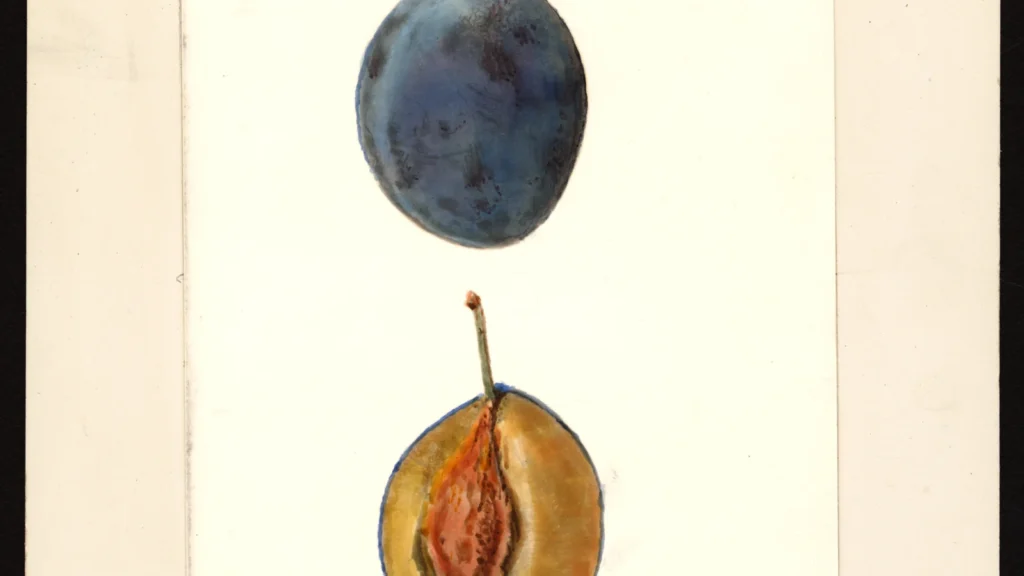
The Italian prune plum is a European plum (Prunus domestica) that bears medium-sized, oval, deep purple plums with a blue bloom and sweet, golden-yellow, freestone flesh. It ripens in late summer to early fall, is self-fruitful, grows about 15 to 20 feet tall on standard rootstock and usually starts bearing 3 to 6 years after planting. Its high sugar content makes it one of the best plums for drying into prunes, and it is just as good for baking, canning and eating fresh.
Italian prune plum essentials
| Botanical name | Prunus domestica ‘Italian’ (also sold as Italian prune, Fellenberg) |
|---|---|
| Type | European prune plum |
| Fruit | Medium, oval, deep purple with blue bloom; golden-yellow freestone flesh |
| Ripens | Late August to September in most areas |
| Pollination | Self-fruitful; larger crops with another European plum |
| Chill hours | About 700 to 1,000 |
| Zones | About 5 to 8; some nurseries rate it to zone 4 and up to 9 |
| Size | About 18 to 20 feet on standard rootstock; smaller on semi-dwarf |
| Years to fruit | About 3 to 6 |
What is an Italian prune plum?
A prune plum is a plum that is sweet and firm enough to dry whole, pit and all, without fermenting. The Italian prune is one of the classic prune varieties, grown for generations in the Pacific Northwest, the northern US and much of Europe, where the same or very similar plum is known as ‘Fellenberg’. It belongs to the European plum group, which the Utah State University Extension plum guide describes as upright trees with oval, blue or purple, yellow-fleshed prune types usually dried rather than eaten fresh. USU also lists ‘Early Italian’, an earlier-ripening selection.
Italian prune plums are freestone, so the flesh pulls cleanly away from the pit, and the flesh turns a rich red-purple when cooked, which makes beautiful tarts and sauces. For an overview of how they compare with other plums, see our guide to types of plum trees.
What do Italian prune plums taste like?
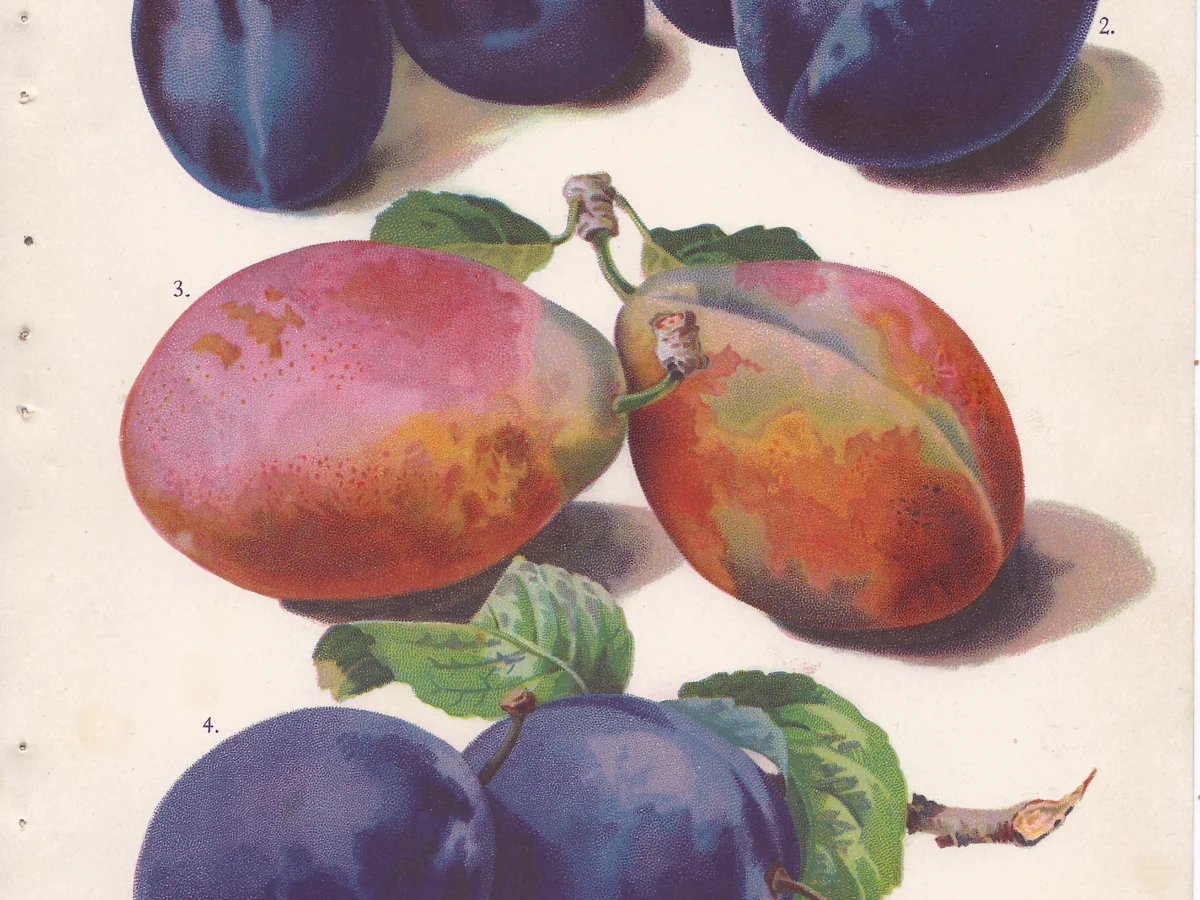
Fresh Italian plums are sweet, dense and mildly tangy, less juicy than Japanese plums, with a firm texture that holds up in baking. The flavor intensifies as they hang on the tree; fully ripe fruit is noticeably sweeter, with a honeyed, slightly spicy note. When dried, they become the familiar rich, chewy prune. The Stark Bro’s variety description lists golden-yellow, semi-firm flesh with a sweet flavor and mild lemony tang.
Where does an Italian prune plum grow best?
Italian is a cold-climate plum. It needs about 700 to 1,000 winter chill hours to bloom evenly, so it is not suited to low-chill regions such as southern Florida or coastal Southern California. European plums bloom 10 to 14 days later than Japanese plums, which helps them escape spring frosts in northern gardens. USU rates European plums for roughly zones 5 to 8, and some nurseries list Italian as hardy into zone 4. Check yours with the growing zone finder and your frost dates with the frost date tool.
Like all plums, Italian needs full sun and well-drained soil. It is somewhat tolerant of heavier soils if water does not stand, but it suffers in wet ground and may show yellow, iron-deficient leaves in very alkaline soil.
Is the Italian prune plum self-pollinating?
Yes. Italian is self-fruitful, so a single tree will produce fruit. Like most European plums, it crops more heavily when another European plum blooms nearby. Good partners include ‘Stanley’, ‘Damson’, ‘Green Gage’ and ‘Seneca’. Japanese plums such as Santa Rosa are not effective partners, because European and Japanese plums are not cross-compatible and bloom at different times.
How do you plant an Italian prune plum tree?
- Choose rootstock. Standard and myrobalan rootstocks make a tree about 18 to 20 feet tall; semi-dwarf rootstocks such as ‘St. Julian A’ or ‘Marianna’ keep it smaller and easier to pick.
- Plant in early spring while dormant. Dig a hole two to three times the width of the roots and no deeper; the planting hole size calculator gives exact dimensions.
- Set the graft 2 to 4 inches above the soil, backfill with native soil and water deeply.
- Space standard trees 18 to 20 feet apart, semi-dwarf trees about 12 to 15 feet.
- Mulch 2 to 4 inches deep in a wide ring, keeping mulch off the trunk.
How do you care for an Italian prune plum?
Watering
Water about twice a week during the first summer, then deeply every week or two in dry weather so moisture reaches 1 to 2 feet down. Steady water while fruit sizes up prevents splitting after sudden rain.
Fertilizing
Skip fertilizer in the first year. After that, feed in early spring only if new shoots grow less than about 8 to 10 inches a year. Too much nitrogen produces leafy growth and soft fruit. See our fruit tree fertilizer guide and the garden fertilizer calculator.
Pruning
Train European plums to a modified central leader with four or five well-spaced scaffold branches. Italian plums bear on spurs on wood 2 to 5 years old, so prune moderately each year in late winter or early spring, removing dead, crossing and crowded branches and some older wood to renew fruiting spurs. Avoid heavy pruning, which European plums recover from slowly. Our guide on how to prune a plum tree explains each step.
Thinning
Italian plums often set heavily and can bear in alternate years. Thin young fruit to about 3 to 4 inches apart after frost risk has passed. Thinning gives larger, sweeter plums and protects branches, which can snap under a heavy crop.
When are Italian prune plums ready to pick?
Italian plums usually ripen from late August to mid-September, depending on climate. They color deep purple well before they are ripe, so judge by feel and taste rather than color alone. Ripe fruit gives slightly when pressed, has a full blue bloom, tastes sweet with little sourness and separates easily from the branch. For fresh eating and baking, pick when sweet but still firm. For prunes, let them hang until very ripe and slightly soft, or pick them as they begin to drop; the higher the sugar, the better the prunes.
How do you use Italian prune plums?
- Drying: The classic use. Halve and pit them for faster drying, or dry whole; see how to make prunes.
- Baking: Plum torte, Zwetschgenkuchen and other European plum cakes rely on this type because it holds its shape.
- Preserving: Jam, butter, chutney and canned halves.
- Freezing: Halve, pit and freeze on trays, then bag.
- Fresh: Sweet, firm and easy to pit.
What problems affect Italian prune plums?
| Problem | Sign | What to do |
|---|---|---|
| Brown rot | Fruit rots with tan, powdery spores near harvest | Thin fruit so plums do not touch; remove rotten fruit and mummies |
| Black knot | Black, corky swellings on branches | Cut out knots well below the swelling in winter |
| Plum curculio | Crescent scars, early fruit drop | Protect fruit for 4 to 6 weeks after petal fall |
| Fruit cracking | Splits after heavy rain | Water evenly; mulch |
| Alternate bearing | Heavy crop one year, little the next | Thin hard in heavy years |
| Branch breakage | Limbs snapping under fruit | Thin fruit; prop heavy limbs |
Use the pest identifier for insects you cannot name.
Italian prune vs Stanley plum
| Trait | Italian | Stanley |
|---|---|---|
| Fruit | Medium, oval, deep purple, very sweet when ripe | Larger, oval, dark blue, slightly milder |
| Season | Late August to September | Late August to early September |
| Hardiness | Good | Very good; widely adapted in the Northeast and Midwest |
| Uses | Excellent for prunes and baking | Good for prunes, canning and fresh |
| Pollination | Self-fruitful | Self-fruitful |
Planting both extends the harvest and improves pollination for each.
How long do Italian prune plum trees live?
With good care, Italian plum trees commonly produce for 20 years or more. Black knot, borers and poor drainage are the main causes of early decline. Annual pruning, prompt removal of infected wood and a well-drained site keep them productive.
Can you grow an Italian prune plum in a small garden?
Yes. On a semi-dwarf or dwarfing rootstock such as ‘St. Julian A’ or ‘Pixy’, and with annual pruning, an Italian plum can be kept at about 8 to 12 feet. European plums also respond well to training as a fan against a sunny wall or fence, a traditional method in Britain that keeps the tree flat and easy to net from birds. Young trees on dwarfing rootstock can grow in a large container of at least 20 gallons for several years, though yields are small. Use the container garden planner to plan a patio fruit area, and remember that potted plum roots need protection from hard freezes.
Where did the Italian prune plum come from?
European prune plums have been grown and dried in Europe for centuries, and the Agen region of southwest France became famous for its prunes. The Italian prune, also known in central Europe as ‘Fellenberg’, became one of the main varieties planted in the Pacific Northwest in the late 1800s and early 1900s, when Oregon, Washington and Idaho had large commercial prune industries. Many old backyard trees in those states are survivors of that era. Today, most US commercial prunes come from California and are made from the ‘Improved French’ variety, while Italian remains a home-orchard and fresh-market favorite.
Italian prune plum care calendar
| Season | Task |
|---|---|
| Late winter | Prune while dormant; cut out black knot; apply dormant oil if scale was present |
| Early spring | Plant new trees; feed only if growth was weak last year; refresh mulch |
| Bloom | No insecticide sprays; watch for late frosts and cover small trees if possible |
| Petal fall to early summer | Protect fruit from plum curculio; thin fruit to 3 to 4 inches apart |
| Summer | Water deeply in dry spells; remove water sprouts and suckers; net against birds |
| Late summer to early fall | Harvest; pick up dropped and rotten fruit |
| Fall | Remove mummified fruit and fallen leaves; protect trunks from rodents |
How do you store fresh Italian plums?
Firm-ripe Italian plums keep for about one to three weeks in the refrigerator in a shallow container or perforated bag. Slightly underripe fruit can finish softening on the counter for a day or two. For longer storage, halve and pit them and freeze them on a tray before bagging, which preserves them for baking for up to a year, or dry them into prunes. The National Center for Home Food Preservation explains safe freezing methods for fruit.
How many plums does an Italian prune tree produce?
A mature standard tree can produce several bushels in a good year, roughly in line with the 3 to 5 bushels USU estimates for plum trees in general. Semi-dwarf trees produce less but are much easier to pick and net. Because Italian plums often bear heavily one year and lightly the next, regular thinning helps keep yields steadier. When a big crop does arrive, the harvest basket and crate calculator helps you plan how many containers you will need.
Are Italian plums good for canning?
Very good. Their firm, freestone flesh holds its shape in syrup, and the deep purple skins give canned halves and plum sauce a rich color. Use only sound, just-ripe fruit, follow a tested recipe and processing time for your altitude, and prick whole plums or halve them so they do not burst in the jar. Overripe or bruised plums are better turned into jam or plum butter, where texture matters less.
For other trees and berries to grow alongside this one, see the home fruit tree guide.
Free printable: the Year-Round Garden & Preserving Planner
Planting dates for 24 crops, monthly tasks, blanching times, canning safety numbers and a winter storage chart in one 8-page PDF. Enter your email to download it instantly and get our seasonal garden newsletter.
No spam. Unsubscribe any time. We never sell your email.
Frequently asked questions
Are Italian plums the same as prunes?
A prune is a dried plum. Italian plums are a prune-type plum, meaning they are sweet enough to dry whole into prunes.
Does an Italian plum tree need a pollinator?
No. It is self-fruitful, but another European plum nearby increases the crop.
When do Italian prune plums ripen?
Usually from late August to mid-September, depending on your climate.
How big does an Italian plum tree get?
About 18 to 20 feet tall and wide on standard rootstock, less on semi-dwarf rootstock or with regular pruning.
How long until an Italian plum tree fruits?
Usually 3 to 6 years after planting.
Are Italian prune plums freestone?
Yes. The flesh separates easily from the pit, which makes them easy to halve for baking and drying.
References used in this guide: Utah State University Extension, Plums in the Home Garden; Stark Bro’s, Italian Plum; University of Illinois Extension, Plums.