Whether you are planning your very first vegetable patch or looking to refresh a garden you have grown for years, a few good ideas can make the difference between a garden that is a chore and one that is productive, easy to care for and a pleasure to spend time in. The best vegetable gardens are not necessarily the biggest; they are the ones planned around how you actually live, cook and garden.
This guide collects 20 practical vegetable garden ideas, grouped into layouts, growing up, themed beds, ways to get more harvest, and easy-care setups. Each idea includes what it is good for and how to try it, along with links to free tools that help you plan.
Before you start: three planning questions
- How much sun do you get? Most vegetables need at least six hours of direct sun; fruiting crops such as tomatoes and peppers want eight or more. The sunlight requirement finder helps you match crops to your light.
- How much time do you have? A small garden you can look after beats a big one that gets overrun by July. About 100 square feet is a good starting size.
- What do you actually eat? Grow the vegetables your household cooks with every week, not just the ones that look good in seed catalogs.
If you are completely new, start with our step-by-step guide to starting a vegetable garden, then come back here for ideas.
Layout ideas
1. A grid of raised beds
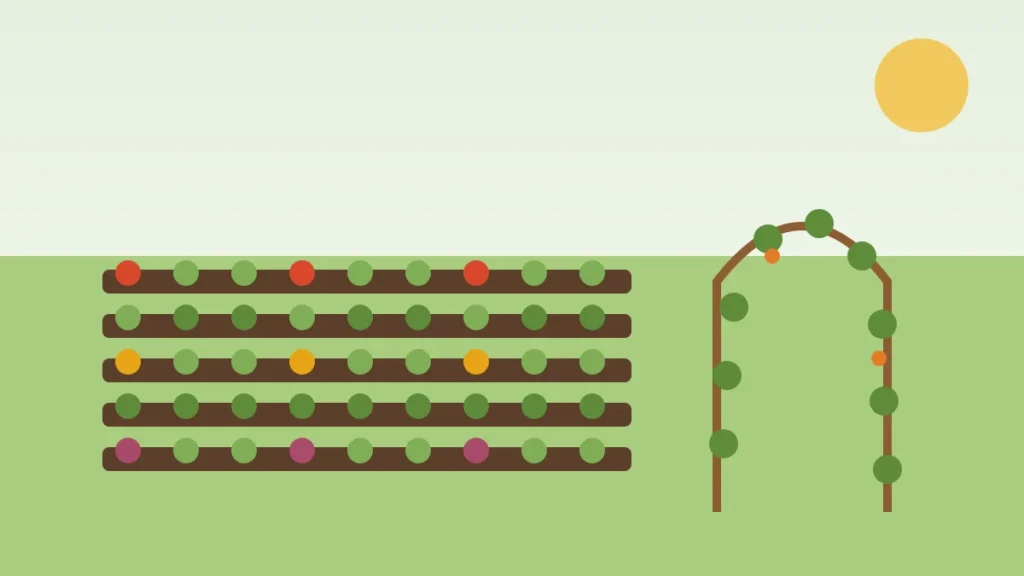
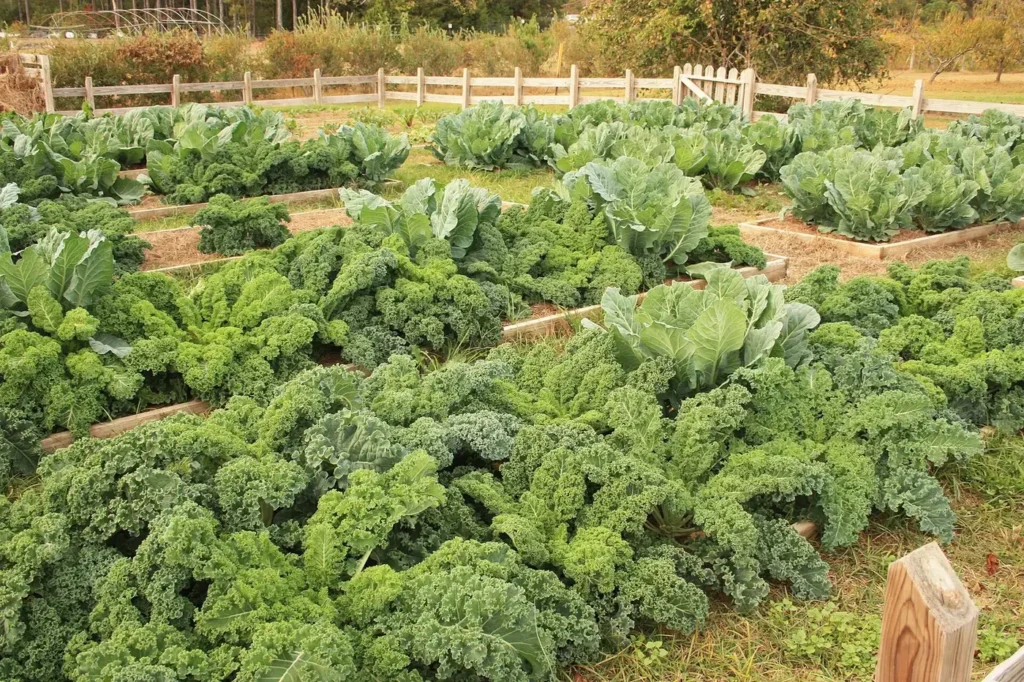
Rows of identical 4-by-8-foot raised beds with 18- to 24-inch paths between them are easy to plan, easy to reach and easy to rotate. Each bed can hold a different crop family, which simplifies crop rotation from year to year. Our guide to building a raised garden bed has full plans, and 25 raised garden bed ideas shows other materials and shapes.
2. A classic four-square garden
Four beds around a central path crossing, with a focal point in the middle such as a birdbath or a large pot of herbs. It is one of the oldest kitchen garden layouts and still one of the most practical: the four beds make a natural four-year rotation of leafy crops, fruiting crops, root crops and legumes.
3. A potager
Take the four-square idea further with patterned planting, flowers mixed with vegetables, neat edging and vertical features. A potager is a vegetable garden designed to be as beautiful as it is productive. Our guide to potager gardens covers design, plants and layouts.
4. A kitchen-door garden
Put herbs, salad greens and cherry tomatoes right outside the kitchen door, where you will pass them several times a day. Even if your main vegetable garden is further away, a small kitchen-door bed gets used far more. This is the idea behind “zone 1” in permaculture; see our permaculture garden guide for the full concept.
5. Traditional rows
On larger, open plots, simple rows are still efficient, especially for crops such as corn, potatoes, squash and beans. Wide rows of 2 to 3 feet, planted intensively, use space better than single-file rows. Our comparison of square foot and row gardening helps you decide.
6. Keyhole and U-shaped beds
A keyhole bed has a narrow path into its center so you can reach every part of a wide circular bed; a U-shaped bed surrounds you with growing space. Both pack a lot of reachable growing area into a compact footprint.
To try layouts quickly, the garden layout generator drafts a plan for your space, and our guide to planning a vegetable garden layout covers spacing, paths and where to put tall crops.
Ideas for growing up
7. Arched trellis tunnels
Bend a sturdy livestock panel into an arch between two raised beds. Pole beans, cucumbers, small squash and climbing flowers grow over it, creating a shady, productive tunnel and freeing up bed space. Fruit hangs down inside, where it is easy to see and pick.
8. Bean teepees
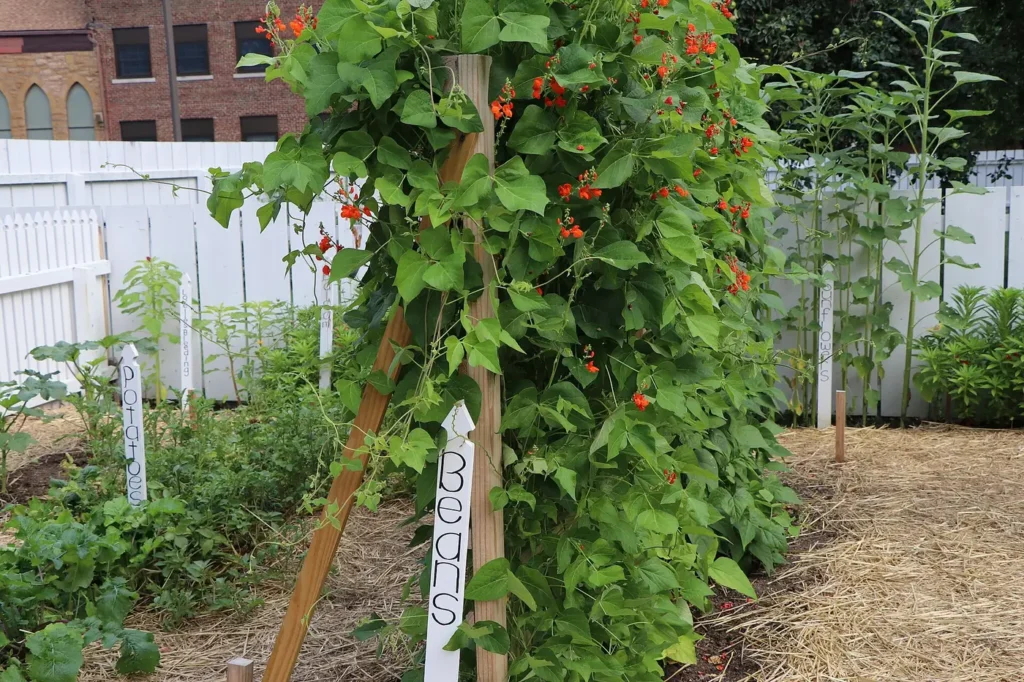
Tie six to eight tall bamboo canes together at the top and plant a pole bean at the base of each. Teepees are cheap, quick to build, look great in the garden, and make a fun hideout for children.
9. Fence and wall trellises
Fix netting or wire to a sunny fence or wall and train peas, cucumbers and pole beans up it. A south-facing wall also reflects warmth, helping heat-loving crops ripen.
10. Tomato cages and stakes
Supporting tomatoes keeps fruit off the ground, improves airflow and reduces disease. Indeterminate (vining) tomatoes need tall stakes or strong cages; determinate (bush) types manage with shorter cages. Our guide to common tomato problems covers the diseases that good support helps prevent.
Themed bed ideas
Themed beds make planning fun and help you grow exactly what you cook.
| Theme | What to plant | Best for |
|---|---|---|
| 11. Salsa garden | Tomatoes, jalapeños and other peppers, onions, cilantro, garlic | Fresh salsa all summer |
| 12. Pizza garden | Tomatoes, basil, oregano, peppers, onions | A fun bed with children |
| 13. Salad bar bed | Lettuces, arugula, spinach, radishes, green onions, cherry tomatoes | Daily salads from spring to fall |
| 14. Three Sisters | Corn, pole beans and winter squash grown together | A traditional Indigenous planting; beans climb the corn while squash shades the ground |
| 15. Stir-fry bed | Bok choy, snow peas, green onions, peppers, garlic | Quick weeknight meals |
| 16. Children’s garden | Sunflowers, cherry tomatoes, snap peas, radishes, strawberries, pumpkins | Fast, colorful, fun crops |
The plant finder helps you choose varieties for each theme, and the companion plant finder shows which crops grow well together.
Ideas to get a bigger harvest
17. Succession planting
Sow small batches of fast crops such as lettuce, radishes, beans and cilantro every two to three weeks, rather than all at once. You get a steady supply instead of a glut followed by nothing. When spring crops finish, replant the space with summer crops, then fall crops. The planting calendar shows what to sow and when.
18. Season extension
Simple covers stretch the season at both ends:
- Row cover on hoops protects against light frost and insects.
- Low tunnels of clear plastic warm the soil for early spring sowings.
- Cold frames keep salad greens going into late fall and early winter.
Knowing your frost dates is the key to timing; the frost date tool and our guide to understanding frost dates explain them.
Easy-care ideas
19. Drip irrigation on a timer
Drip lines deliver water straight to the roots, keep leaves dry and cut watering time to almost nothing once installed. Add a simple timer and the garden waters itself. The drip irrigation calculator sizes a system, and our comparison of drip irrigation and soaker hoses helps you choose. NC State Extension’s guide to how much water a vegetable garden needs explains how much to apply.
20. Mulch and no-dig beds
A 2- to 3-inch layer of straw, shredded leaves or compost keeps weeds down, holds moisture and feeds the soil. No-dig beds built by layering cardboard and compost over grass avoid back-breaking digging entirely. The mulch calculator works out how much you need.
More ideas worth trying
- A pollinator border: flowers along the edge of the vegetable garden bring in bees that improve squash, cucumber and bean harvests. See our guide to planting a pollinator garden.
- A cut flower row: zinnias, cosmos and sunflowers grown alongside vegetables give you bouquets all summer. See how to grow a cut flower garden.
- An herb edge: parsley, chives and thyme make a neat, useful border around beds.
- A rain barrel at the nearest downspout for free water; see our guide to rainwater harvesting.
- A compost corner to turn scraps and spent plants into free soil food; see our beginner’s guide to composting.
- Containers on the patio for extra crops close to the house; see our small garden ideas.
- A garden journal to record what you planted, when, and how it did: the best tool for a better garden next year.
Ideas by garden size
| Space | Ideas that fit |
|---|---|
| Balcony or patio | Containers, vertical trellises, salad bar trough, herbs by the door |
| Small yard (under 100 sq ft) | One or two raised beds, square foot gardening, a bean teepee, succession planting |
| Medium yard (100 to 400 sq ft) | Four-square or potager layout, arched trellis, themed beds, drip irrigation |
| Large yard | Grid of raised beds or wide rows, Three Sisters, a pollinator border, compost area |
Budget-friendly ideas
- Grow from seed rather than buying transplants for crops that sow easily outdoors.
- Use cardboard and free leaves to build no-dig beds.
- Make trellises from bamboo, branches and string.
- Start small and expand only what works.
Our guide to starting a vegetable garden on a budget has many more savings, and the garden cost calculator totals your plan.
Planning tools and resources
Once you have picked your ideas, put them on paper. Sketch a map of your space, mark where the sun falls, and plan each bed. For further reading, the University of Maryland Extension’s vegetable garden planning resources and Oregon State University Extension’s raised bed gardening fact sheet are excellent free references. The garden planner tools on this site help you lay out beds square by square, and the seed quantity calculator tells you how much seed to buy.
Common vegetable garden mistakes
- Starting too big and losing control to weeds.
- Choosing a shady spot.
- Planting too close together, which reduces airflow and yields.
- Planting everything at once instead of in succession.
- No plan for water, leading to stressed plants in summer.
- Growing crops you do not eat.
How to choose the right ideas for your garden
- List what you eat most and start with those crops.
- Measure your space and sun to see which layouts fit.
- Pick one layout idea, such as raised beds, a four-square or rows.
- Add one vertical idea to make the most of space.
- Choose one or two themed beds to keep it fun.
- Add one easy-care idea, such as mulch or drip irrigation, from the start.
- Keep notes through the season and expand what works next year.
Crop rotation made simple
Growing the same crop family in the same spot year after year builds up pests and diseases. A simple four-bed rotation avoids this:
| Year | Bed A | Bed B | Bed C | Bed D |
|---|---|---|---|---|
| 1 | Leafy crops | Fruiting crops | Root crops | Legumes |
| 2 | Legumes | Leafy crops | Fruiting crops | Root crops |
| 3 | Root crops | Legumes | Leafy crops | Fruiting crops |
| 4 | Fruiting crops | Root crops | Legumes | Leafy crops |
Leafy crops include lettuce, kale and cabbage; fruiting crops include tomatoes, peppers, squash and cucumbers; root crops include carrots, beets and onions; and legumes are peas and beans.
Frequently asked questions
What is the best layout for a vegetable garden?
For most home gardens, a grid of 4-foot-wide raised beds or a four-square layout works best: easy to reach, easy to plan and easy to rotate. Larger plots can use wide rows.
How can I make my vegetable garden more productive?
Grow vertically, plant intensively, sow fast crops in succession, extend the season with covers, and keep soil healthy with compost and mulch.
What is a Three Sisters garden?
A traditional Indigenous planting of corn, pole beans and winter squash grown together: the beans climb the corn, and the squash shades the soil.
How do I make a vegetable garden look nice?
Use a clear layout with defined paths and edges, mix in flowers and herbs, add a focal point and vertical structures, and keep beds full by replanting after harvest.
What vegetables should I grow first?
Easy, productive crops you like to eat: lettuce, radishes, bush beans, zucchini, cherry tomatoes and herbs are reliable first choices.
How big should my first vegetable garden be?
About 100 square feet, such as a 10-by-10-foot plot or two 4-by-8-foot beds, is manageable for most beginners.
How do I plan a vegetable garden layout?
Measure your space and sun, choose a layout such as raised beds or a four-square, put tall crops on the north side, and plan spacing with a tool such as the garden layout generator.
What is crop rotation and do I need it?
Crop rotation means moving crop families to a different bed each year. It reduces soil-borne pests and diseases and is worth doing even in a small garden.