Anthracnose is a group of fungal diseases that cause dark, sunken spots and blotches on leaves, stems, flowers and fruit. On shade trees such as sycamore, oak, ash, maple and dogwood, it causes irregular brown blotches along leaf veins and early leaf drop in cool, wet springs. On vegetables and fruit, including tomatoes, beans, cucumbers, melons, peppers, strawberries, grapes and mangoes, it causes round, sunken, water-soaked lesions that often ooze pink or orange spore masses. Most anthracnose fungi belong to the genus Colletotrichum or related genera and spread by splashing water. Manage anthracnose by removing infected leaves and fruit, raking and destroying fallen leaves, pruning for airflow, watering at the base, harvesting promptly, rotating crops, using disease-free seed and resistant varieties, and applying protectant fungicides only for valuable plants with a history of severe disease.
Anthracnose at a quick look
| Plant group | Typical symptoms | Seriousness |
|---|---|---|
| Sycamore, oak, ash, maple | Brown blotches along veins, curled leaves, early leaf drop, twig dieback (sycamore) | Usually cosmetic; trees releaf |
| Flowering dogwood | Tan spots with purple borders, leaf blight, cankers, lower branch dieback | Can kill trees in shaded, humid sites |
| Tomatoes and peppers | Round, sunken spots on ripe fruit with dark centers and salmon spore masses | Fruit losses near harvest |
| Beans | Dark sunken lesions on pods, reddish veins under leaves | Seed-borne; serious in wet years |
| Cucumbers, melons, squash | Angular brown leaf spots that crack out, sunken fruit lesions | Moderate to serious in humid climates |
| Strawberries | Sunken dark fruit spots, crown rot, runner lesions | Serious in warm wet regions |
| Grapes and apples | Bird’s-eye spots on grapes; bitter rot on apples | Moderate |
| Mangoes, avocados, citrus | Black spots on flowers, leaves and ripening fruit | Common in tropical climates |
What causes anthracnose?
Anthracnose is caused by several related fungi rather than a single organism. Many vegetable and fruit anthracnoses are caused by Colletotrichum species, while tree anthracnoses are caused by fungi such as Apiognomonia (sycamore and oak), Discula (dogwood) and others. The Wikipedia article on anthracnose explains that these fungi share a common pattern: they survive on infected twigs, fallen leaves, plant debris and seed, produce spores in moist conditions, and spread by rain splash and overhead watering. Infection is favored by cool to warm, wet weather, which is why tree anthracnose is worst in rainy springs and fruit anthracnose appears during warm, wet summers.

How do you recognize anthracnose on trees?
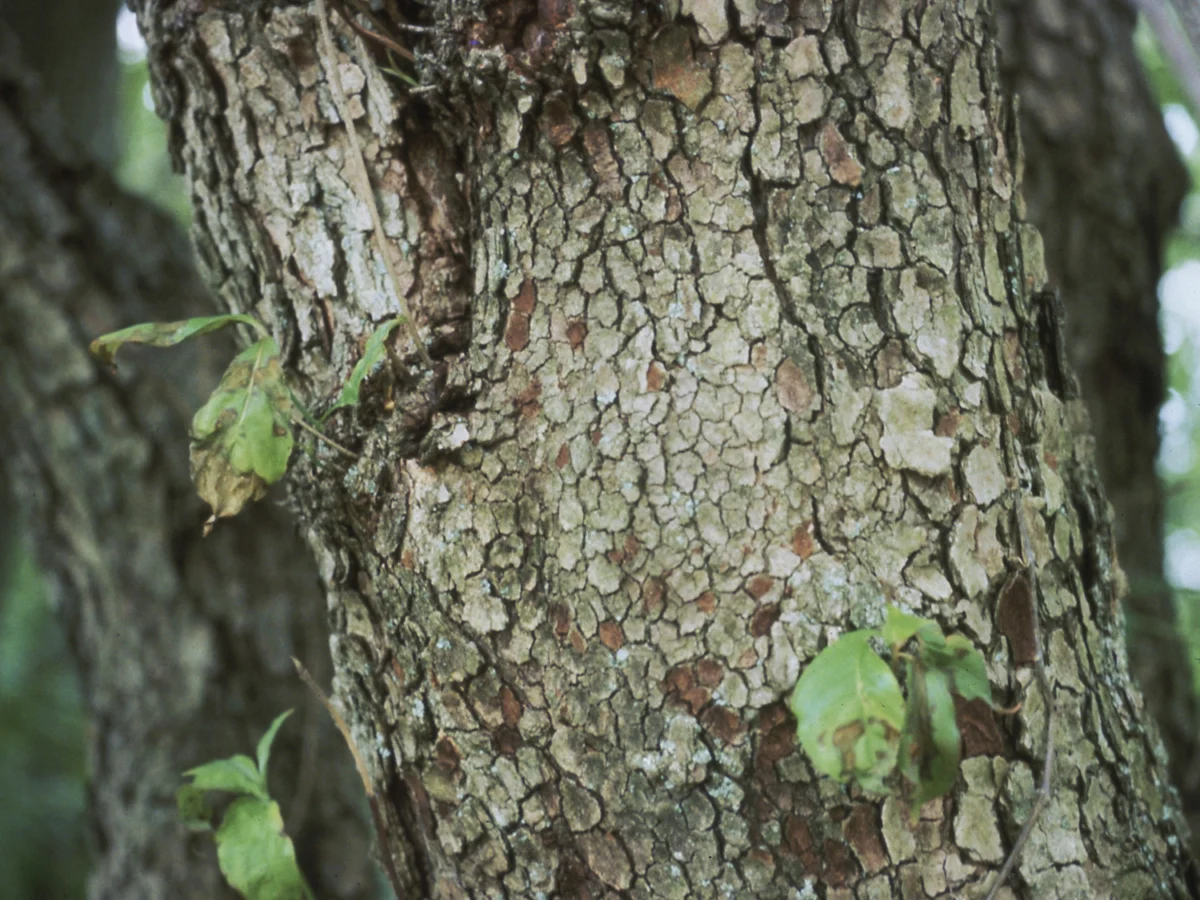
On shade trees, anthracnose usually appears in spring as leaves expand. The Montana State University urban plant pathology fact sheet on anthracnose describes irregular brown or black blotches that follow the veins or leaf margins, leaf curling and distortion, and early leaf drop, especially on the lower canopy. Sycamores may lose most of their first flush of leaves and show twig dieback and cankers, then produce a second set of leaves in early summer. Oaks show brown patches along veins, and ash trees drop many leaflets in wet springs. Maples have tan to brown blotches along veins. In most cases the tree recovers when drier weather arrives.
Dogwood anthracnose
Dogwood anthracnose, caused by Discula destructiva, is more serious than most tree anthracnoses. It begins as tan leaf spots with purple borders and spreads to blight leaves, kill twigs and produce cankers on branches and trunks. Lower branches die first, and water sprouts on the trunk become infected. In shaded, humid woodland settings it has killed many native flowering dogwoods. Plant dogwoods in sites with morning sun and good air movement, water during drought, mulch the root zone, prune out dead twigs and water sprouts, and rake fallen leaves. Kousa dogwoods and their hybrids with flowering dogwood are much more resistant and make good replacements.
How do you recognize anthracnose on vegetables?
- Tomatoes: small, round, sunken, water-soaked spots on ripe or ripening fruit that grow to half an inch or more, with dark centers and concentric rings. In humid weather, salmon or pink spore masses ooze from the center. Green fruit is infected but symptoms only show on ripening fruit.
- Peppers: sunken, circular spots with tan centers and dark rings on ripening fruit.
- Beans: dark brown to black sunken lesions on pods, often with reddish borders, and dark reddish veins on leaf undersides. Seeds may be discolored.
- Cucumbers and melons: water-soaked spots on leaves that turn brown, dry out and crack, leaving shot holes; sunken circular lesions on fruit and stems.
- Squash and pumpkins: similar leaf spots, sometimes fruit rot in storage.
Similar symptoms can come from other diseases. Early blight on tomatoes produces target-like spots on leaves rather than fruit; see early blight. Septoria leaf spot causes many small leaf spots with dark borders; see septoria leaf spot. Blossom end rot causes sunken dark areas at the bottom of the fruit only; see blossom end rot. For other fruit rots on stone fruit, see brown rot.
How do you recognize anthracnose on fruit?
- Strawberries: firm, sunken, dark brown to black spots on ripening berries, sometimes with orange spore masses, plus lesions on runners and crown rot that causes wilting.
- Grapes: small, sunken spots with gray centers and dark borders on berries (“bird’s-eye rot”), plus spots and cankers on shoots and leaves.
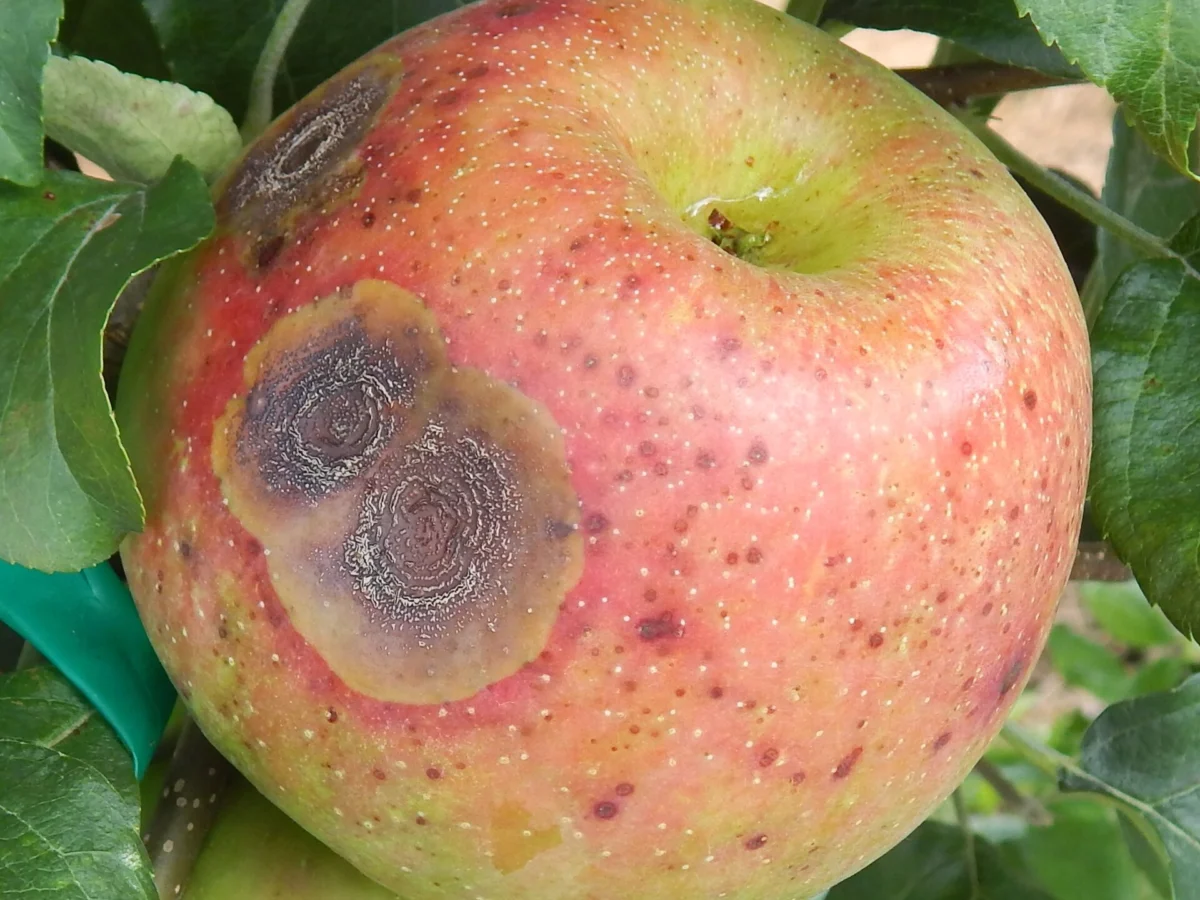
- Apples and pears: bitter rot, with round, sunken brown spots on fruit, often with concentric rings of spore masses, especially in hot, humid summers.
- Raspberries and blackberries: small purple spots on canes that grow into sunken gray lesions with purple borders.
- Mangoes, avocados and papayas: black spots on flowers, young leaves and ripening fruit, with dark sunken rot after harvest.
How do you treat anthracnose?
- Remove infected material. Pick off spotted leaves and fruit, and prune out dead twigs and cankered branches. Bag them for the trash rather than composting.
- Clean up fallen leaves. Rake and destroy leaves under infected trees in fall, and clear vegetable debris after harvest.
- Improve airflow and sunlight. Thin dense canopies, stake and prune tomatoes, and space plants generously so foliage dries quickly.
- Water at the base. Use drip irrigation or soaker hoses and water early in the day. Avoid working among wet plants, which spreads spores.
- Harvest promptly. Pick ripe tomatoes, peppers and strawberries as soon as they are ready, since ripe fruit is most susceptible.
- Mulch. A layer of straw or mulch under plants reduces soil and spores splashing onto fruit and lower leaves.
- Use protectant fungicides if needed. Copper, chlorothalonil or other labeled fungicides can protect healthy tissue but do not cure infections. They are most useful for high-value plants with a history of serious disease, applied starting before symptoms appear in wet weather. See copper fungicide.
Safety note: If you use copper or other fungicides, wear gloves and eye protection, follow the label for the specific plant, rate and pre-harvest interval, and keep products away from children, pets and waterways. For large trees, hire a certified arborist rather than climbing or spraying overhead yourself.
Do trees with anthracnose need treatment?
Most established shade trees with anthracnose do not need chemical treatment. The disease usually causes temporary leaf loss in wet springs, and trees produce new leaves within weeks. The Virginia Cooperative Extension publication on anthracnose of shade trees recommends maintaining tree vigor through watering in drought, mulching and avoiding root damage, along with raking fallen leaves and pruning dead twigs. Fungicide sprays are generally reserved for young trees, specimen trees repeatedly defoliated or dogwoods in high-risk sites, and require precise timing at bud break and leaf expansion. For large trees, a certified arborist can advise on whether treatment is worthwhile.
How do you prevent anthracnose?
- Plant resistant varieties. Choose resistant bean varieties, Kousa dogwoods or resistant hybrids, London plane trees or resistant sycamore cultivars, and strawberry varieties with better anthracnose tolerance in warm climates.
- Use disease-free seed and transplants. Bean anthracnose is carried in seed; buy certified seed and do not save seed from infected pods.
- Rotate crops. Avoid planting tomatoes, peppers, beans and cucurbits in the same spot for at least two to three years.
- Space and prune. Good airflow and sunlight let leaves dry quickly.
- Water carefully. Use drip irrigation and avoid overhead sprinklers on susceptible plants.
- Mulch. Mulch reduces rain splash from soil onto leaves and fruit.
- Sanitize. Remove debris, prune dead wood and clean tools after working on infected plants.
- Avoid working among wet plants. Spores spread easily on hands, tools and clothing when foliage is wet.
Anthracnose on beans
Bean anthracnose is one of the most damaging bean diseases in cool, wet climates. It survives in seed and debris, so infected seed starts outbreaks that spread by splashing rain. Buy certified disease-free seed, avoid saving seed from spotted pods, rotate beans with non-legumes, and stay out of the bean patch when plants are wet. Many modern varieties carry resistance to common races. See growing bush beans and growing pole beans.
Anthracnose on strawberries
Anthracnose fruit rot and crown rot are major strawberry problems in the southeastern United States and other warm, humid regions, and can arrive on infected transplants. Buy certified plants, use plastic or straw mulch to keep fruit off the soil, use drip irrigation, and remove infected berries promptly. If plants wilt and the crown shows reddish-brown streaks when cut, remove them. See planting bare root strawberries.
Anthracnose on cucumbers and melons
Cucurbit anthracnose spreads quickly in warm, wet weather, causing leaf spots that dry and fall out, leaving ragged holes, plus sunken lesions on fruit. Rotate cucurbits, remove volunteer plants and debris, use resistant cucumber varieties and water with drip irrigation. Remove badly infected plants at the end of the season. Trellising cucumbers keeps fruit off the soil and improves airflow.
Anthracnose on houseplants
Indoor plants such as ficus, rubber plants, palms, peace lilies, philodendrons, ivy and anthuriums can develop anthracnose, usually after overhead watering, misting or warm, humid conditions with poor airflow. Symptoms include brown to black spots and blotches on leaves, often with yellow halos, and dying leaf tips and edges. Cut off affected leaves with clean scissors, stop misting, water the soil rather than the foliage, increase airflow with a small fan, and space plants apart. Isolate infected plants from the rest of your collection until new growth is clean.
When does anthracnose appear?
Tree anthracnose is a spring disease, appearing as leaves expand during cool, wet weather between about 50°F and 70°F. Vegetable and fruit anthracnose usually develops from midsummer onward during warm, wet weather between about 70°F and 85°F, and symptoms on tomatoes and peppers often appear only as fruit ripens. In tropical and subtropical climates anthracnose can appear at any time during rainy seasons. Dry weather halts most anthracnose spread.
Common mistakes with anthracnose
- Composting infected leaves and fruit, which returns spores to the garden.
- Using sprinklers on tomatoes, beans, strawberries and young trees, which spreads spores and keeps leaves wet.
- Saving seed from infected bean pods or tomato fruit.
- Spraying fungicides after symptoms are widespread; protectant fungicides cannot cure infected tissue.
- Removing a shade tree after one wet spring of leaf drop; most recover fully.
- Leaving overripe fruit on plants, which gives the fungus more time to develop.
A seasonal anthracnose checklist
- Late winter: prune dead and cankered twigs from trees and shrubs on dry days, and clean tools between cuts.
- Spring: watch tree leaves as they expand during wet spells, mulch vegetable beds, and plan drip irrigation.
- Summer: pick tomatoes, peppers and strawberries promptly, remove spotted fruit and leaves, and stay out of wet plantings.
- Fall: rake and destroy fallen leaves under infected trees, clear vegetable debris and record which beds and varieties were affected.
- Winter: order resistant varieties and certified seed for next season, and plan crop rotation.
You can find guides to related pests and diseases in our plant pests and diseases hub.
Free printable: the Year-Round Garden & Preserving Planner
Planting dates for 24 crops, monthly tasks, blanching times, canning safety numbers and a winter storage chart in one 8-page PDF. Enter your email to download it instantly and get our seasonal garden newsletter.
No spam. Unsubscribe any time. We never sell your email.
Anthracnose FAQ
Is anthracnose fatal to trees?
Rarely for most shade trees; dogwood anthracnose is the main exception and can kill trees.
Can you eat fruit with anthracnose spots?
Cut away small spots on otherwise sound fruit; discard rotting or moldy fruit.
Does anthracnose live in the soil?
It survives in plant debris, infected twigs and seed rather than long-term in soil.
What is the best fungicide for anthracnose?
Copper and chlorothalonil are common protectants for home use; follow the label and start before symptoms appear.
Why are my sycamore leaves falling in spring?
Sycamore anthracnose causes early leaf drop in cool, wet springs; trees usually releaf by early summer.
How do I stop anthracnose on tomatoes?
Mulch, stake plants, water at the base, harvest promptly and rotate crops.
References used in this guide: Montana State University, Anthracnose; Virginia Cooperative Extension, Anthracnose of Shade Trees; Wikipedia, Anthracnose.