To store apples at home, keep them as cold as possible without freezing, ideally about 30 to 32°F, at high humidity of around 90 to 95 percent. In practice, that means plastic bags in the refrigerator crisper for small amounts, or a cold garage, cellar or second refrigerator for a larger harvest. Store only sound, unbruised apples, keep them away from vegetables and other produce, and check them often. Late-ripening varieties such as Fuji, Braeburn and many heirlooms can keep for 3 to 6 months; early varieties last only a few weeks. At room temperature, apples soften about ten times faster than in the cold.
How to store apples: quick guide
| Storage method | Temperature | How long | Best for |
|---|---|---|---|
| Countertop | Room temperature | About 1 week | Apples you will eat soon |
| Refrigerator crisper in a plastic bag | About 32 to 40°F | About 1 to 3 months, depending on variety | Small amounts |
| Second fridge or cold room | About 30 to 32°F | About 2 to 6 months for good keepers | A home orchard harvest |
| Root cellar or cool basement | About 32 to 40°F, humid | Weeks to months | Late varieties, larger quantities |
| Freezer (slices or sauce) | 0°F | About 8 to 12 months | Baking, sauce, smoothies |
| Dried apple rings | Cool, dry, dark | About 6 to 12 months | Snacks, baking |
What is the best temperature for storing apples?
As cold as you can get without freezing. The eXtension apple harvest and storage guide recommends about 32°F, noting that because of their sugar, apples do not freeze until roughly 28 to 30°F. Every few degrees warmer speeds up ripening and softening. A typical home refrigerator runs at 35 to 40°F, which still keeps apples far longer than a kitchen counter. If you store apples in a garage or shed, use a thermometer and move them to a protected spot before temperatures drop below about 28°F.
Why is humidity important?
Apples are about 85 percent water, and in dry air they lose moisture, shrivel and turn soft and leathery. The eXtension guide recommends keeping relative humidity as high as possible without reaching 100 percent, about 95 percent. In a refrigerator, the easiest way is to store apples in a closed or loosely tied plastic bag in the crisper drawer. In a cellar, a damp floor, a pan of water or damp burlap near the boxes helps, as long as the apples themselves do not stay wet.

Should apples be stored away from other produce?
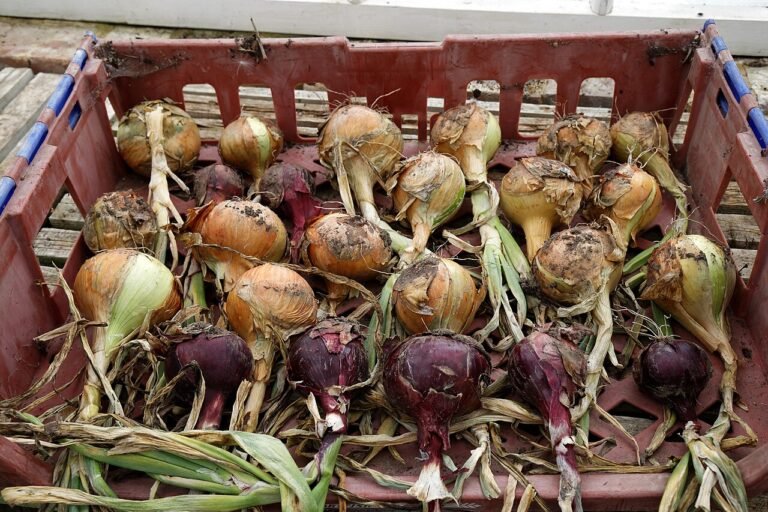
Yes. Ripening apples release ethylene, a natural gas that speeds ripening in other produce. Stored near apples, potatoes sprout, carrots turn bitter, lettuce gets brown spots and cut flowers wilt. Other ripening fruit, such as bananas and pears, also releases ethylene that shortens apple storage. The eXtension guide advises storing apples alone or in a ventilated unit. Apples can also pick up odors from onions, garlic and potatoes, so keep them separate.
Which apples store the longest?
Late-season apples with firm flesh and thick skins store best. Early summer apples, such as Yellow Transparent and Lodi, soften within days. The eXtension guide notes that later-harvested cultivars generally store longer, and that smaller apples store better than large ones of the same variety.
| Storage life | Examples |
|---|---|
| Short (2 to 4 weeks) | Yellow Transparent, Lodi, Gravenstein, Paulared, McIntosh (softens quickly) |
| Medium (1 to 3 months) | Gala, Honeycrisp, Jonathan, Cortland, Golden Delicious, Liberty |
| Long (3 to 6 months or more) | Fuji, Braeburn, Granny Smith, Pink Lady, Northern Spy, Arkansas Black, Newtown Pippin, Roxbury Russet |
Many old heirloom apples were selected specifically as winter keepers, and some, such as Arkansas Black and Newtown Pippin, taste better after a month or two in storage.
How do you prepare apples for storage?
- Pick at the right time. Harvest mature but firm apples for storage; overripe apples do not keep. See when apples are ready to pick.
- Handle gently. Bruises turn into rot spots. Place apples in containers rather than dropping them.
- Sort carefully. Store only perfect apples. The eXtension guide warns against storing fruit with bruises, disease or insect damage. Use blemished apples right away for sauce, pies or cider.
- Keep the stems on. A pulled-out stem leaves a wound where rot can start.
- Do not wash before storing. Washing removes the natural waxy coating and adds moisture that encourages rot. Wash just before eating.
- Cool quickly. Move apples into cold storage within a few hours of picking.
How do you store apples in a root cellar or garage?
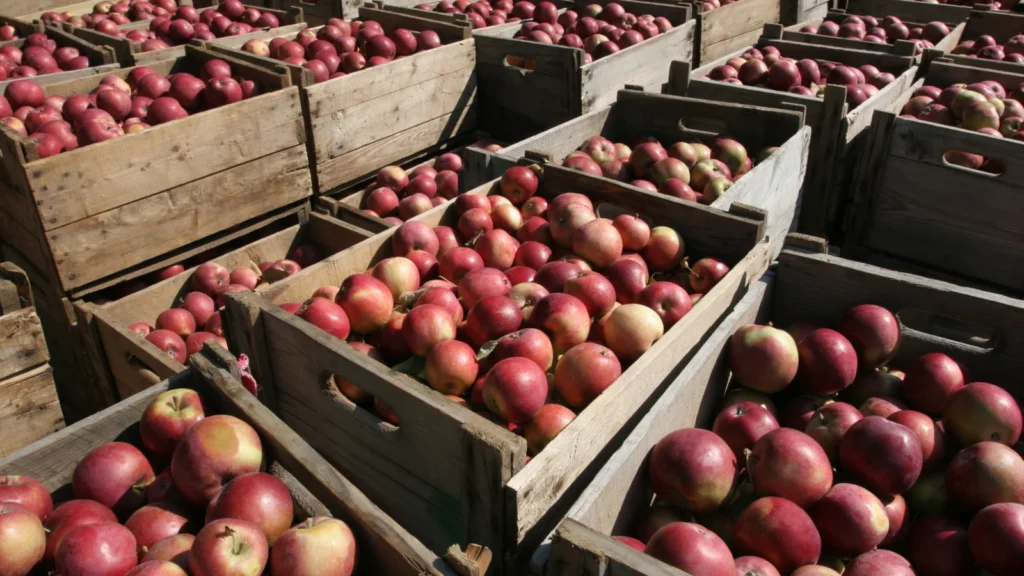
- Containers: Shallow wooden crates, cardboard boxes with ventilation holes or slatted shelves work well. Avoid deep piles that crush the bottom layers.
- Wrapping: Wrapping each apple in newspaper or tissue limits the spread of rot and moisture loss, an old orchard method that still works.
- Layers: Store one or two layers deep so you can inspect them easily.
- Location: The coldest, most humid spot that stays above freezing, away from potatoes, onions and furnace heat.
- Pests: Protect stored fruit from mice and rats with closed but ventilated containers.
- Inspect: Check every week or two and remove any apple showing soft spots. One rotting apple really can spoil its neighbors.
How do you store apples in the refrigerator?
Put unwashed apples in a plastic produce bag, loosely closed or with a few small holes, in the crisper drawer. The eXtension guide notes that bags do not need extra ventilation unless moisture builds up inside. Keep them away from leafy greens. If you have a large harvest, a dedicated second refrigerator set to its coldest setting, about 32 to 34°F, is the best home alternative to commercial storage.
How do commercial orchards store apples for a year?
Large growers use controlled-atmosphere (CA) storage: refrigerated rooms kept near 32°F with very low oxygen and raised carbon dioxide, which slows the apples’ metabolism almost to a standstill. The eXtension guide notes that CA storage can keep apples 6 to 7 months, compared with 30 to 90 days in ordinary refrigerated storage. Some apples are also treated with 1-methylcyclopropene (1-MCP), which blocks ethylene. This is why supermarket apples can be crisp in spring and summer, long after harvest.
How do you preserve apples you cannot store fresh?
- Freezing: Peel, core and slice apples, dip them in an ascorbic acid or lemon juice solution to prevent browning, then freeze on a tray before bagging. Use for pies, crisps and smoothies.
- Applesauce: Cook apples down, sweeten if you like, and freeze or can using tested methods.
- Drying: Dry thin apple rings in a dehydrator at about 135 to 140°F until leathery.
- Cider and juice: Press sound apples, including small and blemished ones, into fresh cider, or ferment it; see hard apple cider.
- Apple butter: Slowly cook apples with spices until thick and dark.
The National Center for Home Food Preservation provides tested methods for freezing, canning and drying apples.
Common apple storage problems
| Problem | Cause | Prevention |
|---|---|---|
| Shriveled, rubbery apples | Low humidity | Store in plastic bags or a humid cellar |
| Mealy, soft apples | Too warm, stored too long, overripe at harvest | Pick firm; store at 30 to 32°F; eat early varieties first |
| Rot spreading through a box | Bruised or damaged fruit stored | Sort carefully; inspect regularly; wrap apples |
| Brown, glassy flesh | Freezing injury below about 28°F | Monitor temperature in garages and sheds |
| Sprouting potatoes, bitter carrots nearby | Ethylene from apples | Store apples separately |
| Brown spots under the skin | Storage disorders such as bitter pit | Use affected fruit first; good orchard nutrition helps |
How many apples can you store, and in what containers?
Plan storage space before harvest. A bushel of apples weighs about 40 to 45 pounds and fills roughly a 1.25 cubic foot container, so a standard apple box or banana box holds about half a bushel. Shallow, stackable crates with ventilation slots are ideal, because they let cold air circulate and keep the bottom layers from bruising. Our harvest basket and crate calculator estimates how many containers you will need for your crop. Label each box with the variety and date, and place the shortest-keeping varieties where they are easiest to reach, so you use them first.
How do you keep cut apples from turning brown?
Cut apples brown when enzymes in the flesh react with oxygen. To slow it, dip slices in a solution of lemon juice and water, about 1 tablespoon of lemon juice per cup of water, or in a commercial ascorbic acid fruit protector, then drain and refrigerate in a sealed container. Some varieties, such as Kanzi, Envy and Cortland, brown more slowly than others. Pre-cut slices keep a few days in the refrigerator.
Can you store apples in the freezer whole?
You can, but whole frozen apples turn soft and mushy when thawed, so they are only good for cooking, sauce and smoothies. Slicing before freezing is more practical. Peel, core and slice the apples, treat them to prevent browning and freeze them in a single layer on a tray before bagging, so the slices do not stick together.
Do apples last longer on the tree or in storage?
Late varieties can hang on the tree for a while after ripening, but they continue to soften, drop and attract pests and birds, and early frosts can damage them. For long keeping, pick apples when they are mature but still firm and move them straight into cold storage; that is how commercial growers keep apples crisp for months. Early varieties do not store well either way and are best eaten or preserved soon after harvest. The Washington State University Extension guide to storing fruits offers more tips on home fruit storage.
Is it safe to eat apples that have been stored a long time?
Yes, as long as they are firm and free of mold and rot. Long-stored apples may be softer, less juicy and milder in flavor, but they are perfectly safe. Cut away small bruises or soft spots. Discard apples with mold, deep rot or a fermented smell, and use slightly soft, wrinkled apples for cooking, sauce and baking, where texture matters less.
Apple storage checklist
- Pick late varieties mature but firm, with stems attached.
- Sort out bruised, cut or insect-damaged fruit for immediate use.
- Do not wash apples before storing.
- Cool apples within a few hours of picking.
- Store at about 30 to 32°F if possible, never below about 28°F.
- Keep humidity high with plastic bags or a humid cellar.
- Store apples apart from vegetables, potatoes and onions.
- Use short-keeping varieties first and check stored fruit every week or two.
Good storage turns a short apple season into months of fresh fruit, and with a cold, humid spot and careful sorting, a home orchard harvest can last well into winter.
If space is tight, focus on long-keeping varieties for storage and enjoy early apples fresh straight from the tree.
Store a few of each variety you grow and taste them every few weeks; you will quickly learn which of your apples keep best and when each one tastes its peak.
Dense, crisp varieties such as the Kanzi apple and many late heirlooms store especially well.
Planning more fruit? Browse every variety, planting and care article in our complete fruit tree growing guide.
See the full food preserving library for canning, freezing, drying, fermenting and cold storage.
Free printable: the Year-Round Garden & Preserving Planner
Planting dates for 24 crops, monthly tasks, blanching times, canning safety numbers and a winter storage chart in one 8-page PDF. Enter your email to download it instantly and get our seasonal garden newsletter.
No spam. Unsubscribe any time. We never sell your email.
Frequently asked questions
Should apples be refrigerated?
Yes. Apples last much longer in the refrigerator than on the counter, where they soften quickly.
How long do apples last in the fridge?
About 1 to 3 months for most varieties, longer for good keepers, if stored in a bag in the crisper.
Should you wash apples before storing them?
No. Wash them just before eating; washing before storage encourages rot.
Can you store apples with potatoes?
Not ideally. Apples release ethylene that makes potatoes sprout, and potatoes can give apples an earthy taste.
What temperature is too cold for apples?
Below about 28 to 30°F, apples begin to freeze and are damaged.
Which apple variety keeps the longest?
Late, firm varieties such as Fuji, Granny Smith, Pink Lady, Arkansas Black and Newtown Pippin.
Reviewed October 2026. Sources: eXtension, Apple Harvest and Storage; National Center for Home Food Preservation, Freezing; Washington State University Extension, Storing Fruits.