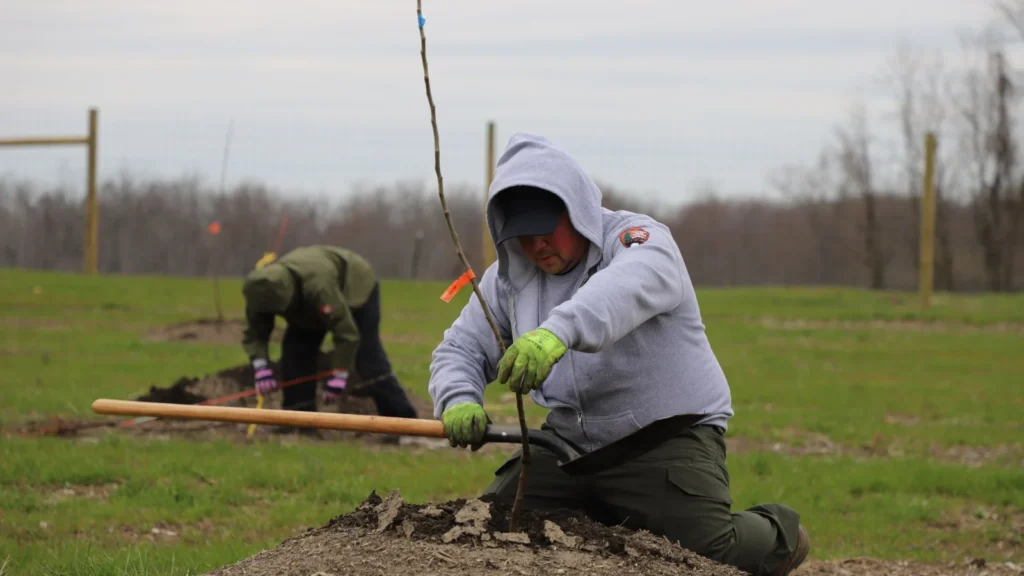
The best time to plant fruit trees is while they are dormant: late winter to early spring for bare-root trees, as soon as the ground can be worked and before buds break, and either early spring or fall for container-grown trees. In cold climates (roughly USDA zones 3 to 6), early spring planting is safest. In mild-winter climates (zones 7 to 10), late fall and winter planting lets roots grow before summer heat. Avoid planting in the heat of summer, into frozen or waterlogged soil, or after bare-root trees have leafed out.
Planting times by tree type
| Tree type | Best time | Avoid |
|---|---|---|
| Bare-root | Late winter to early spring while dormant (as soon as soil is workable) | After buds break; frozen or soggy soil |
| Container-grown | Early spring or early to mid fall | Midsummer heat and drought |
| Balled and burlapped | Early spring or fall | Summer |
| Citrus and subtropicals | Spring, after frost risk has passed | Fall and winter in frost-prone areas |
Why does planting time matter?
A newly planted tree has lost much of its root system in the nursery and depends on growing new roots before it faces heat, drought or hard freezes. Planting when the tree is dormant and the soil is cool and moist lets roots establish before the leaves demand water. The Oregon State University Extension answer on fall versus spring planting explains that dormant trees store more carbohydrates in their roots, which supports spring growth, and that bare-root trees must be planted while they are still dormant.

Is spring or fall better for planting fruit trees?
| Factor | Spring planting | Fall planting |
|---|---|---|
| Best for | Cold-winter climates; bare-root trees | Mild-winter climates; container trees |
| Root growth | Roots and shoots grow together | Roots grow in warm soil before winter |
| Selection | Widest choice of bare-root varieties | Mostly container trees |
| Main risk | Hot, dry early summer before roots establish | Winter injury and heaving in cold climates |
| Watering | More summer watering needed | Rain often does the work over winter |
Oregon State University notes that early spring, around February or March, is the ideal window for bare-root planting and usually offers a wider selection, because nurseries dig trees only once they are dormant, sometimes not until January. It also recommends early spring in the colder parts of Oregon, while fall planting of dormant trees, around October once the weather cools, works in milder areas. If you want to plant in early fall, potted trees may be your only option, though they cost more and can be root-bound.
When should you plant fruit trees in your zone?
| USDA zone | Bare-root | Container |
|---|---|---|
| 3 to 4 | Mid to late spring, once soil thaws | Late spring to early summer |
| 5 to 6 | Early to mid spring (March to April) | Spring or early fall (by mid September) |
| 7 | Late winter to early spring (February to March) | Spring or fall |
| 8 to 9 | Winter (December to February) | Fall through early spring |
| 10 | Winter for low-chill trees | Fall through spring; avoid summer heat |
These dates are approximate. Find your zone with the growing zone finder and your frost dates with the frost date tool, then adjust for the current season: the soil should be thawed, workable and not soggy.
How do you know if the soil is ready?
The Penn State Extension guide to home orchard site selection stresses that good drainage matters even more than soil depth for fruit trees, and recommends sites with good air drainage so cold air can flow away during spring frosts. Choosing the site well before planting day lets you test and correct the soil in advance.
Squeeze a handful of soil from planting depth. If it forms a sticky ball that holds its shape or water drips out, it is too wet; working it will compact it and damage structure. If it crumbles easily, it is ready. Never plant into frozen ground. In spring, many gardeners can plant fruit trees several weeks before their last frost date, since dormant trees tolerate cold, but planting as soon as soil is workable gives roots the longest possible start.
When should you plant bare-root trees?
Bare-root trees are sold dormant, without soil around their roots, in late winter and early spring. They are cheaper, come in more varieties, and often establish faster than container trees because their roots are not circling. Plant them as soon as they arrive, while still dormant. If you cannot plant right away, keep roots moist and cool, or heel them in: lay the tree at an angle in a shallow trench and cover the roots with moist soil until you can plant properly. Soak bare roots in a bucket of water for a few hours, but not more than about 24 hours, before planting.

When should you plant container-grown trees?
Container trees can be planted almost any time the ground is not frozen, but early spring and early fall are best. Avoid midsummer, when heat stresses transplants, unless you can water faithfully. In cold climates, plant container trees in fall at least six weeks before the ground freezes so roots can grow into the surrounding soil. Before planting, check for circling roots and gently tease or cut them so they grow outward. The planting hole size calculator helps size the hole for container and bare-root trees.
When should you plant specific fruit trees?
| Fruit tree | Best planting time | Notes |
|---|---|---|
| Apple, pear | Late winter to early spring (bare-root) | Very hardy; fall planting fine in mild areas |
| Peach, nectarine, apricot | Early spring | Less hardy as young trees; spring is safer in cold zones |
| Cherry, plum | Late winter to early spring | Avoid wet fall planting where bacterial canker is common |
| Fig | Spring after frost | Gives the most time to establish before winter |
| Citrus, avocado | Spring after last frost | Frost-tender; avoid fall planting in marginal climates |
| Persimmon, pawpaw | Spring | Taprooted; plant container trees carefully |
| Pomegranate | Spring in cold climates | Full season to establish before winter |
For specific trees, see dwarf apricot trees, dwarf cherry trees, pawpaw trees and cold-hardy pomegranates.
Before you dig: Call your local utility-locate service (811 in the US) a few days before digging planting holes. Some fruit trees are regulated in certain states or countries because of pests and diseases (for example citrus quarantines), and many named varieties are patented, so buy from licensed nurseries and do not propagate patented varieties for sale.
How do you plant a fruit tree?
- Choose the site: full sun, at least 6 to 8 hours, good air drainage and well-drained soil. See best soil for fruit trees.
- Dig a wide, shallow hole, two to three times as wide as the root spread and no deeper than the roots.
- Set the tree so the graft union is 2 to 4 inches above the soil line.
- Spread the roots of bare-root trees over a small cone of soil.
- Backfill with native soil, firming gently to remove air pockets. Avoid heavy amendments in the hole, which can create a “bathtub” effect.
- Water deeply, about 5 gallons for a small tree, and again as the soil settles.
- Mulch 2 to 4 inches deep in a 3-foot circle, keeping mulch away from the trunk; use the mulch calculator.
- Prune and protect: head back bare-root whips as recommended for the species, and add a trunk guard against rodents and sunscald.
How do you care for newly planted trees?
Water deeply once a week through the first growing season unless rain does it for you, more often in sandy soil and hot weather. The garden watering calculator helps estimate amounts. Do not fertilize at planting; wait until the tree has leafed out and started growing, then feed lightly if growth is weak. Keep weeds and grass out of the mulched circle. Remove any fruit that sets in the first year so the tree puts energy into roots and branches.
What are common planting mistakes?
| Mistake | Result | Better approach |
|---|---|---|
| Planting bare-root trees after they leaf out | Poor survival | Plant while dormant |
| Planting in summer heat | Transplant stress, wilting | Plant in spring or fall |
| Burying the graft union | Scion roots; dwarfing is lost | Keep the union above soil |
| Planting into wet, heavy soil | Root rot; compaction | Wait for workable soil; improve drainage |
| Letting bare roots dry out | Dead roots | Keep moist; plant quickly |
| Fertilizing at planting | Root burn | Feed after growth begins |
How does tree size affect planting time?
Small, young trees establish much faster than large ones. A one-year-old bare-root whip or a tree from a 3- to 5-gallon container usually catches up with and overtakes a larger, older tree within a few years, because it loses less of its root system and recovers quickly. Large balled-and-burlapped or 15-gallon trees need more careful timing, ideally early spring or early fall, and more watering. The Utah State University guide to dwarf fruit trees also notes the advantages of smaller, dwarfing trees in home gardens, including earlier bearing.
Can you plant fruit trees in winter?
In mild climates, yes. In zones 8 to 10, winter is the main planting season for bare-root deciduous fruit trees, since the soil rarely freezes and winter rains help settle roots. In colder climates, wait for spring: frozen soil cannot be worked, and newly planted trees are vulnerable to frost heaving and drying winds.
How do you plan an orchard planting season?
- Late summer to fall: choose the site, test the soil and correct pH, and order bare-root trees early for the best selection.
- Fall: plant container trees in mild climates; mulch and prepare beds elsewhere.
- Late winter: receive and plant bare-root trees as soon as soil is workable; prune at planting.
- Spring: plant container trees and frost-tender species after frost; start watering routines.
- Summer: water deeply and control weeds around new trees.
Use the plant spacing calculator to lay out several trees before you dig.
What should you buy: bare-root or container trees?
Bare-root trees are cheaper, lighter, available in more varieties and usually establish quickly, but they must be planted during a short dormant window. Container trees cost more and can be root-bound, but they give you a longer planting season and are easier to hold for a few weeks before planting. For most home orchards, ordering bare-root trees in fall for late-winter delivery gives the best selection and value, with container trees filling gaps later in the year.
Does moon phase or time of day matter?
There is no good evidence that moon phases affect fruit tree establishment. Time of day matters a little: plant on a cool, cloudy day or in the evening when possible, so roots are not exposed to drying sun and wind, and water immediately after planting.
Once trees are planted, protecting the first crops matters too: see bird scare tape for keeping birds off ripening fruit and copper fungicide for dormant disease sprays on stone fruit.
This article is part of our fruit trees guide, which groups all our fruit growing advice by crop.
Fall or spring: what Oregon State Extension advises
Oregon State’s answer to should I plant fruit trees in fall or spring? gives a clear split. In fall, wait until the weather cools (October in Oregon) and trees are dormant, meaning they are losing or have lost their leaves, because dormant trees store more carbohydrates in their roots to support spring growth. Bare-root trees are hard to find in fall because nurseries dig them when they go dormant, sometimes as late as January; potted trees allow earlier planting but cost more and can be root-bound. In early spring (February or March) bare-root trees are ideal, especially where winters are cold, and stock is more plentiful then. Colder regions should check their USDA hardiness zone before choosing a variety, which our growing zone finder makes easy.
| Option | Best window (OSU) | Trade-off |
|---|---|---|
| Fall, potted | Cool weather once dormant, such as October | Costs more; may be root-bound |
| Fall, bare root | Dormant, as stock appears | Hard to find early |
| Early spring, bare root | February to March | Best selection; recommended in cold regions |
Use our tree planting hole size calculator once you have chosen a date, and see the fruit trees hub for care after planting.
Safety and legal note: Call your local utility-locating service before digging, and check local rules on planting near property lines, power lines, sidewalks and sight lines. Rules on regulated or invasive trees vary by country and region.
Free printable: the Year-Round Garden & Preserving Planner
Planting dates for 24 crops, monthly tasks, blanching times, canning safety numbers and a winter storage chart in one 8-page PDF. Enter your email to download it instantly and get our seasonal garden newsletter.
No spam. Unsubscribe any time. We never sell your email.
Frequently asked questions
What month is best to plant fruit trees?
In most climates, February to April for bare-root trees, and spring or early fall for container trees.
Can you plant fruit trees in fall?
Yes, container trees and dormant trees in mild climates, at least six weeks before the ground freezes.
Can you plant fruit trees in summer?
Container trees can be, but they need daily attention to watering; spring or fall is much better.
Can you plant fruit trees before the last frost?
Yes, dormant trees can be planted several weeks before the last frost once the soil is workable.
How long can bare-root trees wait before planting?
A few days with roots kept moist, or a few weeks if heeled in.
Should I fertilize a newly planted fruit tree?
Not at planting; wait until it has started growing.
Fact-checked against: Oregon State University Extension, Should I Plant Fruit Trees in Fall or Spring?; Penn State Extension, Home Orchard Site Selection; Utah State University, Dwarf Fruit Trees.
Reviewed October 2026. Sources: Oregon State University Extension, Should I plant fruit trees in fall or spring?
