Mandarins are among the easiest citrus to grow and the friendliest to eat, with loose, easy-to-peel skin and sweet segments. The group includes satsumas, clementines and tangerines, and several types are cold hardy enough for the mildest parts of the country or for containers anywhere. This guide explains the types and their real cold tolerance, how to plant, feed, water and prune a mandarin tree, how to grow one in a pot, how to protect it from frost, when the fruit is ripe and what to know before buying a citrus tree.
Mandarin, tangerine, clementine and satsuma
The names overlap, and nurseries use them loosely. In plain terms:
- Mandarin: the broad group of small, easy-peel citrus.
- Tangerine: a type of mandarin with deeper orange-red skin.
- Clementine: a small, very sweet mandarin that is nearly seedless when grown alone but can make seeds if cross-pollinated by other citrus nearby. The University of Georgia notes that clementine needs a cross-pollinator in its conditions.
- Satsuma: the hardiest of the group, self-fruitful, and the usual choice for the Gulf Coast and southeastern states.

Mandarin tree quick facts
| Factor | What to know |
|---|---|
| Hardiness | Outdoors in zones 8 to 10 in sheltered sites; satsumas are the hardiest and tolerate brief cold into the mid-teens °F once mature and hardened |
| Size | 6 to 15 feet in the ground; smaller in pots |
| Sun | Full sun, 6 to 8 hours or more |
| Soil | Well-drained, pH about 6.0 to 7.0 |
| Pollination | Satsumas are self-fruitful; clementines and some tangelos need a pollinator |
| Harvest | Satsumas usually September to November; many other mandarins ripen into December |
| Spacing | 8 to 15 feet apart in the ground |
How cold can a mandarin tree take?
Cold tolerance is the main limit for growing mandarins, so it helps to know the numbers. The University of Georgia’s citrus bulletin for southern and coastal Georgia, UGA Extension bulletin B804, gives approximate damage thresholds:
- Satsumas and Changsha mandarins are the most cold-hardy sweet citrus. Properly hardened, bearing trees can withstand about 15°F without appreciable wood damage.
- Tangerines and other mandarins usually begin to show significant wood damage in the low 20s °F.
- Fruit freezes at about 26 to 28°F, especially if the cold lasts several hours.
- On calm, clear nights the leaf temperature can fall 3 to 4°F below the air temperature.
Young trees are much less hardy than mature trees, and trees that have been fed late in the season or are still growing in fall are more easily damaged. If your winter lows regularly fall below the low teens, grow citrus in containers and bring it indoors.
Choosing a variety
According to the same UGA bulletin, satsumas are self-fruitful and ripen from September to November. Owari is the most popular, and Brown Select and Silverhill are also good. Early options such as Miho, Xie Shan, Early St. Ann and LA Early ripen sooner but the fruit is generally lower in quality. Dancy and Ponkan are self-fruitful but may not ripen until early to mid December, and SweetFrost Changsha ripens in November and has fewer seeds. The fruit of satsumas holds peak quality for roughly two weeks after ripening, so do not pick everything at once but do not leave it too long either.
How to grow a mandarin tree
- Choose a warm, protected spot with full sun, such as a south-facing wall that radiates heat at night. Confirm your zone with the growing zone finder.
- Plant in early spring after the danger of freezing has passed. UGA advises avoiding fall and winter planting.
- Set the root flare slightly above the soil and keep mulch off the trunk. Use the mulch calculator to size a 2 to 4 inch layer.
- Build a watering basin about 30 to 36 inches wide and 4 inches high around the tree. UGA suggests watering twice a week for the first two weeks, then tapering to once a week.
- Keep the area under young trees weed-free for about 4 feet around the trunk, because weeds and grass compete hard with citrus roots.
- Space trees 8 to 15 feet apart, and kumquat-type dwarfs 6 to 10 feet. Use the plant spacing calculator.
Watering
Water deeply and let the top inch or two of soil dry between waterings. Citrus hates wet feet, but it also hates drought swings. Fruit can split in late summer when a dry spell is followed by heavy rain, so steady moisture is the fix. See the garden watering calculator.
Feeding
Citrus is a heavy feeder. UGA recommends not fertilizing at planting and starting about four to six weeks after spring growth begins, using a balanced 8-8-8 or 10-10-10 fertilizer with micronutrients. Avoid fertilizing from early August to mid-February, because late growth is more likely to be killed by cold. Amounts depend on tree age and fertilizer strength, so follow the label and the extension schedule for your area. Keep the soil pH between 6.0 and 7.0.
Pruning
Mandarins need very little pruning. Remove water sprouts, dead wood and damaged or diseased limbs, and shape the tree lightly after harvest. UGA suggests waiting until the danger of freezing has passed, and cutting limbs flush with the trunk. Keep the lowest scaffold branches off the ground by at least 18 to 20 inches on young trees, which also makes it easier to protect them in a freeze.
Growing mandarins in containers
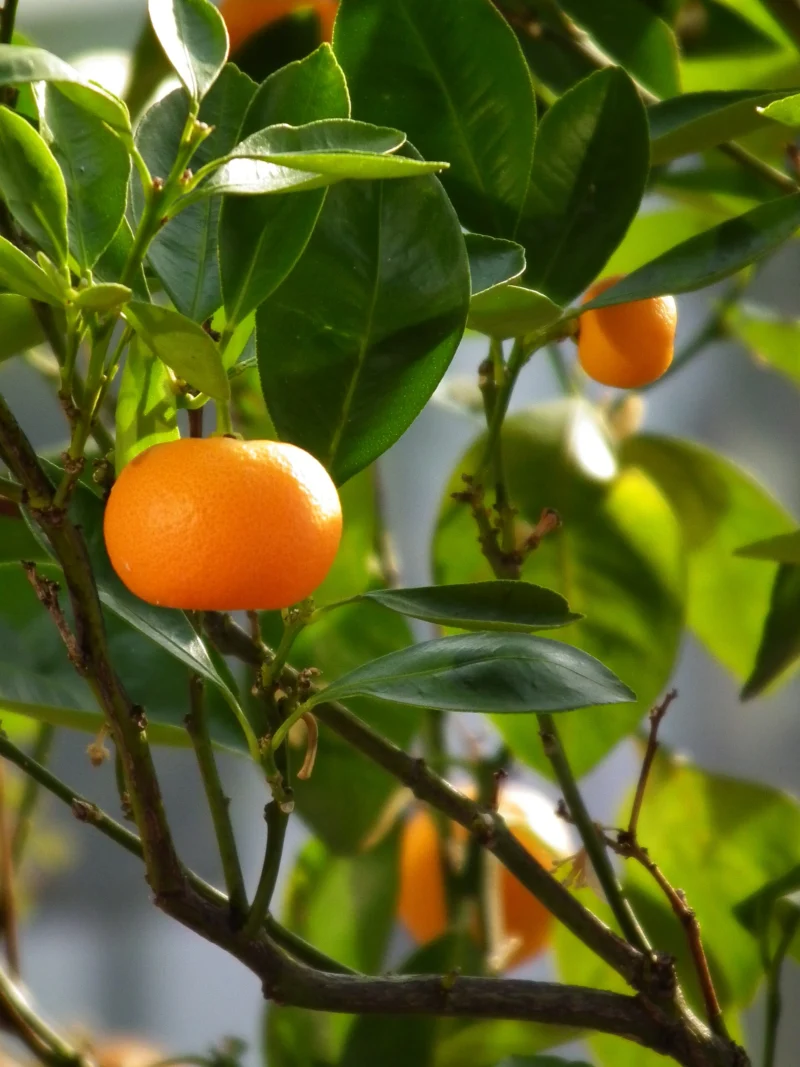
In zones colder than 8, grow mandarins in large pots with drainage holes and move them to a bright, frost-free spot for winter. A 15 to 25 gallon container suits a mature dwarf tree, and it should sit on pot feet or a stand so water can drain. Use a coarse, well-draining citrus or cactus mix, not garden soil. Use the grow bag volume calculator on our tools page to size a container.
Container trees dry out quickly and need regular watering and feeding, often every few days in summer. Put the pot outdoors after the last frost, in full sun, and bring it in before the first frost. Indoors, a south window or a grow light is needed, with cool temperatures, around 50 to 60°F, and reduced watering so the tree rests. Harden the tree off over a week when moving it outside in spring.
Protecting a mandarin tree from frost
Citrus is damaged by hard freezes, so protection matters in marginal areas. Watch the forecast, check frost dates by ZIP code and act before the cold arrives:
- Water the soil beforehand. Moist soil holds more heat than dry soil and releases it at night.
- Cover the tree with frost cloth or blankets that reach the ground, to trap soil heat. UGA says a cover works best when it touches the soil, and one or two electric bulbs under the cover add protection on extreme nights. Remove the cover in the morning.
- Bank young trees with soil. UGA advises banking trees up to four years old with clean soil about 15 inches high before the first freeze, and removing it after the last spring freeze.
- Harvest ripe fruit before a freeze, because unharvested fruit raises the risk of freeze damage.
- Use wraps and microsprinklers carefully. Insulating wraps should be at least 6 inches thick and touch the soil. Microsprinklers need adequate flow and must run until temperatures are above freezing, which can be risky if they fail.
Pests and problems
- Aphids and citrus leafminer: curled, distorted new leaves, mostly cosmetic on mature trees. See citrus leaf miner and how to get rid of aphids.
- Scale and sooty mold: sticky leaves and black mold. Treat early. See scale insects and sooty mold.
- Spider mites: stippled, dusty leaves in hot, dry spells. See spider mites.
- Yellow leaves: often poor drainage, cold stress or a nutrient shortage such as iron or zinc. Check the soil pH and drainage first.
- Fruit splitting: usually uneven watering after drought. Keep moisture steady.
Harvest and ripeness
Mandarins taste ripe before the skin is fully orange, especially early satsumas, which can be sweet while still tinged green. Taste a fruit rather than going by color alone. Fruit does not ripen further after picking, and Mississippi State University Extension notes that mandarins do not store well on the tree, so pick them when they taste ready. Cut the fruit from the branch with clippers rather than pulling, to avoid tearing the skin and the stem end. The MSU Extension citrus publication says refrigerated fruit keeps for several weeks, while fruit left at room temperature may develop off-flavors and wither after about a week.
Why do most blossoms fall off?
Heavy early-spring flower and fruitlet drop is normal. UGA notes that only about 1 to 2 percent of blossoms are needed to give a good crop, so do not worry when the ground is covered with petals and tiny fruit.
How the citrus types compare
A US Citrus Nursery comparison gives a handy way to tell the types apart:
| Type | Look and feel | Taste | Seeds | Cold hardiness |
|---|---|---|---|---|
| Satsuma | Loose, leathery skin; segments separate cleanly | Sweet | Seedless | Most cold-hardy of the group |
| Clementine | Small to medium, smooth, glossy | Very sweet | Usually seedless or nearly so | Mandarin-level; less hardy than satsumas |
| Tangerine | Deep orange, slightly bumpy, tougher skin | Tangy, less sweet | Has seeds | Mandarin-level |
| Tangelo | Larger, thicker skin, small neck at stem end | Sweet-tart, very juicy | Few | Least cold-hardy of the group |
When a freeze hits: what to do next
Even careful gardeners sometimes lose a season to a hard freeze. Mississippi State University Extension warns that severe winters and late spring freezes have killed many outdoor citrus trees back to the graft union, and that the rootstock may then regrow and produce seedy, sour, inedible fruit. If a freeze damages your tree, be patient. Do not prune right away, because damaged wood shows how far the injury goes only after the tree starts growing again in spring. Wait until new growth appears, then cut back to living wood above the graft union. Never cut below the graft union, because everything that grows from the rootstock will not be the mandarin you planted. If the only regrowth is from below the graft, replace the tree with a hardier variety such as a satsuma, and protect it better next time.
Growing mandarins in a sunroom or greenhouse
Extension publications for the Gulf Coast recommend a greenhouse, conservatory or bright sunroom as the surest way to prevent cold injury in marginal climates. A cool, bright room in winter lets the tree rest, and flowering and fruit set in spring improve when the tree has had a cool, dry winter. Keep humidity moderate, check for scale and mites regularly, and open windows on warm spring days so bees can pollinate, or hand-pollinate with a small brush. Water drought during flowering can stop fruit from setting, so keep the pots evenly moist at that time.
Before you buy a citrus tree
Citrus diseases such as huanglongbing (citrus greening) and citrus canker have led to quarantines and nursery rules. UGA advises buying only from nurseries certified by the USDA or your state department of agriculture. Some states and countries restrict moving citrus plants, budwood or even fruit across borders, and shipping may be prohibited to certain places, so check local rules before ordering a tree online or bringing one back from a trip. Never smuggle cuttings, which can spread disease.
Safety and legal note: Citrus plant movement and sales are regulated in many states and countries because of serious diseases, so buy only from certified nurseries and follow local quarantine rules. If you use sprays, follow the label, which is the law, and use only products approved in your country. Rules vary by region. Citrus oils can irritate skin and sensitize it to sunlight, so wash your hands after handling peel.
Looking for other trees? Our guide to growing fruit trees at home compares options by climate. For related citrus, see kumquat, Meyer lemon in a pot and lime trees.
Free printable: the Year-Round Garden & Preserving Planner
Planting dates for 24 crops, monthly tasks, blanching times, canning safety numbers and a winter storage chart in one 8-page PDF. Enter your email to download it instantly and get our seasonal garden newsletter.
No spam. Unsubscribe any time. We never sell your email.
Frequently asked questions
What is the easiest mandarin to grow?
Satsuma. It is self-fruitful, the hardiest of the group, and ripens early in the fall.
Are tangerines and mandarins the same?
A tangerine is a type of mandarin with deeper orange-red skin. Clementines and satsumas are also types of mandarins.
How cold can a mandarin tree survive?
Mature, hardened satsumas can take about 15°F without much wood damage, while other mandarins start to show damage in the low 20s °F. Fruit freezes at about 26 to 28°F.
Do I need two mandarin trees?
Not for satsumas, which are self-fruitful. Clementines and some tangelos need a cross-pollinator.
Can I grow a mandarin in a pot?
Yes. Use a large pot with drainage and a citrus mix, keep it in full sun and bring it indoors or under cover before frost.
When are mandarins ripe?
Satsumas usually from September to November, and other types into December. Taste a fruit, since the skin may not be fully orange.
Reviewed October 2026. Hardiness and ripening vary by region.