To can tomatoes safely at home, always add acid to every jar, even for tomatoes labeled as high-acid: 1 tablespoon of bottled lemon juice or 1/4 teaspoon of citric acid per pint, and 2 tablespoons of bottled lemon juice or 1/2 teaspoon of citric acid per quart. Use firm, ripe, disease-free tomatoes, peel them after a quick dip in boiling water, pack them hot or raw into clean jars with 1/2 inch of headspace, and process them in a boiling water bath for the time in a tested USDA recipe, for example 35 minutes for pints and 45 minutes for quarts of crushed tomatoes at altitudes up to 1,000 feet. Tomatoes can also be pressure canned using tested times, which shortens processing and can improve quality.
Canning tomatoes at a glance
| Item | Guidance |
|---|---|
| Acid per pint | 1 tablespoon bottled lemon juice or 1/4 teaspoon citric acid |
| Acid per quart | 2 tablespoons bottled lemon juice or 1/2 teaspoon citric acid |
| Headspace | 1/2 inch |
| Crushed tomatoes (water bath, 0 to 1,000 ft) | Pints 35 minutes; quarts 45 minutes |
| Whole or halved, packed in water (water bath) | Pints 40 minutes; quarts 45 minutes |
| Whole or halved, packed raw without liquid | Pints and quarts 85 minutes |
| Tomato juice (water bath) | Pints 35 minutes; quarts 40 minutes |
| Yield | About 2.75 pounds of fresh tomatoes per quart of crushed tomatoes |
| Best tomatoes | Paste (Roma) types for sauce; any firm, ripe, unblemished tomato for whole or crushed |
Times are for altitudes of 0 to 1,000 feet. Add 5 minutes at 1,001 to 3,000 feet, 10 minutes at 3,001 to 6,000 feet, 15 minutes at 6,001 to 8,000 feet and 20 minutes at 8,001 to 10,000 feet.
Why do canned tomatoes need added acid?
Tomatoes sit right on the borderline between high-acid and low-acid foods. Most varieties have a pH just below 4.6, but some, especially overripe tomatoes, tomatoes from dead or frost-killed vines, and some modern and heirloom varieties, can have a pH above 4.6, which allows botulinum spores to grow in sealed jars. Because you cannot tell a tomato’s acidity by taste or color, the USDA recommends acidifying every jar of tomatoes and tomato products that will be water bath or pressure canned. Lemon juice must be bottled, because the acidity of fresh lemons varies. The Clemson University Home and Garden Information Center guide to acidifying tomatoes explains the amounts and why they are required. Adding sugar can offset the sour taste of the acid if you like.

How do you prepare tomatoes for canning?
- Choose good tomatoes. Use firm, ripe, unbruised tomatoes free of cracks, disease spots and mold. Do not can tomatoes from dead or frost-killed vines. Paste tomatoes like Roma and San Marzano have less water and give thicker products.
- Wash them under running water.
- Peel them. Dip tomatoes in boiling water for 30 to 60 seconds, until skins split, then plunge them into ice water. Slip off the skins and cut out the cores and any green areas.
- Cut as the recipe directs: leave whole, halve, quarter or crush.
Growing your own? See our guide to growing tomatoes, and for blemishes that may affect canning quality, read blossom end rot, early blight and late blight. Do not can fruit from plants killed by late blight.
How do you can crushed tomatoes in a water bath?
- Prepare jars and canner: wash jars, keep them hot, and heat water in the canner.
- Quarter peeled tomatoes. Heat about a sixth of them quickly in a large pot, crushing them with a wooden spoon as you add them to release juice. Keep them boiling while you add the remaining quartered tomatoes, stirring constantly. They do not need to be crushed further; they will soften with heating.
- Boil gently for 5 minutes once all the tomatoes are added.
- Add acid to the jars: 1 tablespoon bottled lemon juice or 1/4 teaspoon citric acid per pint, or 2 tablespoons lemon juice or 1/2 teaspoon citric acid per quart. Add 1 teaspoon of salt per quart if desired.
- Fill jars with hot tomatoes, leaving 1/2 inch of headspace. Remove air bubbles, adjust headspace, and wipe rims.
- Apply lids and bands fingertip-tight.
- Process in boiling water: 35 minutes for pints and 45 minutes for quarts at 0 to 1,000 feet, adjusting for altitude.
- Turn off the heat, wait 5 minutes, remove jars and cool undisturbed for 12 to 24 hours, then check seals.
For the general process, see water bath canning for beginners.
How do you can whole or halved tomatoes?
For tomatoes packed in water, place acid in the jars, fill with raw peeled whole or halved tomatoes, and cover with hot water, leaving 1/2 inch of headspace (hot pack: heat tomatoes in water for 5 minutes first). Process pints for 40 minutes and quarts for 45 minutes. For whole or halved tomatoes packed raw without added liquid, press tomatoes into jars until their own juice fills the spaces, then process pints and quarts for 85 minutes. Whole tomatoes in their own juice can also be packed with tomato juice instead of water.
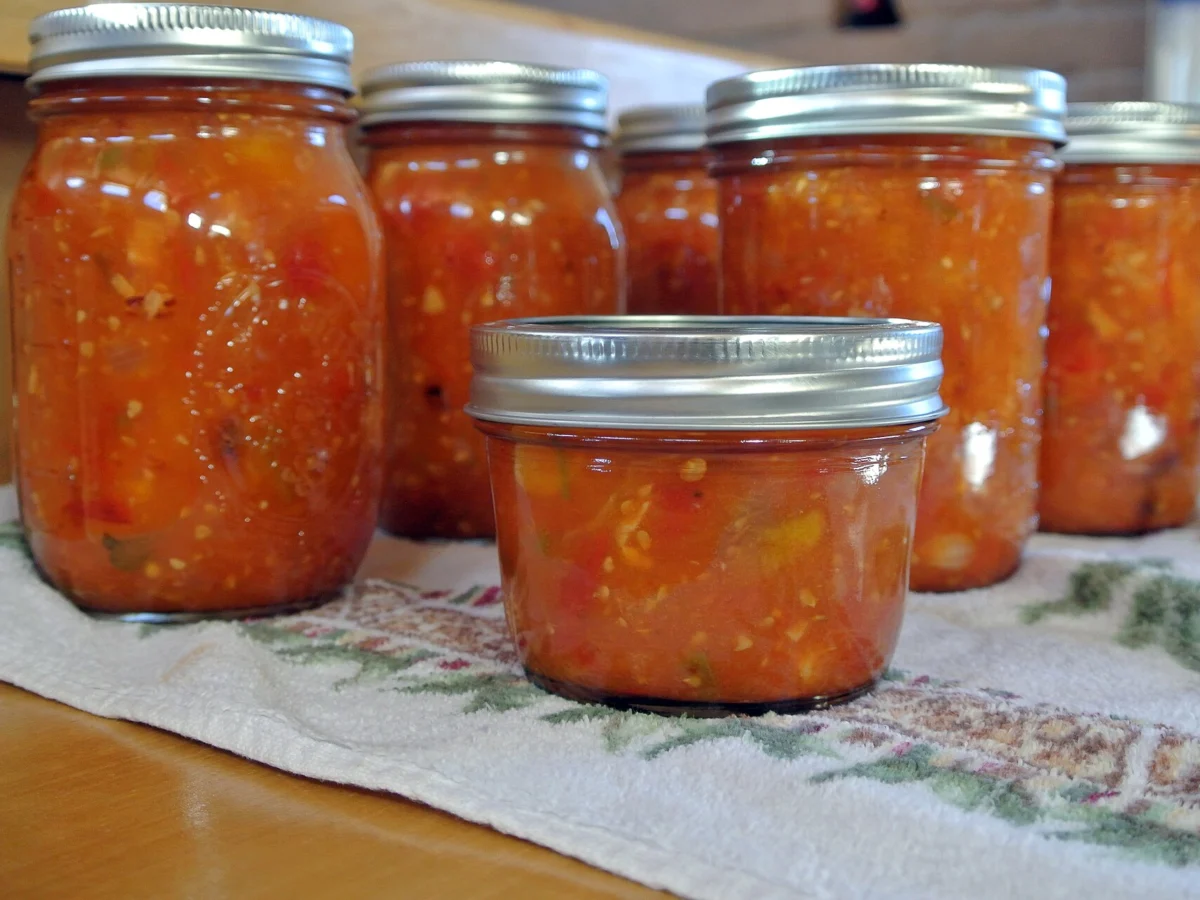
Food safety warning: Always add bottled lemon juice or citric acid to canned tomatoes, follow a tested recipe exactly, and adjust for altitude. Do not add extra low-acid vegetables, oil or thickeners to recipes meant for water bath canning. Discard any jar with a bulging lid, leaks, mold or an off smell without tasting it. Seek emergency medical care for symptoms of botulism such as double vision, drooping eyelids, slurred speech or difficulty swallowing. Handle boiling water and hot jars with a jar lifter and oven mitts. Guidance from the National Center for Home Food Preservation.
Can you pressure can tomatoes?
Yes. Pressure canning is an option for most tomato products and shortens processing time, which can improve color and flavor. Acid is still required. For example, crushed tomatoes can be processed for 15 minutes at 10 pounds pressure in a weighted gauge canner, or 11 pounds in a dial gauge canner, at 0 to 1,000 feet, for pints or quarts. Follow a tested recipe for the exact time and pressure, and adjust pressure for altitude. See pressure canning vegetables for how to use a pressure canner.
What about tomato sauce, salsa and mixed vegetables?
- Tomato sauce: plain tomato sauce, cooked down from crushed tomatoes, can be water bath or pressure canned with added acid and tested times. Thick sauces take longer to heat through.
- Spaghetti sauce with vegetables or meat: adding onions, peppers, mushrooms, garlic or meat makes the sauce low-acid; it must be pressure canned using a tested recipe, and you must not add more vegetables than the recipe states.
- Salsa: use only tested salsa recipes, which balance tomatoes, peppers and onions with enough vinegar or lemon juice. Never increase the peppers, onions or garlic, or reduce the acid. Spices can be adjusted.
- Tomatoes with okra or zucchini: these combinations require pressure canning using tested recipes.
- Ketchup: tested recipes exist for water bath canning.
Never thicken tomato products with flour or cornstarch before canning; add thickeners when you heat the jar contents for serving.
The USDA Complete Guide to Home Canning includes a full chapter of tested tomato recipes, from juice and sauce to salsa and ketchup.
What causes problems with canned tomatoes?
| Problem | Likely cause | Is it safe? |
|---|---|---|
| Liquid separates from pulp | Enzymes act when tomatoes are cut and left before heating | Yes; heat quickly after cutting to reduce it |
| Tomatoes float in jars | Raw pack, overripe fruit, or loose packing | Yes, if sealed |
| Liquid lost during processing | Siphoning from temperature changes or air bubbles | Yes, if sealed |
| Lid unsealed after cooling | Food on rim, damaged jar or lid, bands too loose or tight | Refrigerate and use, or reprocess within 24 hours |
| Bulging lid, spurting, mold, off smell | Spoilage from under-processing or seal failure | No; discard without tasting |
| Darkening at the top of jars | Oxidation from too much headspace | Usually yes, if sealed and no other signs |
How many tomatoes do you need?
As a rough guide, a bushel of tomatoes weighs about 53 pounds and yields 15 to 21 quarts of crushed tomatoes, or about 2.75 pounds of fresh tomatoes per quart. A 7-quart canner load of crushed tomatoes needs about 22 pounds of tomatoes, and a 9-pint load needs about 14 pounds. Paste tomatoes yield more sauce per pound than slicing tomatoes. If you plan to grow tomatoes for canning, the plants needed for a harvest goal calculator helps you estimate how many plants to grow.
Can you freeze tomatoes instead?
Yes. Freezing is easy and needs no added acid. Wash and core tomatoes, then freeze them whole on a tray before bagging them; the skins slip off easily under warm water when thawed. You can also freeze crushed or stewed tomatoes and sauce in freezer containers, leaving headspace for expansion. Frozen tomatoes become soft and are best for cooking, sauces and soups. See how to freeze vegetables for general freezing tips.
The Michigan State University Extension basics of water bath canning is a useful refresher before your first batch.
Common tomato canning mistakes
- Skipping the lemon juice or citric acid.
- Using fresh lemon juice instead of bottled.
- Canning tomatoes from dead or diseased vines or overripe, damaged fruit.
- Adding onions, peppers or other vegetables to tomatoes and water bath canning them without a tested recipe.
- Thickening with flour or cornstarch before canning.
- Using old or untested processing times, including open-kettle canning.
- Not adjusting for altitude.
See the full food preserving library for canning, freezing, drying, fermenting and cold storage.
Free printable: the Year-Round Garden & Preserving Planner
Planting dates for 24 crops, monthly tasks, blanching times, canning safety numbers and a winter storage chart in one 8-page PDF. Enter your email to download it instantly and get our seasonal garden newsletter.
No spam. Unsubscribe any time. We never sell your email.
Tomato canning FAQ
Do I have to peel tomatoes for canning?
USDA tested recipes for whole, crushed and halved tomatoes call for peeling; skins can harbor bacteria and become tough.
Can I use vinegar instead of lemon juice?
Yes, 4 tablespoons of 5 percent vinegar per quart, but it may change the flavor.
Why are my canned tomatoes separating?
Enzymes break down pectin after cutting; heating tomatoes quickly reduces separation, and it is safe.
Do cherry tomatoes need acid when canning?
Yes, all tomatoes need added acid.
How long do canned tomatoes last?
Use within 12 to 18 months for best quality.
Can I can green tomatoes?
Yes, green tomatoes can be canned using the same recipes and acid as ripe ones, or pickled.
Which tomato varieties are best for canning?
Any firm, ripe tomato can be canned, but paste tomatoes give the best results for sauces, crushed tomatoes and paste because they have meaty flesh, fewer seeds and less water, so they cook down faster and yield more per pound. Popular paste varieties include ‘Roma’, ‘San Marzano’, ‘Amish Paste’, ‘Big Mama’ and ‘Juliet’. Slicing tomatoes such as ‘Celebrity’, ‘Better Boy’ and many heirlooms work well for whole, quartered and juice products, though they release more liquid. Mixing varieties often gives the fullest flavor. Whatever you grow, add acid to every jar, since heirloom and low-acid-tasting varieties are not reliably acidic enough.
How do you make tomato juice?
Wash, core and quarter tomatoes, heating a few pounds quickly in a large pot while crushing them, and add the remaining pieces gradually so the mixture keeps boiling. This hot-break method stops the enzymes that separate juice. Simmer for 5 minutes, then press the hot tomatoes through a sieve or food mill to remove skins and seeds. Reheat the juice to boiling, add bottled lemon juice or citric acid to the jars (the same amounts as for other tomato products), fill with hot juice leaving 1/2 inch of headspace, and process pints for 35 minutes and quarts for 40 minutes in a boiling water bath at 0 to 1,000 feet.
How should you store and use canned tomatoes?
Store sealed jars without bands in a cool, dark place between 50°F and 70°F. Use them within a year for the best color and flavor. Before opening, check that the lid is still concave and sealed and that there is no bulging, leaking, mold or off smell. Once opened, refrigerate leftovers in a covered container and use them within about five days. Home-canned tomatoes work in sauces, soups, stews, chili, curries and braises; season and thicken them when you cook, not before canning.
Is a tomato canning day worth it?
For many gardeners, canning tomatoes is the best way to use a large late-summer harvest and enjoy home-grown flavor all winter. It takes a full afternoon to process a bushel, but the steps are simple once learned. Invite a friend, set up an assembly line for peeling, cutting and filling, and work in canner-sized batches so tomatoes are heated and packed promptly.
References used in this guide: National Center for Home Food Preservation, USDA Complete Guide to Home Canning; Clemson University HGIC, Canning Tomatoes: To Acidify; Michigan State University Extension, Basics of Water Bath Canning.