Redhaven is one of the most widely planted peaches in the world, and for good reason. It is a reliable, early-to-mid-season yellow freestone with firm flesh, good flavor and better-than-average cold hardiness, which makes it a favorite for northern gardens. This guide covers where Redhaven came from, what makes it popular, how to plant and grow it, how to thin and prune it, what pests to expect and how to get the best crop.
Redhaven peach quick facts
| Factor | What to know |
|---|---|
| Origin | Bred at Michigan State University’s South Haven Experiment Station by Stanley Johnston and released in 1940 |
| Parentage | A cross of Halehaven and Kalhaven |
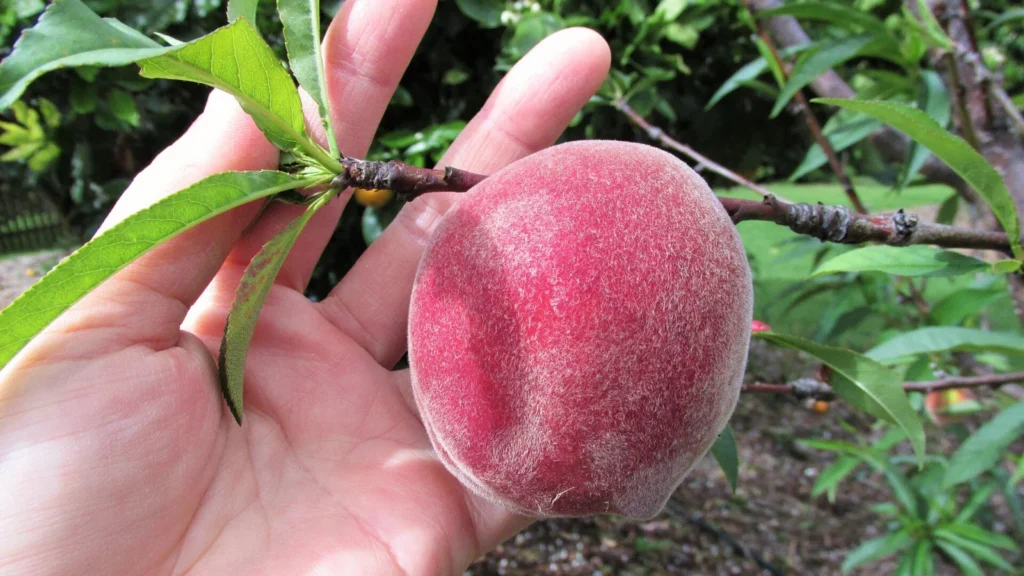
| Fruit | Medium to large, almost fuzzless red-blushed skin, firm creamy yellow freestone flesh |
| Hardiness | Commonly rated for USDA zones 5 to 8, with above-average cold hardiness for a peach |
| Chill hours | About 800 hours below 45°F (varies by source) |
| Pollination | Self-fertile |
| Ripening | Early to mid season, often mid to late July in northern areas |
| Size | Standard about 12 to 15 feet tall and wide when pruned; dwarf about 8 to 10 feet |
| Time to first fruit | About 2 to 4 years |
The history of Redhaven
Redhaven has an unusually well-documented history. According to Good Fruit Grower, it was bred at the South Haven Experiment Station in southwest Michigan by Stanley Johnston, the station’s superintendent from 1920 until his death in 1969. It was released in 1940 as his third “haven” peach, from a cross of Halehaven and Kalhaven. Johnston said it took its large fruit, firm flesh, tough skin and bright yellow ground color from J.H. Hale, its earliness, hardiness and bright red skin from South Haven, and its hardiness and tree structure from Kalamazoo.
A historical marker summary on Read the Plaque adds that between 1924 and 1963, eight yellow-fleshed freestone varieties were selected from more than 21,000 cross-bred seedlings, and that Redhaven was the first red-skinned commercial peach variety. The Haven peaches stretched the harvest from roughly three weeks to about seven. Good Fruit Grower reports that Redhaven became the most-planted peach in the world by the 1960s and held that spot for the rest of the twentieth century. Many other varieties are still described by how many days they ripen before or after Redhaven, and Elberta, for example, matures about 30 days later.
Why gardeners choose Redhaven
- Freestone fruit that is easy to slice, bake, can and freeze (see our guide to freestone peaches).
- Cold tolerance that is above average among peaches, with relatively hardy buds.
- Self-fertile, so one tree is enough. Stark Bro’s notes a second tree within about 100 feet is optional and can increase crop size.
- Early ripening in a season when fresh peaches are most welcome.
- Good all-round use: fresh eating, canning and freezing.
- Decent resistance to bacterial spot, a common peach disease, according to Good Fruit Grower.
Limits to know about
Redhaven needs a solid winter chill, so in very mild climates a lower-chill variety is a better choice. Its red color develops while the fruit is still firm, which helps shipping but can fool pickers into harvesting early. Michigan State’s current peach breeder has pointed out that Redhaven sometimes lacks enough red color to compete in the wholesale market, which is a commercial problem rather than a backyard one. Check your zone with the growing zone finder.
Planting Redhaven
- Plant bare-root trees in late winter or early spring, in full sun and well-drained soil with a pH of about 6.0 to 6.5. Peaches dislike wet feet, so avoid low spots where water stands.
- Space standard trees about 15 to 20 feet apart (see the plant spacing calculator), and dwarf trees about 10 to 12 feet apart.
- Dig a hole wide enough for the roots to spread without bending, and keep the graft union 2 to 3 inches above the soil.
- Water deeply after planting and apply 2 to 4 inches of mulch, kept off the trunk.
- Cut the whisk-like young tree back as the nursery advises so it forms low scaffold branches.
Choosing the site
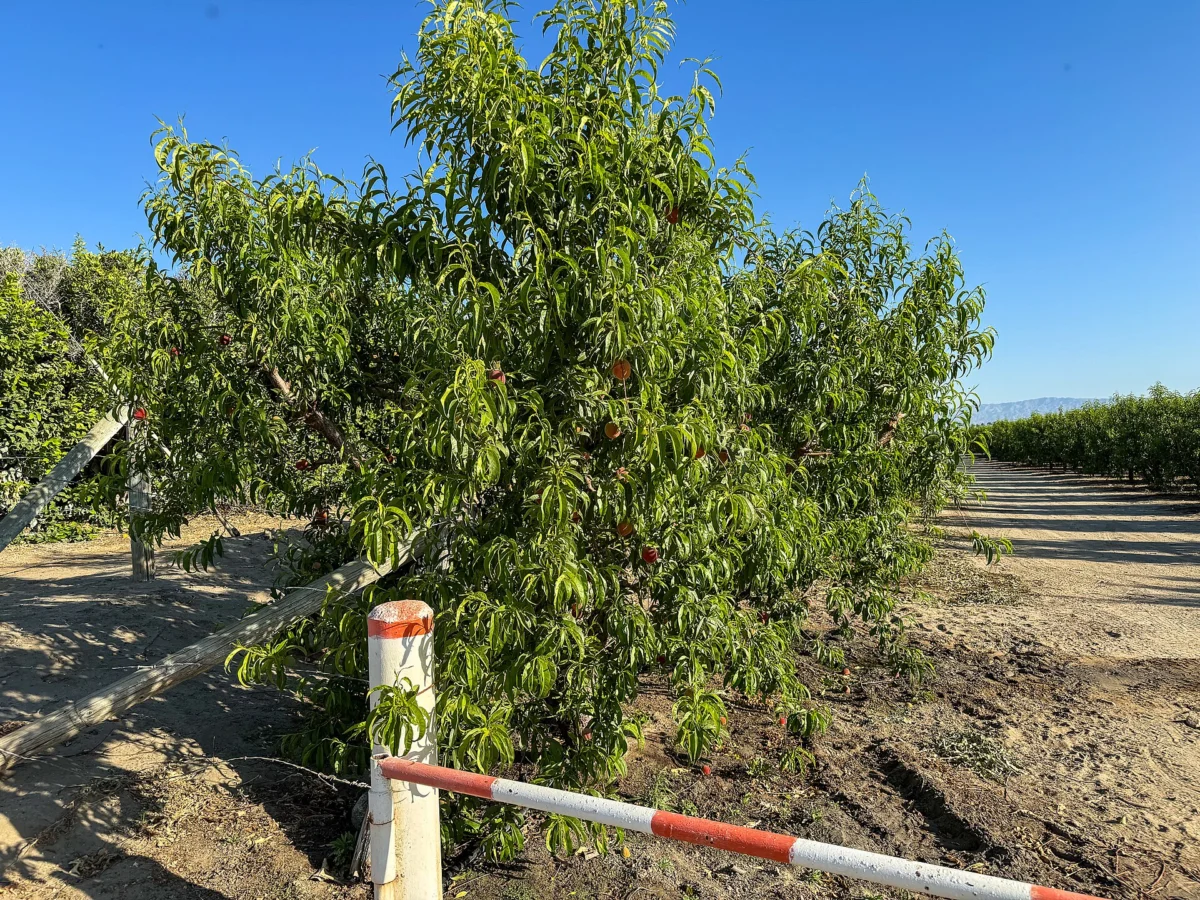
Because Redhaven blooms early, site matters more than almost anything else. Cold air flows downhill like water and pools in hollows, so a gentle slope or an upper-slope site protects blossoms from late frost better than the bottom of a valley. A south or east exposure warms up early, which can sometimes bring blossoms out too soon, so in frost-prone areas a north-facing or shaded-in-winter spot delays bloom by a few days.
Care through the year
- Water about an inch a week, with steady moisture as the fruit swells. Uneven watering can cause split pits and poor flavor. See the garden watering calculator.
- Feed lightly in spring and stop by midsummer so new growth can harden before winter. See fruit tree fertilizer.
- Prune to an open vase in late winter. See when to prune peach trees.
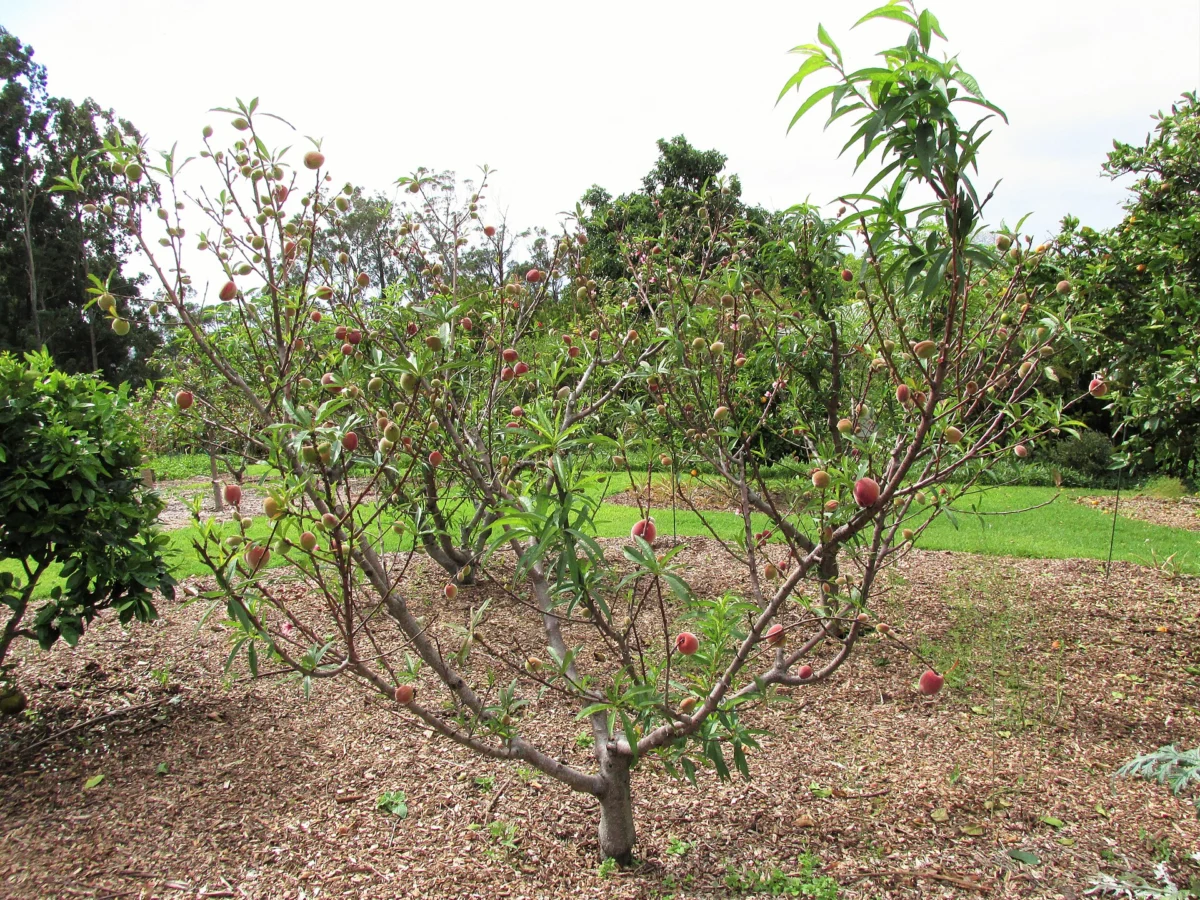
- Thin fruit to 6 to 8 inches apart. Good Fruit Grower stresses that thorough, early thinning is needed to get large fruit, and Redhaven often sets a very heavy crop.
- Mulch every spring to hold moisture and suppress weeds. Keep it a hand’s width from the trunk to avoid rot.
How to thin peaches
About four to six weeks after bloom, when the fruitlets are roughly the size of a walnut, pinch or twist off extra fruit so the remaining peaches are 6 to 8 inches apart along the branch. It feels wasteful, but a thinned tree produces larger, sweeter fruit, avoids limbs snapping under the weight and bears more reliably the following year. Thin early in the window if you can, because earlier thinning has a bigger effect on final fruit size.
Pruning Redhaven
Peaches fruit on one-year-old wood, so every year you remove some old wood to encourage new shoots. Aim for an open vase with three to five main scaffold branches, no crossing limbs and a clear center that lets light reach the fruit. Prune in late winter to early spring when the worst cold is past but before the buds swell. Cut out dead, diseased or crossing branches first, then shorten overly long shoots. Keep the tree at a height you can reach from the ground, because picking and thinning from a ladder is hard work.
Frost and pests
Redhaven blooms early, so a late frost can reduce the crop. Choose a site with good air drainage and check frost dates by ZIP code. On nights when frost threatens open blossoms, a light frost cloth draped over a small tree can help.
Common peach problems include peach leaf curl, brown rot, borers, plum curculio and oriental fruit moth. Clean up fallen fruit and mummies, because they carry brown rot over winter. A dormant-season spray for leaf curl is the standard control, but timing is critical. Use the plant problem identifier to narrow symptoms.
Harvest
Pick Redhaven when the ground color turns from green to yellow, the fruit smells sweet and the flesh gives slightly near the stem. Because the red color develops while the fruit is still firm, do not pick by blush alone. Fruit ripens over a week or two, so pick every few days. Peaches do not get sweeter after picking, so wait for the fragrance. If peaches are hard, see how to ripen peaches, and for the full picking checklist read when to pick peaches. For more basics, read our peach tree guide.
To extend the season after Redhaven, pair it with a mid-season variety such as the cold-hardy Contender peach tree, or a late freestone such as Elberta, which ripens about a month later.
Using your Redhaven crop
A mature, well-thinned tree can give a bushel or more of fruit, so plan ahead for the glut. Peaches are best eaten within a few days at room temperature, then refrigerated once ripe. Share extras with neighbors, freeze slices for winter smoothies, and keep a few firm fruit aside for a pie. Fresh-picked Redhaven, ripened on the tree, tastes noticeably better than anything from a store, which is the best reason to grow your own.
Redhaven’s firm flesh makes it versatile. Eat it fresh, slice it for pies and cobblers, or freeze slices on a tray before bagging. Yellow freestones like Redhaven are also recommended for home canning by university extension services, which is useful if you get a big crop. Always follow a current, tested canning recipe.
Redhaven vs other popular peaches
Gardeners often ask how Redhaven compares with other freestones. The table gives a rough guide, though exact timing and hardiness depend on your climate and rootstock.
| Variety | Ripens | Strengths | Watch for |
|---|---|---|---|
| Redhaven | Early to mid season | Firm, red, productive, above-average cold hardiness | Heavy crop needs early thinning; early bloom |
| Contender | Mid season | Very cold-hardy buds, reliable crops | Needs enough chill and a good site |
| Elberta | About 30 days after Redhaven | Classic late-season flavor and size | Needs a long, warm season |
| Belle of Georgia | Mid to late season | White freestone flesh, sweet fresh eating | White peaches cannot be safely canned |
If you have room for only one peach tree in a cold-winter area, Redhaven or Contender are the two most common choices. If you have room for two, planting one early and one later gives you several weeks of fresh fruit instead of one glut.
A year in the life of a Redhaven tree
- Late winter: prune to an open vase before buds swell, remove mummified fruit and clean up fallen leaves. A dormant spray for leaf curl, if you use one, goes on before bud swell.
- Early spring: bloom arrives. Watch the forecast and be ready with frost protection. Apply a light feeding once growth starts.
- Late spring: thin fruit to 6 to 8 inches apart when fruitlets are walnut-sized, and refresh the mulch.
- Early summer: water deeply during dry spells and watch for borers and fruit moths.
- Midsummer: harvest every few days over one to two weeks. Support heavy branches if needed.
- Late summer to fall: stop feeding, tidy the orchard floor, and make summer pruning cuts only if needed to open the canopy.
- Winter: protect young trunks from sunscald with white tree wrap or whitewash, and guard against rabbits and mice.
Troubleshooting Redhaven
- Lots of blossoms but little fruit: a late frost during bloom is the most common cause. Poor pollinator weather and over-thinning can contribute.
- Small fruit: the tree set too much fruit and it was not thinned, or it was short of water during fruit swell.
- Fruit that cracks or splits: usually uneven watering, with heavy rain after a dry spell the typical trigger.
- Gummy ooze on trunk or branches: peach tree borers or injury. Inspect the base of the trunk for sawdust-like frass.
- Pale leaves and slow growth: check drainage and soil pH, and test the soil before adding fertilizer. Our best soil for fruit trees guide explains what peaches prefer.
- Fruit rotting on the tree: brown rot in warm, humid weather. Remove infected fruit promptly and improve airflow through pruning.
Safety and legal note: Use sprays only as directed by the label, which is the law, and avoid spraying open blossoms when bees are active. Pesticide rules and approved products vary by state and country. Keep peach pits and kernels away from pets and children. Use tested canning instructions, because untested methods can allow botulism.
Planning more fruit? Browse every variety, planting and care article in our complete fruit tree growing guide.
Free printable: the Year-Round Garden & Preserving Planner
Planting dates for 24 crops, monthly tasks, blanching times, canning safety numbers and a winter storage chart in one 8-page PDF. Enter your email to download it instantly and get our seasonal garden newsletter.
No spam. Unsubscribe any time. We never sell your email.
Frequently asked questions
Is Redhaven a freestone peach?
Yes. The pit separates easily from ripe fruit, though some sources list it as semi-free in a given season if picked early.
Is Redhaven self-fertile?
Yes, so a single tree can bear fruit. A second tree nearby is optional.
When does Redhaven ripen?
In early to mid season, often mid to late July in northern climates, but it varies with weather and region.
Does Redhaven grow in cold climates?
It is among the more cold-hardy peaches, but late frosts can still damage the early blossoms.
How big does a Redhaven tree get?
About 12 to 15 feet tall and wide when pruned as a standard tree, or 8 to 10 feet for a dwarf.
How many years until Redhaven fruits?
Typically 2 to 4 years after planting.
Reviewed October 2026. Ripening and hardiness vary by region.